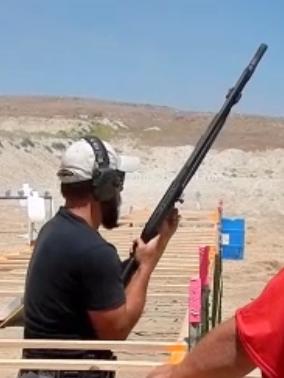
2 Gun Action Challenge Match: A Model for the Future

The Case For Rifle/Pistol Matches

The number one reason people tell me they don’t want to shoot 3 Gun is because they don’t have/don’t want to buy a shotgun just for shooting a game. I have heard this more and more since the mid-2000s.  There are three major things I believe are contributing to this:

1) There is a large pool of people that came back from the global war on terror.  They have bought carbines similar to the ones they were issued, and want an outlet to practice the martial skills they learned and used. Very few of these people actually used shotguns, and those who did will admit their limited utility.

2) The focus in commercial defensive/tactical shooting schools as whole is largely geared around rifles and handguns now, there aren’t as many tactical shotgun classes taught anymore by comparison.

3) Expense: one less gun makes it that much more affordable to compete in both initial equipment investment and ammunition costs.  While people may own shotguns, few are optimized for shooting 3 Gun.  Competitive 3 Gun Shotguns are somewhere between a home defense shotgun and a hunting shotgun.  21-24″ barrels with chokes and full length or longer magazine tubes are the norm.  The ammunition carrying equipment to be competitive is also increasingly impractical for anything other than competing.  The shotgun is consequently viewed as much more specialized equipment than rifles or pistols.

2GACM

With these things in mind, there is an untapped market of potential competitors.  The 2 Gun Action Challenge Match in Tucson, Arizona is an event that appeals to these demographics. It is strictly a rifle/pistol match.  Many of the stages combine physical challenge elements.  The more complex stages are often based around real world incidents.  The mean age of competitors is younger than other venues.  More active duty military, veterans, and Law Enforcement attend it. There are also more people attending who have paid for commercial training that want a monthly event to keep their skills sharp

Physical Challenges

Including physical challenges as part of stages changes the tone of the match.  Shooting this match feels more like a training session with friends than a serious competitive event.  It also helps keep away the whiners and complainers that can ruin the experience.  The fewer the targets on the stage, the harder the stage is physically.  Physical Challenges Can Include: 100-200 yard sprints, kettle bell throws, carrying heavy objects, crawling under obstacles, or going through obstacles.  The end result is more challenging stages with less ammunition expended.

Inclusivity Fosters Success

The match has wisely chosen to remain inclusive in the sense that any equipment allowed at other multi-gun matches is allowed there.  Arizona has a large action shooting population, they can use the same rifles and pistols they use in 3-Gun if they want.  Prohibiting equipment simply gives people a reason not to participate.  There is crossover from other local competitive venues as a result.  Armored division is available for people who wish to compete with body armor on as it does tend to make one slower and the physical challenges harder.

Stage Design Defines Everything

2GACM distinguishes itself based upon stage design and shooting/physical challenges.  Events that try to distinguish themselves based upon equipment restrictions invariably prohibit equipment with real world applications.  Stage design alone determines how useful something is in reality, and how martially applicable the match itself is.  We often see that traditional match equipment is a liability at 2GACM.  At the basic level magazines fall out of pouches because the match is more physical.  Typical competition rifles are too long to maneuver in confined spaces.  Short Barrelled Rifles can in fact be advantageous. Limited eye relief optics are slower, the more times the shooter has to reacquire the sight picture or from awkward positions.  Carpets are not placed on the ground in shooting areas so muzzle brakes can kick up dirt/dust obscuring targets down range.

Run Your Own Match

2GACM is open source; all you need to get your own match going is a range that is 50-100 yards, shot clocks, and 2-3 steel targets.  If you don’t like what your own local clubs have going on, get your own match started.  Even if it’s just 5-10 guys at first you can grow it over time and make more complex props and acquire more advanced target arrays.  You do not need the backing of a national organization to make your event happen.  There will be a learning curve in match logistics and how to set up and run your match in a timely manner.  As long as you have a range to run your match on, none of the challenges you face are insurmountable.

Posted in Competitions, Training | Comments Off on 2 Gun Action Challenge Match: A Model for the Future

Competition Shooting for the Martial Gunman

Techniques, Tactics, and Mindset

All the Action Shooting Sports we see today have martial roots, just as archery, fencing, wrestling, and track and field do as well.  How martially applicable various matches are depends solely on stage design which determines the skills tested and what type of equipment is more advantageous than others. When designed to test martial skills stages can make using traditional USPSA or 3 Gun Equipment less effective or a liability.

IMG_2584The simple fact is in many areas matches are the only venue where shooters can draw from a holster, move and shoot, or engage in positional shooting.  Many public ranges prohibit these actions at anything other than matches, so the martial shooter may have to shoot matches to have a venue to practice in at all.  With that in mind,  what you get out of competition largely depends on the mindset you have going into it. Use it to focus on gun handling and marksmanship skills, proofing out equipment, and socializing with like-minded people.  If your sole intent is to win, that path will take you down the rabbit hole that would cause you to start disregarding martially suitable equipment and gun handling techniques.

DSCN1573Matches cannot and will never be able to test tactics objectively. Accept this and move on.  Do not view stages as literal tactical scenarios.   Instead look at them as a shooting drill with some problem solving. There are often shooting drills used in various courses that are not literal tactical scenarios, they are simply meant to build gun handling and marksmanship skills.  View stages the same way, it’s just a drill where you’re trying to shoot as fast and accurately as possible.  The fact there are barricades that form a hallway and the targets are humanoid does not turn it into the hallway in your home practicing for a home invasion.  What it does let you do is practice moving in confined spaces safely with a gun and acquiring targets rapidly.

IMG_2458Martial gun handling techniques such as using your support hand to run your slide every time or reloading with retention generally will not have a significant effect on your score.  If you shoot fast and accurately and move efficiently you will still place well.  If your mindset is to win at all costs, then these things may bother you.  I like winning, and I feel proud when I win or place high, but ultimately my goal for going to a lot of these things is for the shooting experience and to validate equipment and techniques.  For example I’ve won Trooper division twice at Ironman 3 Gun (2008, 2009), but I will tell you both those years were not my best performance.   Over all the best performance I had was in 2011 and I placed fifth  How can I say it was my best performance with that placement?  I trained really hard, all my equipment worked exactly as I wanted it to, and I shot the cleanest and fastest I ever have.  There were 4 people who were simply better than me that showed up that year.  Having annual events to go to helps keep yourself motivated and gives you things to work on in the interim.

Equipment and Technology

RMR-2We have seen quite frequently products developed through the rapid feedback cycle of competitive shooting being useful for martial purposes. Sometimes they require modifications to be suitable, other times they do not. At matches I have attended all over the country I have spoken with and shot with a large number of military and law enforcement that are there using it for training augmentation and R&D purposes. In 2005 for example when I attended the US Army Marksmanship Unit’s Fort Benning 3 Gun Challenge; the commander at the time told us all “we are here to find better ways to kill the enemies of the United States”. He made a point of going around to each squad and talking to us about what we were using and why we used it. At the Ironman 3 Gun match I have regularly competed with servicemen from various special units that were trying out new equipment and asking us about the equipment we were using. You can use these venues for the same purposes. If your equipment does not work under the mild stress of competition, it is unlikely it will work when your life is on the line. If it works consistently match after match, it is more likely you can trust your life to it.

Recommendations to get the most out of matches as a martial gunman:
1) Safety Rules and Range Rules/Procedures: Comply with the rules so you can finish the whole match
2) Scoring/Penalties. Again treat it like a drill. Understand the requirements and operate within those requirements.
3) Target Systems: There are a lot of target systems that are for lack of a better term essentially carnival games or tricks, but they do move and require timing to hit properly. Understand how these systems work to engage them effectively.
4) Understand that people that go to matches are all there for different reasons. Get a group of buddies with the same mindset and goals and go compete against each other. If you beat a large percentage of the sport-only mindset shooters you can consider that you are doing well.
5) Use your daily carry gear or whatever martial gear you have in the appropriate division. Equipment is always of much less consequence than shooting ability. For example Race Holsters matter less than simply running faster at times, and they can be a liability when the gun falls out resulting in a DQ. Similarly split times with a tuned low mass gun matter less than simply being able to get into and out of positions faster and being familiar with your equipment. None of these equipment advantages really matters until you get to the top 5% of shooters.
6) The only way to get better at matches is to shoot matches. Local matches are organized practice sessions for larger events, don’t stress it and view it as simply renting the range time for you to run. You will never be ready for your first match, just go do it.

Blog-1


Posted in Competitions, Training | Comments Off on Competition Shooting for the Martial Gunman

Independence Day Action Rifle Match 2014

Posted in Uncategorized | Comments Off on Independence Day Action Rifle Match 2014

Beretta 1301 at Ironman 3 Gun 2014

The Ironman 3 Gun is the highest round count 3 Gun match in the United States. The stages take up to seven minutes to shoot. The long days on the range and environmental conditions take a toll on shooters and guns alike. These factors are what make the match interesting and enjoyable for me to shoot. They also make it interesting to take people without a lot of match experience and throw them into it to see how they do. Every year I try to convince someone who hasn’t shot competitively very much or at all to go with me.This year I convinced John Brooks to go to the match, and as you’ll see from his background below he is not an inexperienced shooter. He simply has not shot many 3 Gun matches.

Ironman also coincided with having a Beretta 1301 competition shotgun on loan for a Recoil article. I had previously used the 1301 for Superstition Mountain Mystery 3 Gun, but I wanted to get some more rounds through it to assess longer term reliability. I would be using my VEPR-12 in Trooper division, so I had John use the 1301 for Ironman in Tac Limited division.

John’s review of using the 1301 at Ironman 3 Gun 2014 follows below.
—————————

Beretta 1301 Competition at Ironman 3 Gun 2014
by John Brooks

1301G
The 2014 MGM Ironman would be the second 3 gun match I had ever attended. I didn’t quite know what to expect from the firsthand accounts I had heard and the things I read on blogs and forums. “The most physically and mentally demanding 3 gun match around,” was the general consensus. After my years of military service, time spent as a marksmanship instructor and various shooting disciplines I had dabbled in, I thought, “how hard could it possibly be on me and my equipment?” I started shooting at a young age, and have spent time doing everything from small bore silhouette, DCM and USPSA, to skeet and trap. I was never heavily invested in any of them, but thought this diverse shooting background would be of great help in this endeavor.

1301-2
I didn’t have a shotgun even close to being considered competitive, so Russell allowed me to use the Beretta 1301 competition he had on loan for an article. I grabbed it just a few weeks prior to Ironman, which allowed me just a few short hours of familiarization and practice that I managed to squeeze in with my work schedule. My first impressions were great to say the least. In wing shooting, a forward weighted shotgun is not a bad thing. It allows for a smooth sweep across a clays trajectory and good follow through on moving targets. For 3 Gun, however, it would seem a light, nimble gun would be better suited to the interrupted swinging on staggered, static targets and aerial clays. The 1301 has this in spades. Its light weight nature, functional lines and solid grip texturing allow for a very pointable shotgun that becomes an extension of your body. It was a smooth, fast shooting gun that handled everything I fed it; from #8 shot low brass target loads to low recoil 1 oz slugs and 3in #6 shot. It became apparent the only limiting factor for this gun would be my level in proficiency in manipulation.

1301

Attending Ironman would be a baptism by fire for the 1301 and me. I drew first in the shooting order on our first stage. I thought this was not exactly ideal for my first time there. I had decided to utilize a weak hand reload technique, since most of my equipment was borrowed, and I had ended up with seven 4-shell caddies. At first, it was slow and painful, but learning on the clock either makes your or breaks you; in this case it made me. On the third day of shooting, I was averaging almost 2 shells per second on my reloads. The 1301’s opened loading gate area and chamber no doubt helped with a quicker learning curve. On stage 3, I was able to shoot the three clay popper targets and the three following aerial clays in quick succession. I was also able to make most of the required slug shots using only the standard bead on the barrel.

Coming from the perspective of a shooter and a gunsmith, there are very few times I have been boldly impressed by a production gun. The Beretta 1301 Competition enthusiastically makes my list. To remain objective for the purposes of our evaluation of the 1301, I opted to conduct zero maintenance on the gun for the entire three days of shooting. The 1301 ran flawlessly despite being exposed to the talcum powder like sand on the range when left with the action locked open in racks and abandonment barrels. For the price, performance, and utility it is everything a limited division shooter could ever want right out of the box. I am convinced it played a crucial role in my third place finish in Limited Division. It will definitely be the next gun I purchase.


Posted in Competitions, Ironman 3 Gun | Comments Off on Beretta 1301 at Ironman 3 Gun 2014

Ironman 3 Gun Match 2014

Ironman 2014 marked the 10th Anniversary of Trooper Class.  I’m the only person who has competed in Trooper Division at all 10 Ironman Matches that have featured it.  As one of the division’s founders I’m glad to see it remain popular over the years.  The first year had only 7 competitors and the past several have had over 30 each year.  Trooper is second only to open in popularity at the OLHOT half of the Ironman 3 Gun Match (the match is split into separate Tac Scope and everything else matches now).

Ironman has always been a great test bed for firearm reliability and limitations.  This year was no exception.  In years past I’ve practiced with the exact equipment I’d use for Ironman for 2-3 months a head of time at every local match I could shoot.  This time I didn’t get the opportunity to do that.  Much of the equipment I used I received for use in upcoming reviews and only had it for 1-3 weeks before the match.  So while I was able to hit the range and get everything zeroed and test it ahead of time, it’s hard to use guns with 100% efficiency without using them at multiple matches ahead of time to get acclimated.  So with that in mind, I did better than I expected to placing 6th/33 Shooters.

Tyler Payne of the Army Marksmanship Unit took 1st again this year, with the change of using a 9mm M16 for both pistol and rifle targets on some stages.  Sean Smith took 2nd again, narrowing the gap between himself and Tyler Payne by a good margin this year.  Iain Harrison, Recoil’s editor in chief, took 3rd Place…much like me throwing a bunch of guns together at the last minute to use the match as part of upcoming reviews.

The biggest gear problems I had this year were with electronics.  My VIO POV HD camera died halfway through the match, losing signal from the camera to the recording module.  It’s back at VIO again for repair.  My Peltor ear pro also started glitching out because I sweated too much into it and it would turn off and on randomly.  I had to pull the batteries out because it turning off and on along with the off/on sound effects during stages was distracting.  I let them dry out and they were fine after that.

I’ll save the details of using the guns for other reviews, but here’s what I took to the match

Shotgun:
VEPR-12 with Aimpoint ML2 (used on every stage)
Rifles:
Windham Weaponry SRC-308 with Leupold MKIV 1.5-5x (used on 3 stages)
CAV-15 MKII 16″ Lightweight with HAMR and Aimpoint Micro (used on 2 Stages)
Pistol Caliber Carbine:
Brethren Armament BAP 9mm with Aimpoint M4 (used on every stage)
Pistol: OST-TSD Glock with RMR (used on 1 Stage)

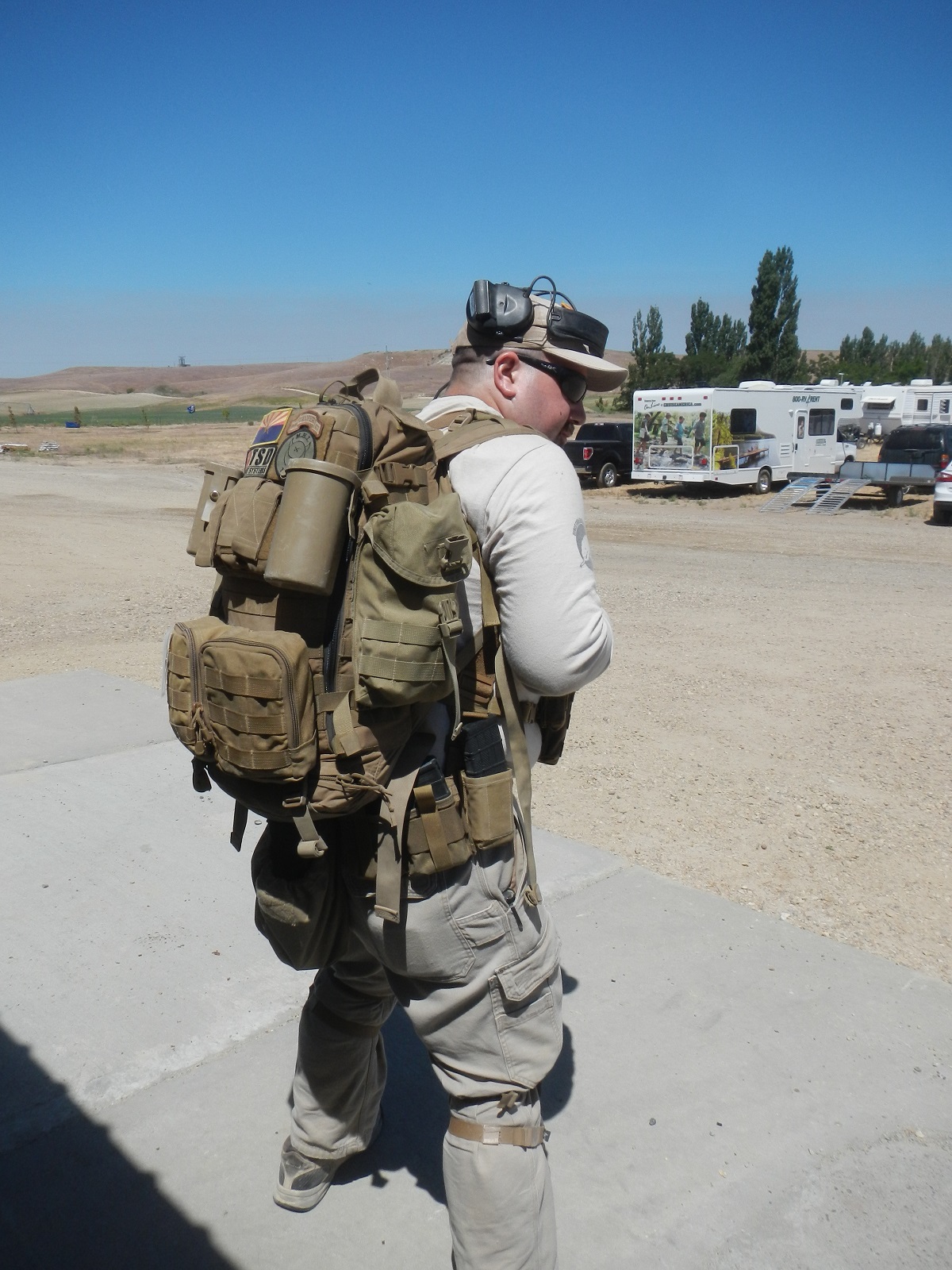
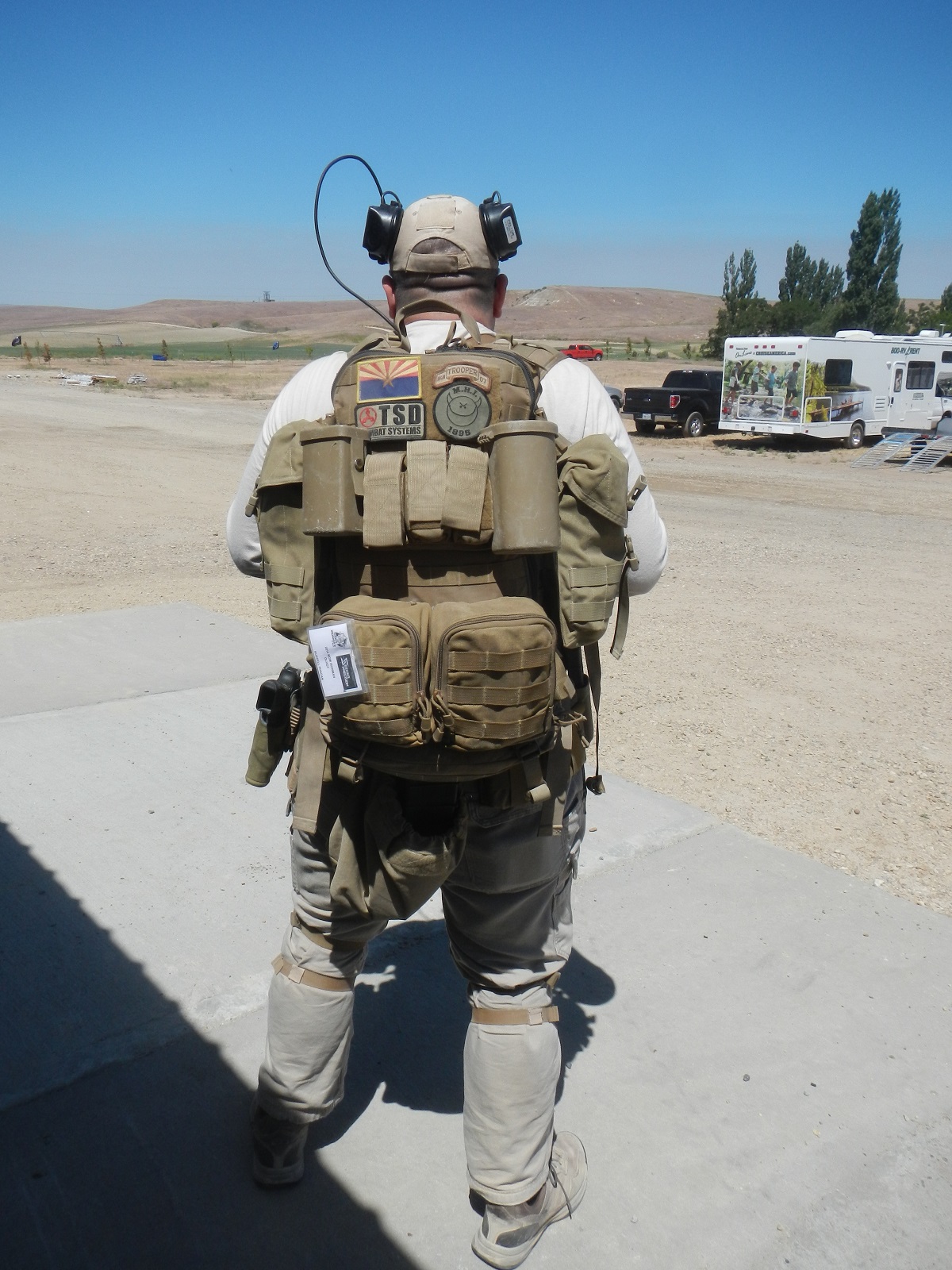
Honor Point USA JACS Loaded up
JACS-3 JACS-1JACS-2
My JACS Started with the following in it
700 Rounds 9mm
200 Rounds 5.56mm
200 Rounds .308
150 Bird Shot
40 Slugs

I also attached the following to pouches on the outside: Cleaning Kit, tools, batteries, Snacks, 2 Liters of Water.  The ability to lay it down flat and open the whole thing up made it much easier to keep all my ammo seperated and organized than other packs I have used in the past.

In the ammo can at the Trooper Check Point:
125 Round Bird Shot
50 Slugs
200 Rounds  9mm
100 Rounds .308
200 Rounds .223

Stages in the order I shot them

Stage5:  This is the only stage that I  had a reason to use a pistol on this year.  I did not want to carry the dummy and deal with a slung subgun at the same time.  Every other stage, the way the stages flowed combined with the ability to preposition the pistol caliber carbine made a pistol less useful for Troopers this year.   Shooting prone I induced malfunctions with the pistol because the magazine made contact with the ground under recoil.

Stage 6: This stage was mandatory support side shooting.  It would have been a good run if I had been able to get the clays underneath the truck easier.  After I shot and watched other shooters on the same stage it was apparent there was a small dirt rise on the way to the targets we kept skimming rounds across causing deflection.  Otherwise my all PCC approach to this stage worked pretty well and I used Shotgun only for the targets that I had to.

Stage 7:  One of only 2 Stages I used my .223 rifle on.  I used it here because of the combination of 100-400 yard steel and paper rifle targets from the same position.  The slug double spinner I fired at only once because it was at 80 yards and thus at the limit of mechanical accuracy for slugs. It wasn’t worth chasing so I ate the 60 second penalty.  There was only one visible hit on it when our squad came through so most of our shooters did the same thing.  Later squads shot it with rifle from the roof top; because it wasn’t expressly prohibited it was allowed.  If I had known I could do this I would have shot it with rifle as well; failure to rotate double spinners is a 60 second penalty.  Note to self; ask the ROs more questions next year when things like that come up.

Stage8:  This stage required all shots be fired underneath the spools.  Skinny guys and junior shooters had an easier time here.  I shot the whole thing urban prone with my left shoulder on the ground to get as low as possible.  I did ok on the pistol and rifle portions with the BAP 9mm, but the shotgun portion was painful.  Getting angles on the targets was harder with shotgun and I ended up pushing it away from my shoulder to get a few.

Stage 9:  This was my best stage of the match.  Using PCC from pistol to rifle portions was very smooth.  I was able to rotate the double spinner with slugs at the end.

Stage 10:  I did fairly well on this stage too, but the POV cut out in the middle.  I used the .308 rifle here to more easily rotate the rifle double spinner.

Stage 1:  Cooper Tunnel.  I used the .308 again on this stage to make the double rifle/spinner rotate easier.  By this point in the match I was feeling sore and stiff, crawling through the tunnel was slower as a result.

Stage 2: 2 Double Rifle Spinners here so I used the .308 again.  I only really got to practice with my optic on the .308 to 200 yards before the match so I ended up shooting more at long range targets than I wanted to here.

Stage 3: I  used my lightweight CAV-15 MKII Rifle here.  I realized after the fact that I pulled the Samson Evo  free float tube loose under recoil with the way I braced on the tower pulling back against my  bipod.  It was contacting the front sight which explains some deflection on the long range targets.

Stage 4:  Sorry no video.  This stage had a 90 second par time and was shot twice, once from each shoulder.  Shooters had to neutralize as many targets as possible in the par time.   Looking at it, I did the math and realized all the rifle targets and the double spinner would take longer to engage than the penalties.  I shot all the pistol targets with the BAP 9mm, and the Slug Plates.  I had the second highest score in Trooper with this methodology.

Stage4

Posted in CAV-15, Competitions, Ironman 3 Gun, VEPR-12 | Comments Off on Ironman 3 Gun Match 2014

VEPR-12 Follow Up: Magazines and Slug Accuracy

Magazines

As part of my review of the VEPR-12 shotgun in Issue 12 of Recoil, I purchased 3 SGM 12 round magazines. They were the only magazines I could find at the time that held more than 5 rounds, and they were the only US made magazines.  The SGM Magazines exhibited some significant problems right out of the box.  The followers obviously dragged, and loading the magazines up, the shells would not feed up freely when pushed out by hand. Shooting these magazines at all before trying to fix them would have been a waste of time. They also would not insert into the magazine well as easily as the OEM magazines, and they would not drop free. I did not bother contacting SGM about these issues because of my prior experience with their customer service with Saiga-12 magazines in 2010.

binding-2binding-1
Followers binding right out of the box.

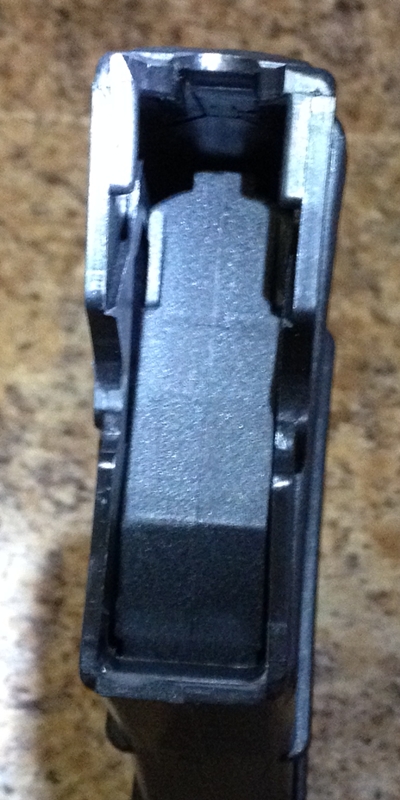
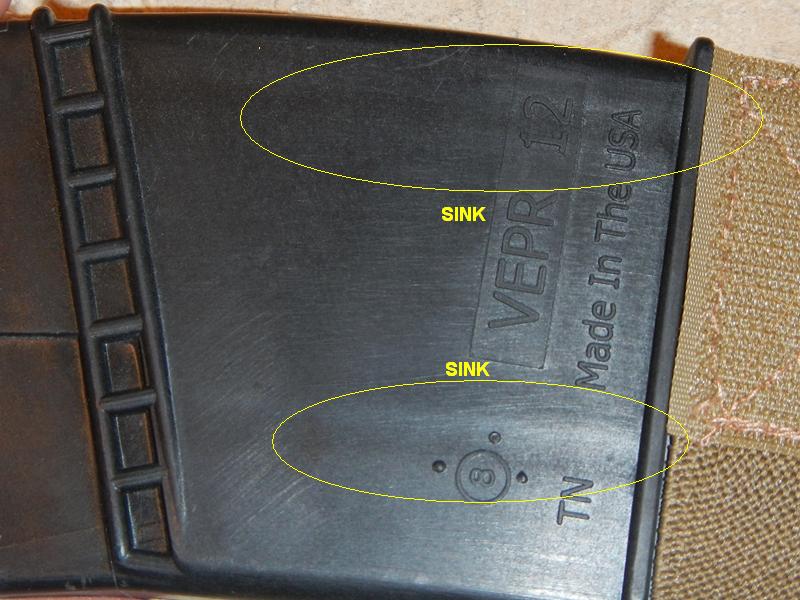
The reason for the follower/shell binding issues is readily apparent from simply looking at the magazine. The SGM magazines are a large injection molded part. The general principle of injection molding is that plastic is heated to melting point, then forced into a mold at high pressure. The part is then cooled in the mold for a short time, then ejected, and the process starts over again for the next part. The SGM magazines show signs of “sink” on the outside of the magazine body that correspond with the points where the shells and follower bind. There are a number of processing or mold design issues that can cause sink; either way SGM’s mold isn’t running right to produce parts.

DSCN1433
Sink lines apparent on the outside of the part.

I was able to make my magazines work by wrapping sand paper around the magazine follower and pushing it through with a stick until they were able to pass through the magazine body freely.

fitting-1
Magazine after fitting.

The insertion of the magazines and ability to drop free improved as I used them at home practicing my reloads. Plastic was being shaved away as it contacted the metal parts of the VEPR-12. The magazines proved reliable at two local 3 gun matches. I purchased an Arredondo Magazine coupler so I could start with two magazines on the gun, making reloads faster. I’m two weeks out from the 2014 Ironman 3 Gun match when this happened:

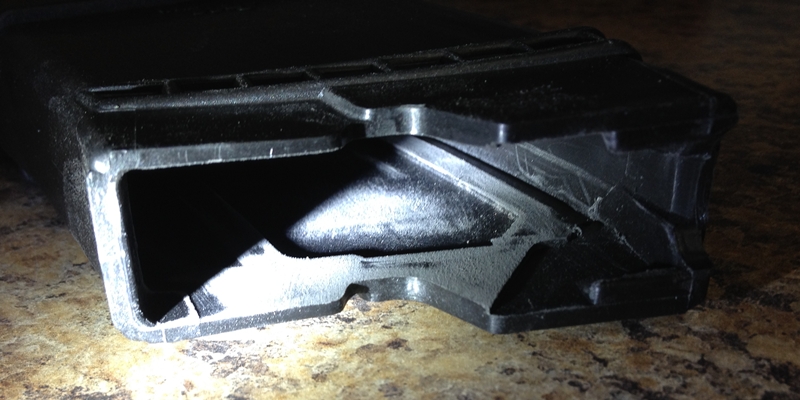
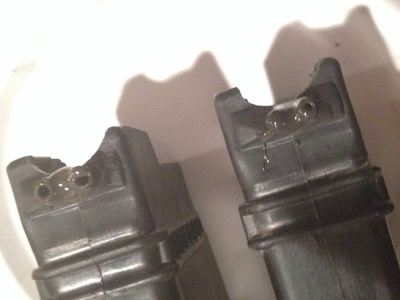
Examining the magazines after the stage showed that the first magazine was missing material out of the locking tab where the mag catch interfaces with it. The other two magazines also show similar wear marks on the locking tabs that I can only assume will eventually wear through. In fairness to SGM, perhaps the weight of two loaded magazines coupled exacerbated this issue. However even the uncoupled magazine is showing these signs of wear, it just gets used less.

SGM-1
The magazine that fell out

SGM-2
Magazine that has been used the least

By comparison I have had zero issues with the Russian 8 round OEM Magazines imported by Legion USA. They do not show signs of wear on the locking tab that the SGM do.  If you’re using your VEPR-12 for something your life depends upon, use the OEM Magazines.

OEM-1

The downside to using Russian OEM 8 rounders is the need to make the VEPR-12 922R compliant. For competitive purposes, the 8 rounders function but put the shooter at a disadvantage against other competitors with 12-20 round magazines. I should note that the R&R racing magwells favored by competitors use highly modified SGM Magazines. These mag wells and magazines do not use the existing locking tab, and instead use a slot cut into the side of the magazine, that is less prone to wear/failure.

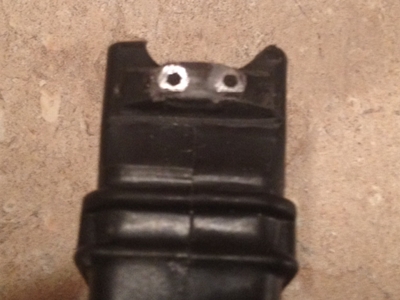
I’m glad this happened at a local match that cost me $15.00 + ammo to shoot vs a major match with much more time and expense involved.   I was able to take corrective action before going to Ironman.  A friend recommended that I should reinforce the locking tabs by drilling and tapping some set screws into the back of the magazine and reinforcing it with JB Weld.  I followed this advice and fitting the new reinforced tabs to the gun with a file.

fix-1

fix-2

These tabs did hold up and lasted the duration of the Ironman 3 Gun Match.  The coupled SGM mags were my primary start magazines and I would reload with the 8 rounders after that.  The LRBHO feature on the SGM magazines worked intermittently so I offset the magazines so I could more easily rack the charging  handle when switching to the second magazine.

If you buy SGM magazines expect to have to do some modifications to make them function reliably. Inspect them regularly for wear to avoid having your mag drop out on the ground.

Slug Accuracy

As part of my initial testing of the VEPR-12 I zeroed with slugs at 25 yards and opened and closed the top cover multiple times to check for zero shift.  It stayed zeroed relatively well and I did not have a hard time hitting the 18-24″ slugs plates at 50-75 yards commonly encountered at local multigun matches.

While practicing for the Ironman 3 Gun match on an MGM Targets double spinner with slugs at 60 yards, it became apparent that my zero would not be sufficient to hit the smaller 8″ plate on top with slugs at 50 yards.  I rezeroed at 50 yards with a 4″ group, then cleaned the gun.  When I went to practice again a week later, I could no longer hit the 8″ plate on the double spinner.  The zero shifted enough from opening and closing the top cover that when combined with human error I was off target.  I cleaned the VEPR-12 and rezeroed again the day before the match.  I got a 5″ Group at 50 yards.  Needless to say I was concerned about being able to rotate the Double Spinners.  They are worth 60 seconds a piece in penalties if not rotated and  there would be up to five of them at the match.  And I was nearing the edge of the mechanical accuracy required to rotate them.   I decided to not clean the VEPR-12 during the match to avoid effecting the zero.  Thankfully my plan worked and I was able to rotate the mandatory slug double spinners with little effort.  The VEPR-12 worked for the duration aside from some misfeeds with Remington Game loads out of the SGM mags on the first stage I shot.  I otherwise did not have any malfunctions.

Overall the VEPR-12 was easier to use than the SAIGA-12s I have used in the past at the same match.  The mag well and straight insert mags were much easier to reload with and made it less of a chore than with the SAIGA-12.  I do intend to investigate other optics mounting options and eagerly wait for quality US Made larger capacity magazines.


Posted in VEPR-12 | Comments Off on VEPR-12 Follow Up: Magazines and Slug Accuracy

2 Gun Action Challenge Match 5-17-2014

3/40 Shooters

Rifle: Windham Weaponry SRC-308
Midwest Industries Rail
Leupold MKIV 1.5-5x CMR
CMC Trigger
Magpul 25 Round .308 Mags with AF Weapons Coupler

Pistol: Suarez International Glock 17 with Trijcon RMR07

Posted in Uncategorized | Comments Off on 2 Gun Action Challenge Match 5-17-2014

2 Gun Action Challenge Match 4-19-2014

4/55 Overall, 2nd Tac Scope.

Rifle: Windham Weaponry .308 AR with Aimpoint M4

Pistol: TSD Combat Systems Glock 17 with Warren/Tactical/Sevigny Sights

Posted in Competitions | Comments Off on 2 Gun Action Challenge Match 4-19-2014

Superstition Mountain Mystery 3 Gun 2014

SMM3G 2014 is done.  I had a great time shooting with the  range officers on Wednesday and Thursday before the main match began.  I ended up placing 17th/53 Shooters in Tac-Limited or about 70% of the match winner’s score.  This is up 5% from my place last year of 13/37 shooters or 65% of the match winner’s score.

I used the same upper from the CAV-15 MKII Abuse test with an Aimpoint M4 and TSD Kompressor added.  This upper had standard M4 Handguards, and was not free floated.  I used a very basic upper deliberately to demonstrate that dedicated 3 gun uppers are not necessary to shoot reasonably well, particularly in Tac-Limited division.

The Beretta 1301 Competition shotgun I used I had only had for about a week and only used at one local match.  It worked flawlessly and is currently probably the best out of the box 3 Gun Shotgun.  My full review of the 1301 can be found in issue 13 of Recoil Magazine at the end of May 2014.

I used my TSD Combat Systems Glock 17 with Warren Tactical Sevigny Sights.  It just works and continues to be a little more accurate than my stock 17.

Posted in Uncategorized | Comments Off on Superstition Mountain Mystery 3 Gun 2014

Recoil Magazine: VEPR-12 Article

I’m now a freelance contributor to Recoil Magazine. My first article on the VEPR-12 was just published in issue 12. The VEPR-12 is a big improvement over the earlier SAIGA-12.

Buy the digital copy online here:
http://www.recoilweb.com/magazine/issue-12/

Posted in SAIGA-12, VEPR-12 | Comments Off on Recoil Magazine: VEPR-12 Article