.308 in Competition: Observations

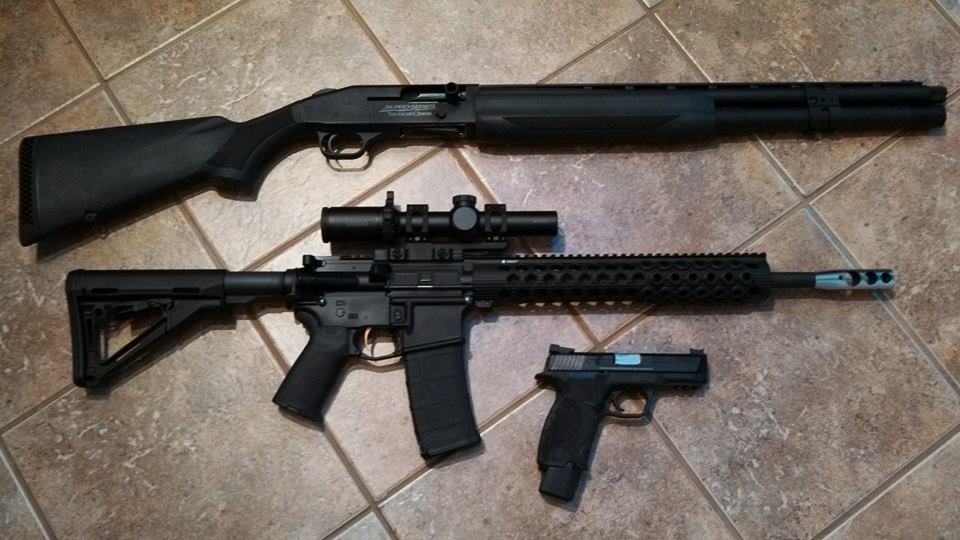
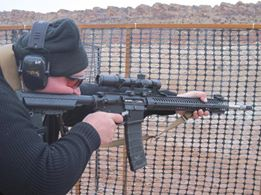
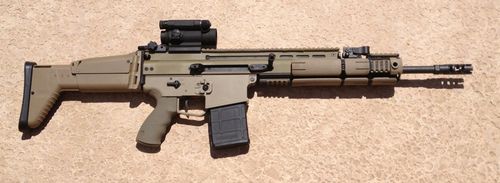
Over the past couple years I’ve shot .308 in matches a lot more than I ever have before.  The .223 ammo shortage created by the Barackalypse Part II in December of 2012 is partially responsible for this.  The other factor was I was actively testing .308 platforms including the MK17S SCAR-H, the same gun with the CAV-MFG PMAG Fire Control Module, and then a Windham Weaponry SRC-308.  For those who haven’t read my posts before, I view matches as a laboratory to validate firearms, equipment, and techniques.  During this time frame I shot around 4,000 rounds of .308 in matches.  Some of the observations I have may seem obvious, but its different reading about something in a few sentences from a third party than experiencing it yourself.  Note I’m not criticizing the rifles themselves; they both worked as they should.  This is a discussion of using .308 rifles in general.

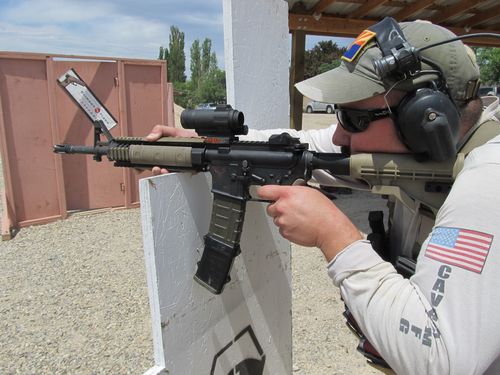
I used my SCAR-H to win Heavy Metal Limited Division at the 2012 Independence Day Action Rifle Match.

Effect on Target
Matches rarely account for the terminal effect of larger cartridges in their scoring.  The closest thing we get is engaging moving/falling steel targets.  When .308 impacts a steel target there is no debate if it was a hit or not.  With .223 at further distances sometimes targets won’t move enough for an RO to call a hit if it was marginal.  On falling targets like LaRues .308 more easily knocks them down, where .223 may require multiple hits higher on the target.  The MGM Targets Double Spinner is easily rotated in 3-4 hits with .308 vs 8-12 with .223.  The number of Double Spinner targets at the Ironman 3 Gun for example made using .308 a potential advantage where it normally isn’t at most matches.  The .308 rifles generally worked the best on intermediate to long range stages in open field conditions.

6a0133ec985af6970b01bb07d1b48a970d

Liabilities

Memorial Day Rifle Match 2013.  There were no divisions at this match, everyone competed against each other heads up.  A lot of people used .22s and Pistol Caliber Carbines.  I used the SCAR-H to keep testing the CAV-MFG P-Mag compatible lower.  Not the most competitive rifle at close range against much higher capacity, lower recoil .22s and .223s carbines, but I still placed 25th/90 Shooters.

Rifle Size
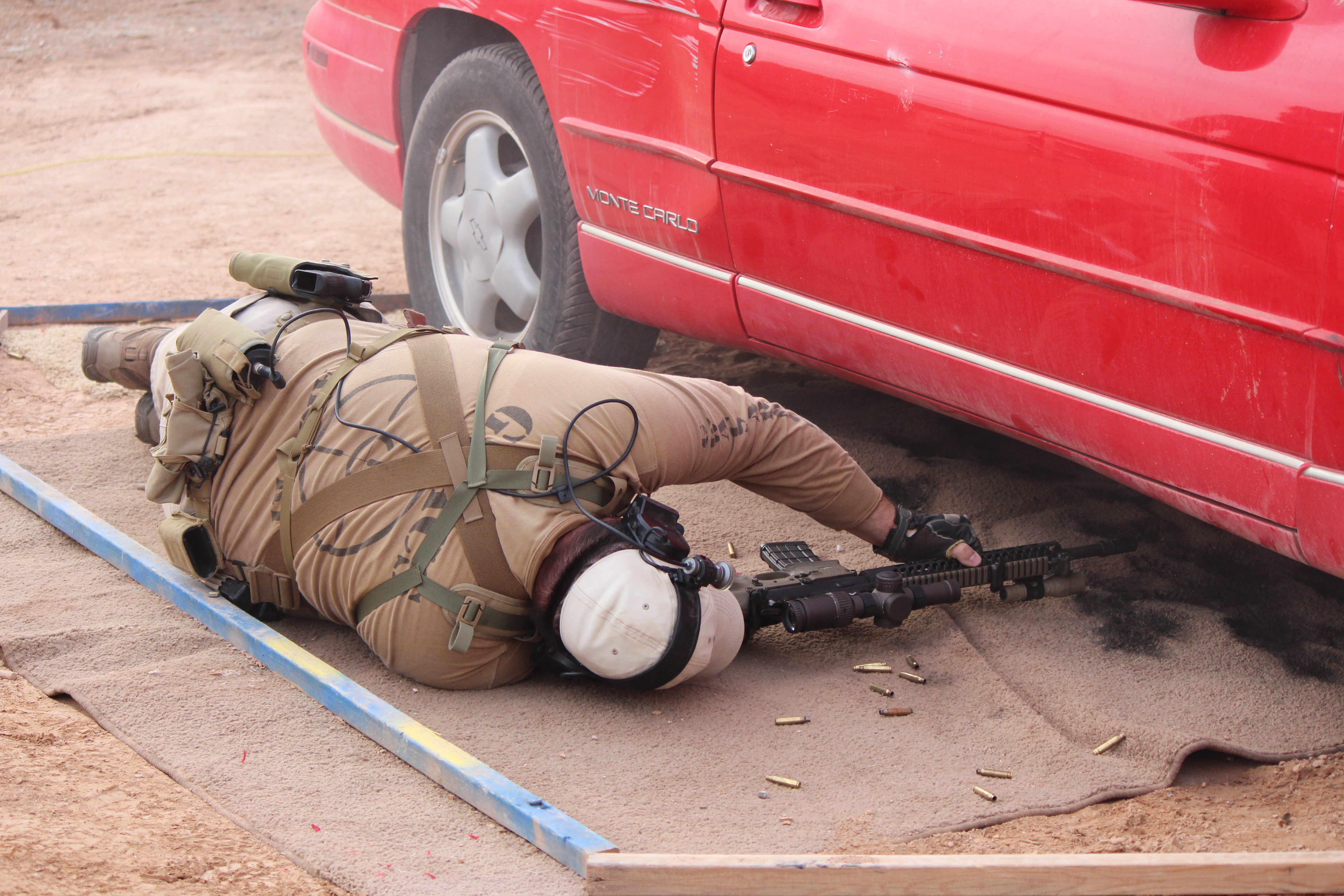
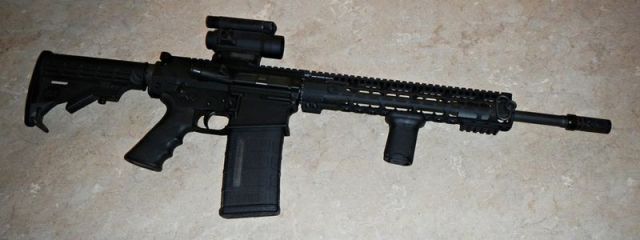
.308 rifles are inherently larger than .223 rifles, even if they have the same length barrel.  Using the SCAR-H inside the car in the video above was more difficult.  You’ll see the same with the Windham SRC-308 in a video below.  Both have 16″ barrels but are several inches longer than an equivalent rifle in .223.

Capacity
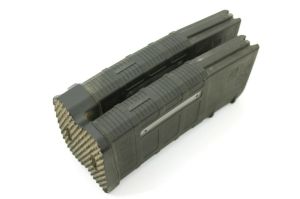
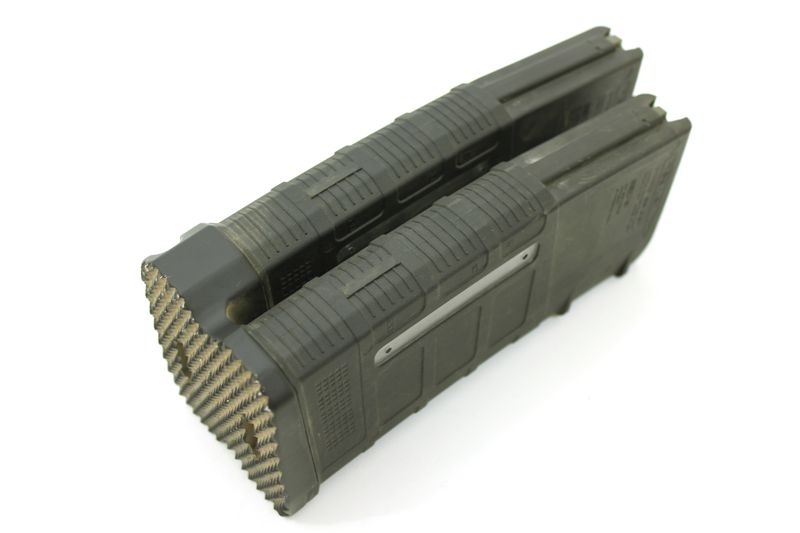
20 round magazines are the standard in .308 rifles.  For some of the stages you see me shoot in these videos if I was using .223 I would not need to reload, or certainly reload less running with 40 round mags.  With .308 I have to be much more conscious of how much ammo is in my rifle and reload proactively.  It’s similar to the difference in stage planning between shooting a double stack 9mm with 20+ rounds and a 1911 with 8 round magazines.
6a0133ec985af6970b01b8d0b731d7970c-800wi
I’ve found sometimes that carrying enough ammo for a stage along with pistol and shotgun ammo was difficult.  Magpul’s 25 round LR PMAGS definitely helped.  The AF Weapons Magazine coupler with 25 round mags was even better to start with in the rifle.
Recoil Costs Time
Every miss with .308 costs more time for a follow up shot.  This may be imperceptible for some people, but for me it is a noticeable amount of time longer waiting for the sights to settle.  Recoil is higher and it takes longer to restablize shot to shot.   Sometimes I could get split times close to shooting .223, but only from a standing position on close range paper where I could muscle the gun more; doing this over time is more fatiguing.  When stabilizing off barricades, techniques that would be solid with .223 require more readjustment with .308 shot to shot.  All these fractions of a second add up.  It is impossible to beat a peer level shooter time wise using a .308 even if capacities are equal.

6a0133ec985af6970b01b8d0b73334970c-800wi

Muzzle Blast
Brake or no brake, flash hider or bare muzzle, .308 always has more muzzle blast than .223 with an equivalent muzzle device.  Why does this matter in a match environment?  Shooting prone kicks up more dirt.  If there is too much dirt in the air it can be impossible to see the targets down range.  This happened to me several times while shooting .308 and I had to consciously pause for the dust to settle or spent more time hunting for the targets.  I have had this happen with .223 rifles as well, but it is much less common in the same conditions.  Using .308s in confined spaces is not pleasant.  Even with muffs and plugs ear protection.  The muzzle blast is much more capable of damaging props and barricades.
6a0133ec985af6970b01b7c72db410970b-800wiWindham Weaponry SRC-308

How is this relevant?
You may be thinking “I’ll never shoot matches, so why should I care”.  Here is why.  I never would have been able to categorically understand the liabilities of using a .308 had I not been forced to solve a wide range of shooting problems using one.  .308 no doubt has significantly better barrier penetration and terminal effect than .223, but is that worth the negatives?  That’s a question you have to answer for yourself by testing your rifle and yourself in practical conditions and considering your operating criteria.

 

Posted in Competitions, SCAR-H | Comments Off on .308 in Competition: Observations

Ruger 10/22 Tactical Take Down with AGP Arms Stock Kit

In late 2011 AGP Arms of Tempe, Arizona released an aftermarket mod kit for the Ruger 10/22 to turn it into a take down rifle.  You can watch my original video on it here.  Ruger also released their own take down model not long after in 2012.  AGP unexpectedly was selling a lot of folding stock assemblies to people who bought factory take down rifles.  Unfortunately the front stock sections would not work with these without modifications.  AGP made a new stock fore end piece to work with the factory rifle so they could more easily sell their stocks to any owner of a Ruger 10/22 Take Down.  I got a 10/22 Tactical Take Down Model to try out with their new stock system.  Here I will discuss the features of the rifle as it comes as well as the AGP Arms stock kit.

From the Factory

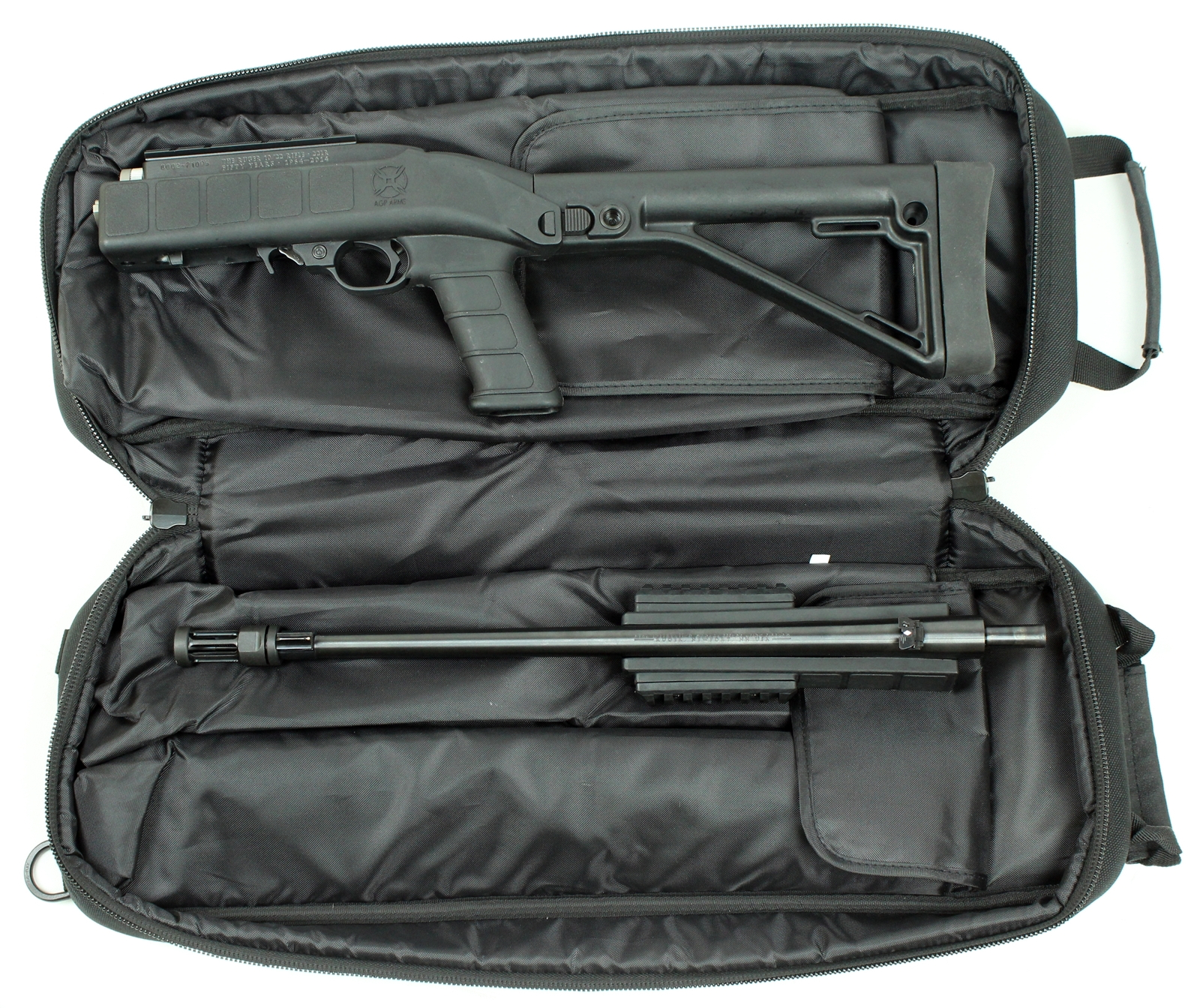
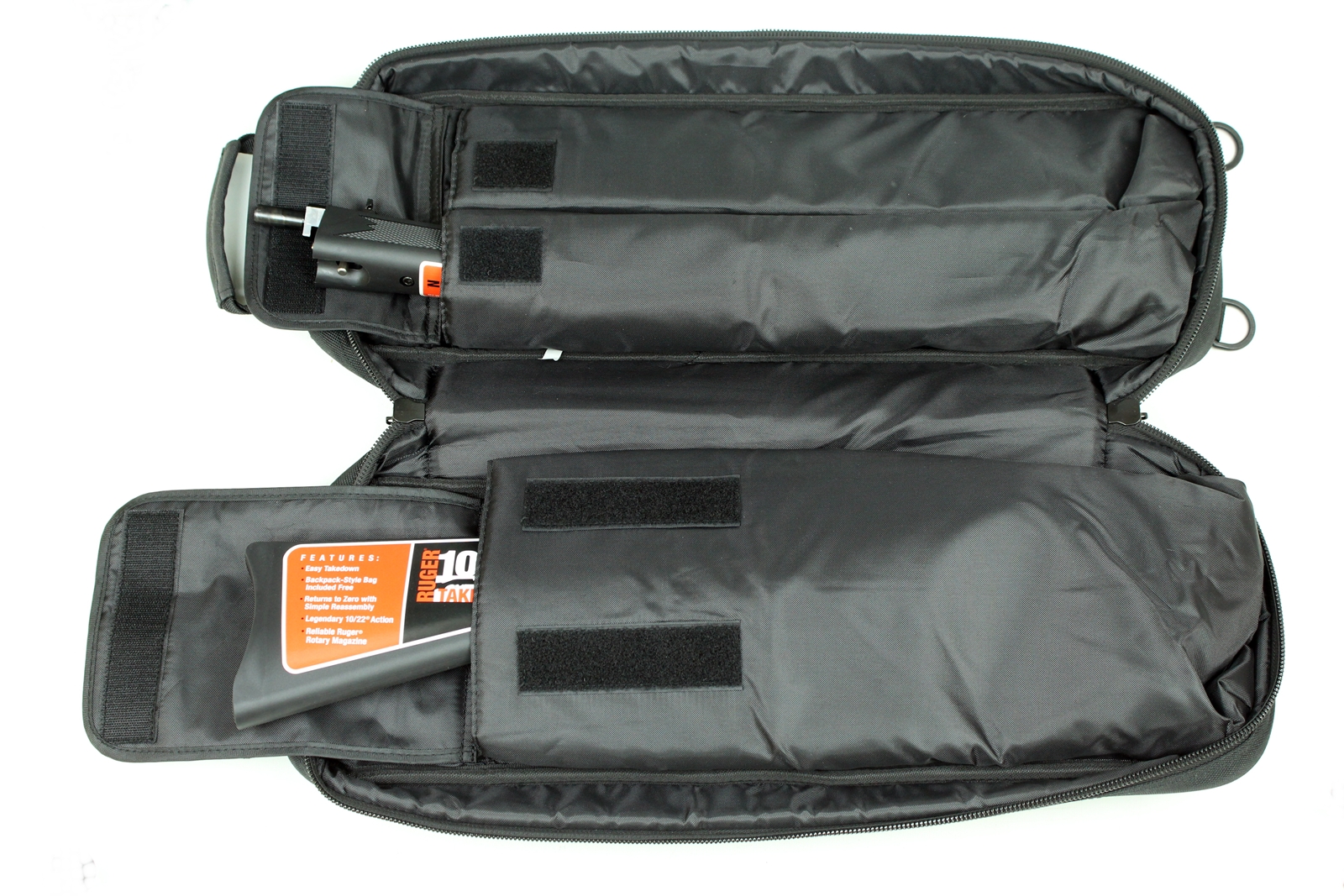
IMG_6912 The rifle comes in a nice bag that makes carrying it in the disassembled state easy.  The dimensions of the bag are approximately 22.5″x8.5″x7.5″.  It can stretch out a bit further if necessary.  At the top are two carry handles that would be useful for pulling it out of a storage bin or from behind the seat of a truck.  On the back are 4 d-rings that the included carry strap can attach to at two points to wear over one shoulder.  If one were so inclined a second strap could be added to carry it backpack style.  The bag features two external pouches.  The bottom pouch has two pockets for BX-25 magazines, though you could probably fit 3-4 in there if you do not use the dividers.  The top pouch is the right size for the owners manual and more ammo or cleaning supplies. The only real criticism I have of the case is I wish they had not put MOLLE on the bottom pouch or the Ruger logo on the top.  The case is fairly benign looking otherwise and could pass for a tripod case or camera bag.  Not alerting your neighbors you own guns every time you go to the range can be a good thing for some people depending on where they live. IMG_6935IMG_6933 The two halves of the rifle fit neatly into their separate compartments.  The compartments are padded to protect the rifle from wear in transport. IMG_6924 The components of the rifle outside of the bag.  The rifle comes with one 10 round magazine. IMG_6902 An optional weaver style rail is included.  I would recommend replacing this with an aftermarket M1913 picatinny rail if you want to run a wider range of optics.  Take care when installing the screws not to over torque them and strip them out.  The Iron Sights are a bit too low to work with the rail mounted.  Note the silver tensioning nut that must be adjusted for the barrel to attach properly.  IMG_6927 The rifle assembled.IMG_6931 The sticker that comes on the buttstock explains the disassembly process.  The magazine must be out with the bolt locked back to disassemble the rifle. IMG_6919 The rifle receiver and barrel with the stock removed to illustrate how the take down system works. IMG_6921 With the bolt locked back and the magazine removed, push forward on the take down lever and twist the fore end clockwise to unlock the barrel.  Then simply slide it forward to remove it.

AGP Arms Folding Stock and Accessories

IMG_6918 Removing the factory stock is simple and only requires the use of a flat head screw driver and a 5/32′” Allen wrench.  The safety needs to be half way between safe and fire when removing the receiver from the stock. IMG_6894 Installing the AGP Arms stock is also very easy.  Use the factory screw for the receiver, and the included shorter screw for the fore end.  I found it easier to install the new stock with the barrel in the receiver.  I installed the stock portion first, then butted the fore end up against the stock taking care to line up the screw hole.  The entire process is easily accomplished in less than five minutes. IMG_8805 One of the things I really like about the AGP Stock is how solid it locks.  The wide upper tube of the stock feels like a fixed stock and is comfortable against the shooter’s face.  All the components are made from quality injection molded glass filled nylon.  It feels strong and nothing flexes or feels like you might break it if you grip it too hard.  I prefer the pistol grip to traditional stocks with as much time as I spend shooting AR15s and other modern semi-autos.

IMG_6896IMG_6898 Close up of the docking port on the front of the fore end.  Optional injection molded rails (sold separately) can be mounted here.  The attachment screws thread directly into the plastic so take care not to over torque them.  I personally preferred the feel of the handguard without them installed.  If you want to use a light, laser, or side sling attachment you may find them useful.

IMG_6897 IMG_6899
The optional rubber butt pad (sold separately) is not necessary for recoil, but does help extend the length of pull from the normal 11.75″.  With the 1″ pad installed the length of pull is 12.75″, which works fine for me as it is close to the 13″ LOP I prefer.  It also has a nice non-slip surface to keep the stock firmly seated in the shooter’s shoulder. IMG_6901 IMG_6900 There are multiple attachment points for Uncle Mike’s QD swivel sockets.  One is underneath the fore end.  There are sockets on the stock at the front and rear both left and right sides.  Note the button for the folding stock release on the left hand side. IMG_6904 The stock folds to the right and does not lock in the closed position.  It does not move much though.  While you can slam the stock open, I would recommend holding down the button when you open the stock to prolong the life of these parts and avoid damaging them. IMG_6905 The muzzle is threaded to 1/2″-28 TPI making it a natural fit for common .22lr suppressors.

IMG_6908 IMG_6910
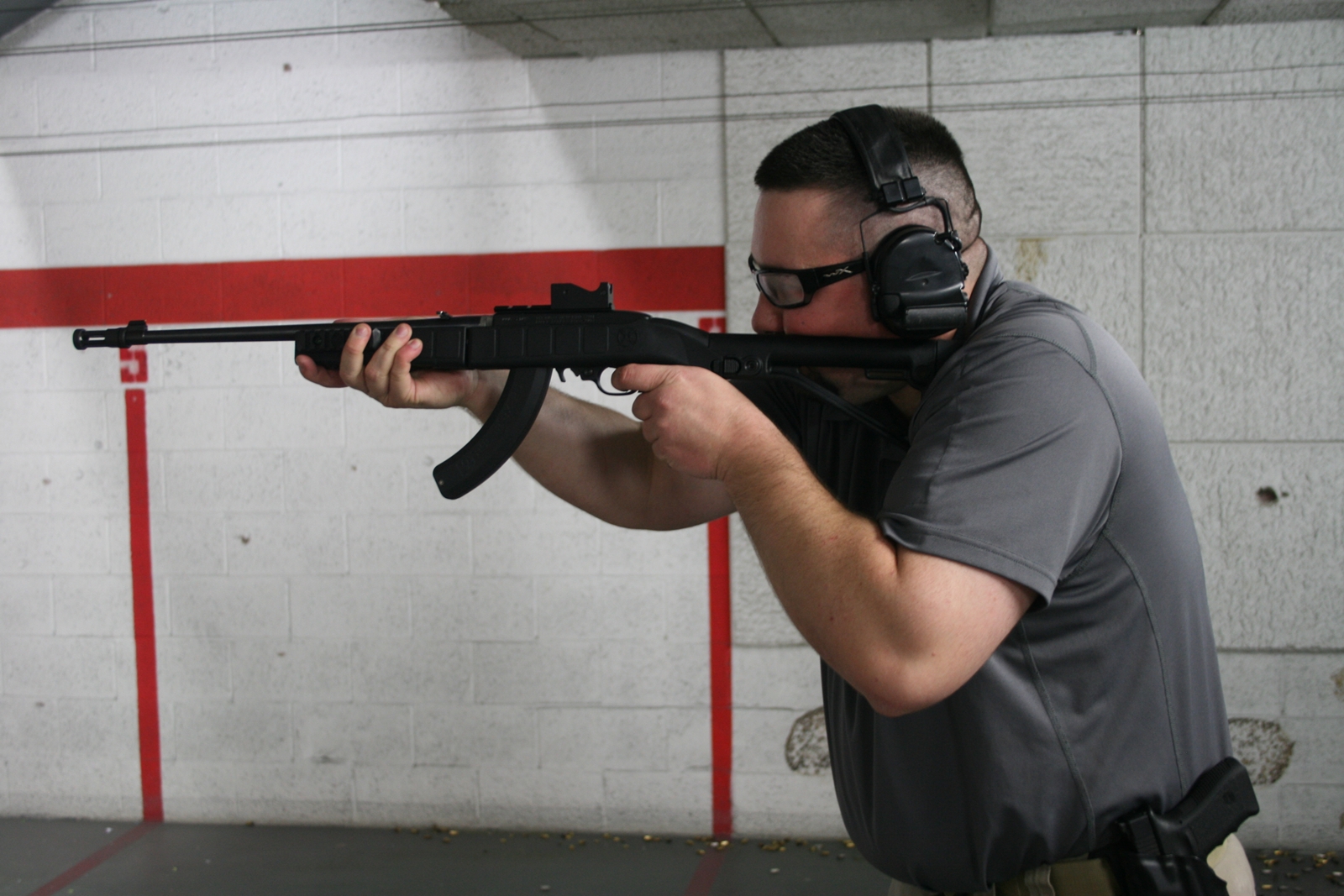
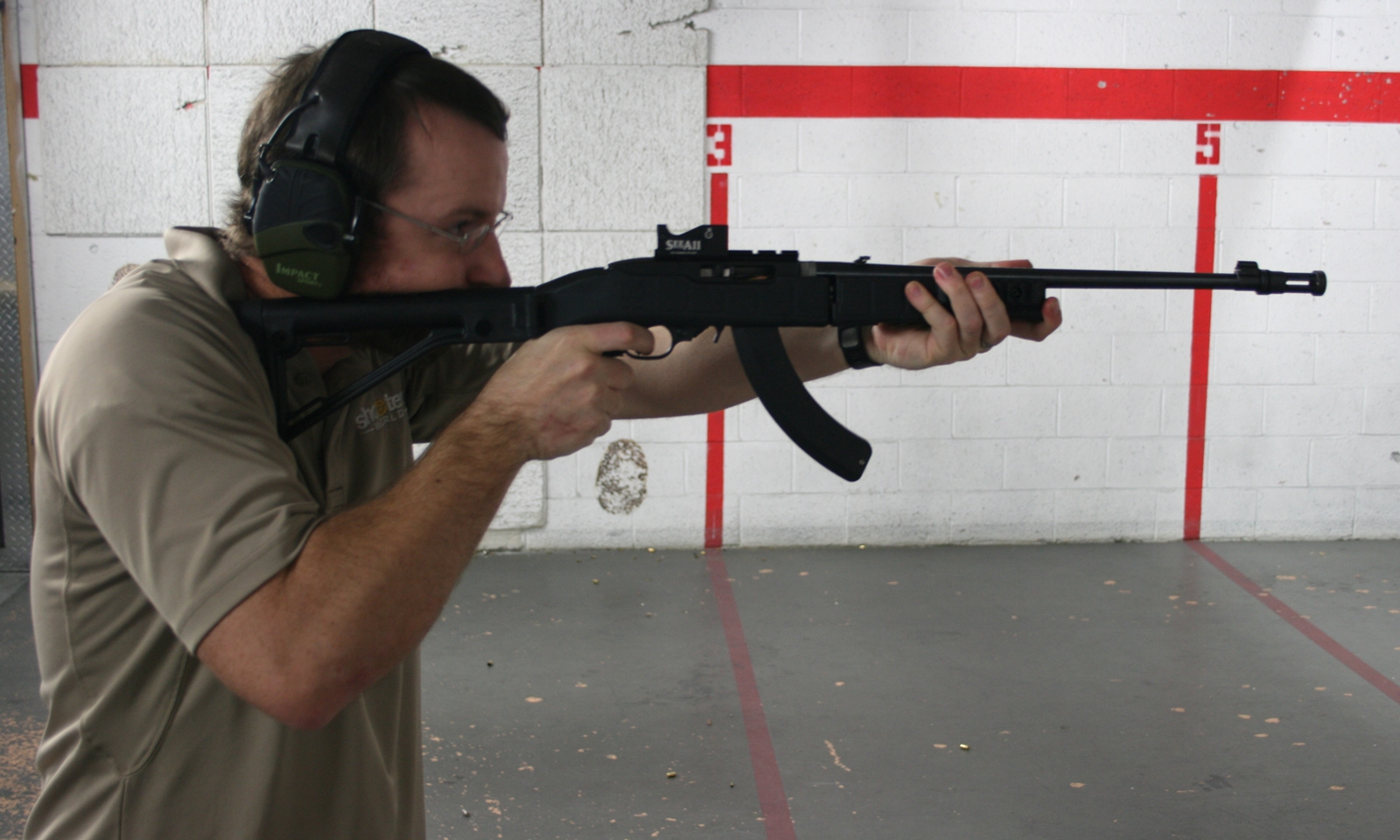
The rifle still fits in the factory case with the AGP Stock and accessories installed. SBREDIT The AGP Arms stock would be particularly useful for a registered Short Barreled Rifle.  I edited this photo to give an idea of how small that could be.  A new case could be made that was more of a square rather than a rectangle like the factory case making it even more compact.  Ruger is releasing a 10/22 Charger take down pistol that could be well suited for this purpose. IMG_8812 Don Langworthy shoots the fully outfitted Ruger 10/22 Tactical Take Down indoors at Shooters World Phoenix.  Note the bolt mid cycle.

How does it shoot?

IMG_8810 The 10/22 Take Down works as well as any other 10/22 I have used.  That is to say the quality of the ammunition used directly impacts performance with regards to accuracy and reliability.  Malfunctions should be expected with cheap bulk pack ammo, and for plinking this is honestly fine.  If the rifle is going to be used in a survival or hunting role, pick correspondingly better ammunition.  I used Winchester high velocity .22lr for most of my testing and experienced no malfunctions with this ammunition.

Conclusion

Comparing the Take Down Tactical (MSRP $429.00) vs the standard Tactical model (MSRP $339.00) the Take Down is a distinctly better value.  The Take Down Tactical comes with the case and iron sights that the standard Tactical model lacks, in addition to being a able to break down into a more compact form.  The difference in features is well worth the extra $90.00 in my opinion. The AGP Arms Stock kit adds versatility and handling characteristics to the rifle and is well made.  With an MSRP of $129 without the accessories and $149.00 it is priced similarly to other total replacement stock systems.  As of this writing it also appears to be the only such stock system available as a replacement for the 10/22 Take Down.

Photography by Whiskey Two Four Studios

Posted in 10/22 | Comments Off on Ruger 10/22 Tactical Take Down with AGP Arms Stock Kit

TAC-SCOPE-3 Gun Divisions Break Down

Continuing from my first post explaining Limited Division 3 Gun, this post on Tac-Scope Division will be more of a history lesson.  The equipment rules for Tac-Scope are otherwise the same as Limited or Tac-Irons with a single magnifying optic being allowed on the rifle in place of the 1x optic or red dot.  Because they are so similar I do not see the need for the same break down of rules.  The evolution of technology within the division may be interesting to people though.

Toshiba Exif JPEG

Author with Tac-Scope Rifle 2003. Optic is TA31F ACOG.

When 3 Gun first started there were only two divisions Iron Sights and Open, or in the case of SOF 3 Gun an approved military style optics list.  As 3 Gun grew and became more popular so did the number of people who wanted to use a scope for long range targets but did not want to use full open division equipment.  Tac-Scope division was created for people wanting to run a single optic on their rifle.  Tac-Scope is currently the most popular division in 3-Gun with 50-75% of any given match participating in the division.

A2

Don Langworthy with Tac-Scope Rifle 2006

In the late 1990s to mid 2000s ACOGS were the most popular optic in Tac-Scope.  Some people used variable power scopes, but there really weren’t many suitable options.  The problem with using an ACOG and in many cases the older variables is that on close range stages they were definitively slower than using iron sights or a dot.  Before red dots were allowed in Limited division they could be used in Tac-Scope, but then shooters had the problem of engaging long range steel.  10-25% of the targets at most matches are long range with the rest being 50 yards or less.  It was a constant technology race to find a solution that covered the diversity of target engagements reasonably well.

Front Scope Cap on ACOG

One solution was putting a scope cap on the front of the ACOG to close  off the magnified view so the shooter would only see black and the fiber optic illumination reticle.  This made using the Bindon Aiming Concept of shooting with both eyes open on close range stages simpler.  The support side eye sees the course and the targets, the dominant eye sees the reticle and it is super imposed in the shooters vision on the target.  This is not ideal, because the shooters peripheral vision is reduced and it does cause some difference in point of aim vs point of impact that can be an issue on smaller targets or targets with less exposure.

Offset Irons

Open Division shooters would compete with magnified optics on top and an offset red dot at 30-45 degrees off center that they would use by rotating the stock in their shoulder.  Tac-Scope equipment rules only mentioned being restricted to a single optic.  Tac-Scope shooters followed the offset red dot concept experimenting with off-set iron sights.  It’s hard to say where this trend started exactly, but one of the first formal solutions was the JP Short Range Tactical sight.

A3

One of my competition rifles from 2004 with Leupold CQT and JP Short Range Tactical Sight.

A4

View down the JP SRTS

These were fairly commonly used in conjunction with ACOGs.  Other shooters mounted Back Up Iron Sights front and rear on 45 degree angle mounts or by rotating railed free float tubes for the rail to be offset.  Now there are purpose built offset iron sights from a number of companies and they are advertised for real world use in addition to competition use.  Outside of match rules; using an offset red dot would be more advantageous in all ways except cost so their popularity outside of Tac-Scope division perplexes me, but I digress.

A5

Even with modern variable power scopes some shooters still use Offset Irons in different circumstances. Jesse Tischauser’s Rifle here features the Dueck Defense sights. Jesse tells me he uses them within 15 yards if his scope is dialed up for something else at range. Note rapid adjustment lever on the scope for changing magnification fast.

Red Dot + Magnifier

A5

Aimpoint released it’s magnifier in 2006 and EOTech and others soon followed suit.  Initially matches were unsure how to handle magnifiers.  Some treated it as a secondary optic putting shooters using them in open, others treated it the same as using a variable power scope.  Eventually the latter viewpoint won out and competitors could use red dots + magnifiers in Tac Scope so long as the magnifier stayed mounted to the gun the entire match.

With the majority of targets at 50 yards or less and significantly less at 100+ yards initially Red Dots + Magnifiers seemed promising; but there were some limitations.  Adding the magnifier introduced potential deviation in point of aim vs point of impact vs without the magnifier.  Red dots often turned into red blobs or appeared fuzzy under magnification, lacking the precision needed on smaller targets at range.  Newer magnifiers with adjustable focus have solved some of these issues.  Magnifiers remain limited in their power vs dedicated variable power scopes.  This is not to say you can’t be relatively successful with one in Tac-Scope (I’ve had some successes using one), you simply won’t see many shooters using them.  If your duty/self defense carbine is equipped with a red dot + magnifier I’d still encourage you to try it at a match.

Variable Power Optics

A6

Author with Tac-Scope Rifle in 2006. Note 40 Round Steel Magazine. The Leupold CQT is a 1-3x optic, which worked fine at the time but is limited by today’s standards. It’s main liabilities are short eye relief and higher than average bore offset.

Optics technology has advanced dramatically in the  past 10 years.  Some people credit this to the Global War on Terror, which is probably true from a funding stand point.  3 Gun is where a lot of the R&D was done in my opinion as shooters were constantly on a quest for a do everything optic to shoot from 0-500 yards reasonably well.  Big advancements came in the form of reticles designed for speed up close but with BDC for .223/5.56mm.  Magnification ranges got closer and closer to a true 1x.  Some designs began to incorporate daylight illuminated reticles so that the scopes could function more like reflex sights on the low end.  Current generation optics have wider ranges of magnification of 1-6x or even 1-8x.  Arguably offset irons are of less utility than they once were unless there isn’t time to dial a scope up or down.  Extended lever or arms to rapidly change magnification are commonly added to variable power scopes.

A7

Paul Shanks with Tac-Scope Rifle 1.5-5x Leupold MKIV with SPR Reticle 2007. Note magazine monopodding.

IMG_5643

Author with Vortex Razor HD II 1-6 JM at Hard as Hell 3 Gun 2014. The long eye relief and daylight illuminated reticle makes it almost as easy to shoot from awkward positions as a red dot.

Modern Tac-Scope Gear

I rarely compete in Tac-Scope anymore, usually opting for Limited or Open.  I asked for some photos of Tac-Scope division equipment from my facebook friends.

A8

Chris Mulberry’s 3 Gun Rig

A9

John McClain’s 3 gun Rig

A10

EJ Redding with his 3 Gun Rifle.

Equipment Trends

You may notice while the makes, models, and details may vary all the guns have similar characteristics.

Rifles will all have a variable scope in the 1-4x to 1-8x range, free float tube, muzzle brake, and match trigger.  Magazines of 40+ rounds are common to avoid reloads or minimize them.  20-30 rounders are still useful from prone positions or in confined spaces.

Shotguns will generally be 21-24″ barelled semi-autos with vent ribs, removable chokes, and 9+ shot capacity.

Pistols will be a double stack 9mm of some kind with base plate extensions and good iron sights.

Brooks

John Brooks with his KE15 10.3″ SBR. Nightforce 1-4 Scope. John Hit targets out to 600 yards with this rifle at the Hard as Hell 3 Gun 2014

Should you shoot in Tac-Scope?

Competition is a lot tighter in Tac-Scope division due to the number of shooters.  There is also less variation of equipment in this division.  What this means is if you want to be truly competitive you are going to have to have the right gear and practice a lot harder.  On the plus side from match to match across the country the rules for Tac-Scope division are the most consistent.  Unless you already have the equipment or most of it to be competitive in this division, it’s probably not the place for most shooters to start.  As I said before Limited is a better place for novices to start.

Posted in 3 Gun Divisions, Competitions, Gear | Comments Off on TAC-SCOPE-3 Gun Divisions Break Down

LIMITED DIVISION-3 Gun Divisions Break Down

One of the most common reasons people tell me they don’t want to compete is “I don’t have the right gear”.  There is a misconception that you must have super tricked out race guns to even show up.  While it is true that equipment can help your score, without the requisite skill set it does not really matter.  Competitors in matches are sperated into divisions based upon the equipment and accessories they use; you are only really competing against people with similar equipment.  Limited, aka Tac-Limited or Tac-Iron, is probably the best place for most people to start in 3-Gun or multi-gun competition.  Chances are if you are reading this you already have the gear that fits in this division.

1

Home Defense/Trunk Gun doing double duty. 14.5″ Barrel with Permanent Flash Hider. Note 45 round magazine and Aimpoint M4S.

As we moved into the 2010s participation in Iron Sight or Tac-Iron divisions steadily declined.  Using iron sights is generally harder and slower than any kind of optic.  Few people used red dots sights in Tac-Scope division because they were seen as a hindrance for long range stages.  The most common setup in Tac-Scope was an ACOG with offset irons, or a low variable power scope.  Outside of competition red dots like Aimpoint and EOtechs were the most common sights people had on their AR15 carbines, and in the military the Aimpoint was a general issue optic as the M68 to many service personnel.  Law Enforcement overhwelmingly uses red dots as well.  With Iron Sight based divisions dying a slow death, the decision was made by many matches to allow 1x or red dot sights on rifles.  In many cases the old Iron Sight division was renamed Limited.  Iron sights could still be used but they would compete heads up against no magnification optics.  So now if you have a home defense or duty rifle with red dot, you have a place to easily participate and be relatively competitive.

If you’re going to use anything other than an AR15 for your rifle, this is also the easiest division to be competitive in.  Throw a red dot on an AK, a Sig, a SCAR, or any other semi auto rifle and how good the iron sights are is now irrelevant.  It is easier to be competitive in this division if you’re not a full time competitor because the equipment rules attract other casual competitors to use the gear they already own.  When I’m testing new guns for reviews, Limited is generally the division I like to do it in.

The downside to Limited division is lack of magnification on long range stages.  You will need to practice shooting out to 300 yards on targets that are 4MOA at range.   Put in the time getting a good zero before the match; for most red dots and bore offset heights 50 yards is a good range to zero at.  Use a BDC calculator to understand where your hits should be at different ranges and then verify by practicing at those distances.  The range I sight in at has steel targets for the public to use at 200 and 300 yards.  This makes confirming point of aim vs point of impact at these distances easier.  If you don’t have access to a range like this you’ll have to figure it out on the clock.  Being able to read your impacts relative to the target is critical to make adjustments on the clock.  Good vision or good corrected vision helps A LOT as well.

Rules

I’m going to use the Superstition Mountain Mystery 3 Gun Match rules in discussing Limited division.  Please understand that these rules vary slightly from match to match.  Always check a particular match’s rules before attending.  SMM3G is perhaps the oldest continually running 3 Gun match so they often set the trend for others to follow.

Ammunition

3.1 Handgun ammunition shall be 9mm Parabellum (9x19mmNATO) or larger, unless otherwise stipulated under equipment division rules.

9mm handguns are generally best for 3-gun due to higher capacity.  It is rare to encounter scoring systems or targets that reward using larger calibers.  Safe-action pistols are also often preferred because grounding them simply means placing them in a dump box rather than having to turn a safety back on, decock, or clear the pistol entirely.

3.2 Rifle ammunition shall be .223 Remington (5.56x45mmNATO) or larger, unless otherwise stipulated under equipment division rules.

.223 is by far the most common cartridge in this division because of its low recoil.

3.3 Shotgun ammunition shall be 20 gauge or larger,unless otherwise stipulated under equipment divisi on rules.

3.3.1 Birdshot must be no larger than #6 birdshot, and be made from lead or bismuth only. Iron/steel/tungsten birdshot is unsafe and prohibited.

Most competitors use 12 gauge.  20 gauge is generally used by female or junior shooters due to it’s lighter recoil, and the shells are easier for them to hold and use with competition reloading techniques.

3.4 Ammunition containing tracer, incendiary, armor piercing, steel jacketed or steel/tungsten/penetrator core projectiles is unsafe and prohibited.

This is where you may run into trouble using 7.62x39mm, you need to make sure that your projectiles do not attract a magnet.

Handguns

2

Longslide models like the Glock 34 are often preferred over normal duty sized handguns for their longer sight radius. This is not to say you need one to compete, you can compete and be fairly effective with compact models down to Glock 19 size. I encourage people to compete with their carry guns. When I competed with a 34, I also carried an identical copy daily.

5.4 Tactical Limited Division

5.4.2 Handgun

5.4.2.1 Handgun holsters must be a practical/tactical carry style and must safely retain the handgun during vigorous movement. Semiautomatic pistol holsters must completely cover the trigger, and must cover the slide up to ½” below the ejection port. Revolver holsters must completely cover the trigger and the cylinder. The belt upon which the handgun holster is attached must be worn at waist level. Shoulder holsters, cross draw holsters and “race” holsters are prohibited.

Your typical carry or duty holster is specifically allowed.  Confirm with match staff that apendix holsters are ok just to be sure if thats what you use.  Holsters with retention like a Safariland ALS can be a benefit at more physical matches so you do not drop your gun.

5.4.2.2 Electronic sights, optical sights, extended sights, compensators, muzzle brakes or barrel porting are prohibited.

3

The Glock 17 on the left would be legal for Limited, the Glock 17 on the right would be legal in Open division.

5.4.2.3 Magazine length may not exceed 170mm in thecase of single column magazines, and may not exceed 140mm in the case ofstaggered column magazines.

+2 to +5 extensions are common on double stack handguns.

Rifles

4

Competition Rifle or Defense Rifle? It could be both. 18″ barrel free floated barrel with FSC556, match trigger, Aimpoint T-1 2MOA, Surefire X300.

5

Dedicated Competition Rifles for Limited Division. Note on the Iron Sight upper the front sight base is as far forward as possible for maximum sight radius. The muzzle brakes are designed for optimal muzzle jump/recoil control without regard for noise level or flash. The optic is a Leupold Prismatic 1X.

6

Sterling White with his Limited Rifle: JP SCR-11 equipped with Leupold Prismatic.

7

Kurt Miller has been competing in multigun for a long time. He still uses Iron Sights in Limited division as a point of pride (and he still places well and wins).

5.4.3 Rifle

5.4.3.1 Not more than one (1) non-magnified electronic or optical sight is permitted. Electronic or optical sights originally designed to be capable of any magnification (whether used or not) are prohibited.

Aimpoints and Eotechs can be competitive in this division.  I prefer using Aimpoints myself.  Top tier competitors often use 1x sights with adjustable focus like the Leupold Prismatic or Vortex Spitfire.  They get a crisper sight picture which helps on long range.

5.4.3.2 Supporting devices (bipods, etc.) are prohibited.

8

Bipods are decreasingly useful at 3 Gun matches due to stage design, there is usually somewhere to support off of. Even in open division we almost never use them. Monopodding on a magazine in your rifle is allowed.

5.4.3.3 Compensators and muzzle brakes may not exceed 1 inch in diameter and 3 inches in length (as measured from the barrel muzzle to the end of the compensator).  Sound suppressors are not considered to be compensators or muzzle brakes.

Most commercially available muzzle devices including the Suarez International Kompressor I currently use meet these dimensional requirements.  You do not need a comp to compete, but they do help most of the time in most match environments.

9

MK17S SCAR-H. Typically .308s are used in Heavy Metal or He-Man divisions, but if you don’t have a .45 pistol you can use them in any other division. It will just be harder to place as well with lower capacity and more recoil.

10

As long as your rifle can shoot 3MOA or better (preferably 2MOA), you can use it successfully in 3 Gun. The smallest targets we shoot are 4MOA at range. I would probably not use an AK at a match that had shooting past 200 yards.

11

The Sig 556R has better accuracy and can keep up with peer level shooters equipped with AR15s.

Shotguns

12

Benelli M2 Field 24″ with 9+1 Capacity (can only start with 9 loaded). 3 Gun Shotguns are something between a hunting shotgun and a tactical shotgun. Chokes are desirable features to make birdshot more effective at knocking over steel.

13

Benelli M2 Tactical. The 7+1 Capacity can be a liability for match purposes as clusters of targets are often presented for the 9 shot division legal capacity, with a smaller magazine tube you will find yourself doing more standing reloads or reloading more proactively. The ghost ring sights are not a liability if you shoot with both eyes open, and they can help on slug targets (maybe 1-5% of shots fired.) If all you have is an 870 or 500/590 by all means come give it a try using what you already own.

5.4.4 Shotgun 5.4.4.1 Only tubular magazines are permitted.

Until magazine fed shotguns are sold at Walmart, mag fed shotguns will be relegated to Open division.

5.4.4.2 Electronic sights and optical sights are prohibited.

Vent ribs with bead sights are often preferred by competitors for speed on close range steel and on flying clays/moving targets.

5.4.4.3 Supporting devices (bipods, etc.) are prohibited.

I’ve never seen anyone use a bipod on a shotgun outside of slug targets  at 125 yards at Ironman many years ago.  This simply is a non-issue.

5.4.4.4 Barrel devices designed/intended to reduce recoil or muzzle movement (e.g. compensators, barrel porting) are prohibited.

Hopefully you didn’t buy a ported 870 or 590 with a breacher brake, if so welcome to Open division.

5.4.4.5 Speed loading devices and/or detachable box magazines are prohibited.

Tech-loaders or other speed tubes are legal in Open only

5.4.4.6 Not more than nine (9) rounds total may be loaded at the start signal, unless otherwise stipulated in the stage briefing.

It is common for people to have 10-12 shot tubes that they fill up all the way after the buzzer goes off.  Some matches limit capacity to 9 rounds period.  Check the specific match rules before going.

14

If you don’t own a shotgun at all consider one of the out of the box ready to go shotguns for 3 Gun like the Beretta 1301 competition.

15

Mossberg 930 JM 21″ Model 8+1 Capacity.

The one match specific piece of equipment you may actually need is some form of shell caddy system.  I’m still using the California Comp Works style shell caddies (mounted to a vest) because I feel they are more practical and durable.  Other more competition specific systems like Load-2, Load-4, or Twins, are no doubt faster but require more practice and more fine motor control to use correctly.

16

Sterling’s 3-Gun Rig. Safariland ELS Belt with Taccom Dueling Dueces shell carriers. He also has California Comp Works caddies at the rear.

Sterling has used a wider variety of shell carriers than I have since I also often compete in Open or Trooper  with mag fed shotguns.  I asked him his opinion on shell caddy systems:

“There are a number of manufacturers who make dual and quad load shotgun shell caddies as well as the standard 4 or 6 round stacked caddies. Test out a variety of different shell caddies before investing a lot money. Once you settle on one or several types then practice loading. A common goal for beginners is to load 4 rounds into the shotgun in or around 4 seconds. As your skill sets improve so will your times.”

Again you don’t need all this gear to get started.  Come out with what you have to a club level event and start learning by participating.  You will know when equipment is holding you back and it is time to upgrade.  Or you may decide to just uses matches as a practice venue for your martial shooting skills and stick with your self-defense/duty gear.

Thanks to Sterling White for getting me pictures of his dedicated competition rigs for this write up and sharing his experience with me as a top-tier Limited division competitor.

Posted in 3 Gun Divisions, Competitions, Gear, Industry Insiders | Comments Off on LIMITED DIVISION-3 Gun Divisions Break Down

RMR Equipped Glock: Solving Shooting Problems

RMRGlock

One of the best things about competition is using it to validate equipment you are using.  Did it help or hinder your performance?  Being forced to solve a variety of shooting problems that you might not want to practice on your own helps in validating how well your equipment actually works.  Having just shot the Hard as Hell 3 Gun 2014, It made for a good opportunity to discuss how using an RMR Equipped Glock helps solving these problems.

Heads Up Display: Using the RMR equipped glock frees up the shooters field of vision and allows for easily shooting with both eyes open.  The slide and iron sights do not occlude the shooters field of view.  There are two identifiable benefits to this

1) Tracking moving targets: with both eyes open, a clear field of view, and a single aiming point it is easier to follow targets through their movement path and send the shot.

2) Calling missed shots: My shooting isn’t perfect and you’ll see me miss in the videos below.  However, when I do miss it is generally easier to see where the miss was and correct accordingly.

Reading the Dot

The bounce in the dot allows me to see when I am actually stable enough to make certain hits vs not stable enough.  Getting used to reading the dot and watching for that 1/10th of a second pause to send the shot allows for more consistent hits on smaller or farther targets.  More accurate shooters aren’t necessarily more stable, they simply have a better understanding of the timing of when they should fire a shot when it is least effected by respiratory and cardiac function.

If you have a RMR equipped Glock you can do this exercise without any shooting simply hold it at arms length and get used to the cognitive process of watching the dot to stop moving, for most people this will be a 1/10th or 1/20th of a second pause.  When that pause occurs is when you want to pull the trigger.  Keep in mind that human reaction time takes you 0.20-0.25 seconds to pull the trigger from when you decide to do it.  So pulling the trigger must be timed in sync with that 1/10th of a second pause.  This is a difficult mental process to teach people, you must be able to self identify your own natual pause and time your shot with it.

Shooting Targets at Distance.

There was a lot of 35-50 yard pistol targets at Hard as Hell.  With a 10 yard zero on my RM01, hitting them was pretty much a point of aim, point of impact event.  It’s not to say these shots can’t be made with Iron sights, but they require a higher threshold of skill to do so consistently.  I watched shooters of similar skill level struggle with more rounds sent down range to hit this targets than it took me.  I know for myself, it would have taken me more rounds with my iron sight equipped Glock.

One Handed Shooting

There were a number of stages that required one handed shooting by design or because it was the best way to shoot around props and obstacles.  The ability to read the dot makes one handed shooting accurately a more natural process.  Shooting one handed it is also natural to cant the gun with the arm extended, this can cause misallignment of iron sights.  With the dot, this is not a concern.

Match Video

Here’s all the portions of the Hard as Hell 3 Gun 2014 where I used my RMR Glock.  Please understand that you’re only seeing 1/3 of the match in this video.  And if you’re wondering why I’m missing more or breathing hard, I may have just run through an obstacle course.  Over all, solving all the shooting problems encountered was easier for me using my RMR Glock for the reasons explained above.

Posted in Competitions, Red Dot Glock | Comments Off on RMR Equipped Glock: Solving Shooting Problems

Inside My 3 Gun Range Pack

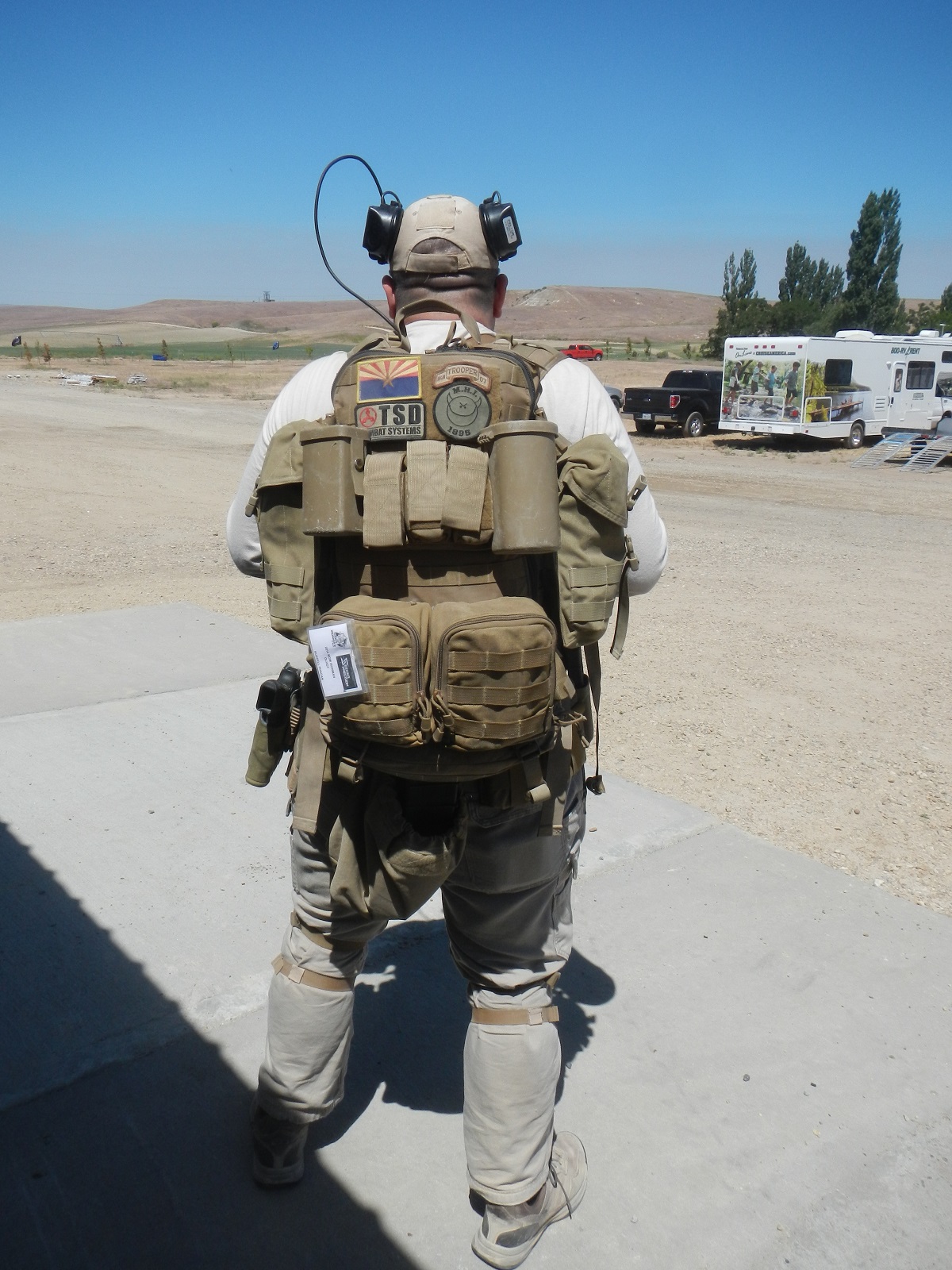
I’ve never been a fan of using carts or converted strollers to carry my ammo and gear around the range at 3 Gun Matches.  Using a pack and a double long gun case works at any range regardless of terrain and stores in a vehicle much easier.  Conversely traditional range bags are often too heavy when fully loaded down to carry comfortably with a single shoulder strap.  A good backpack makes carrying everything stage to stage much easier.

JACS-2

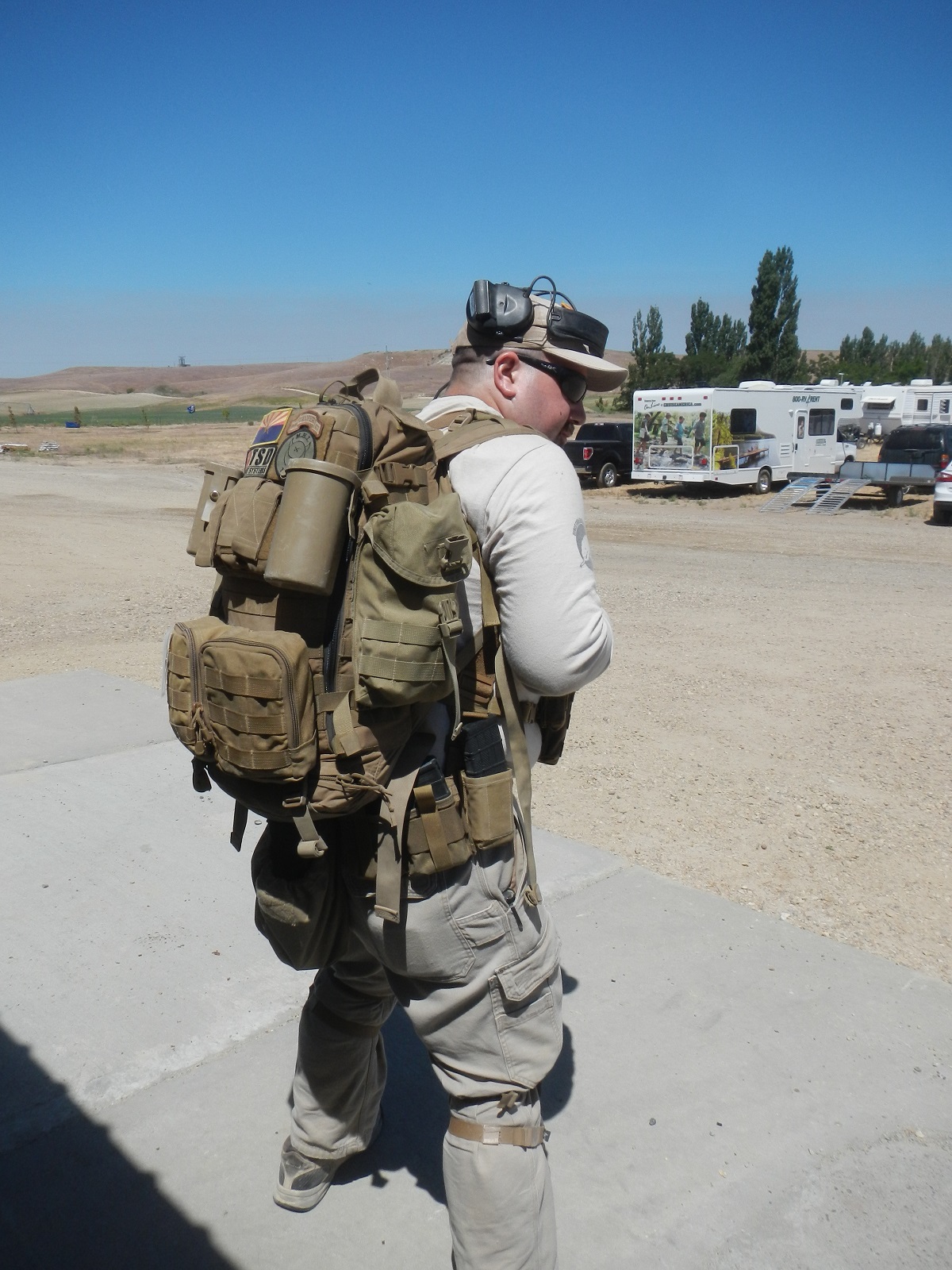
One of my sponsors, Honor Point USA, makes the Joint Assault Combat System Pack I currently use.

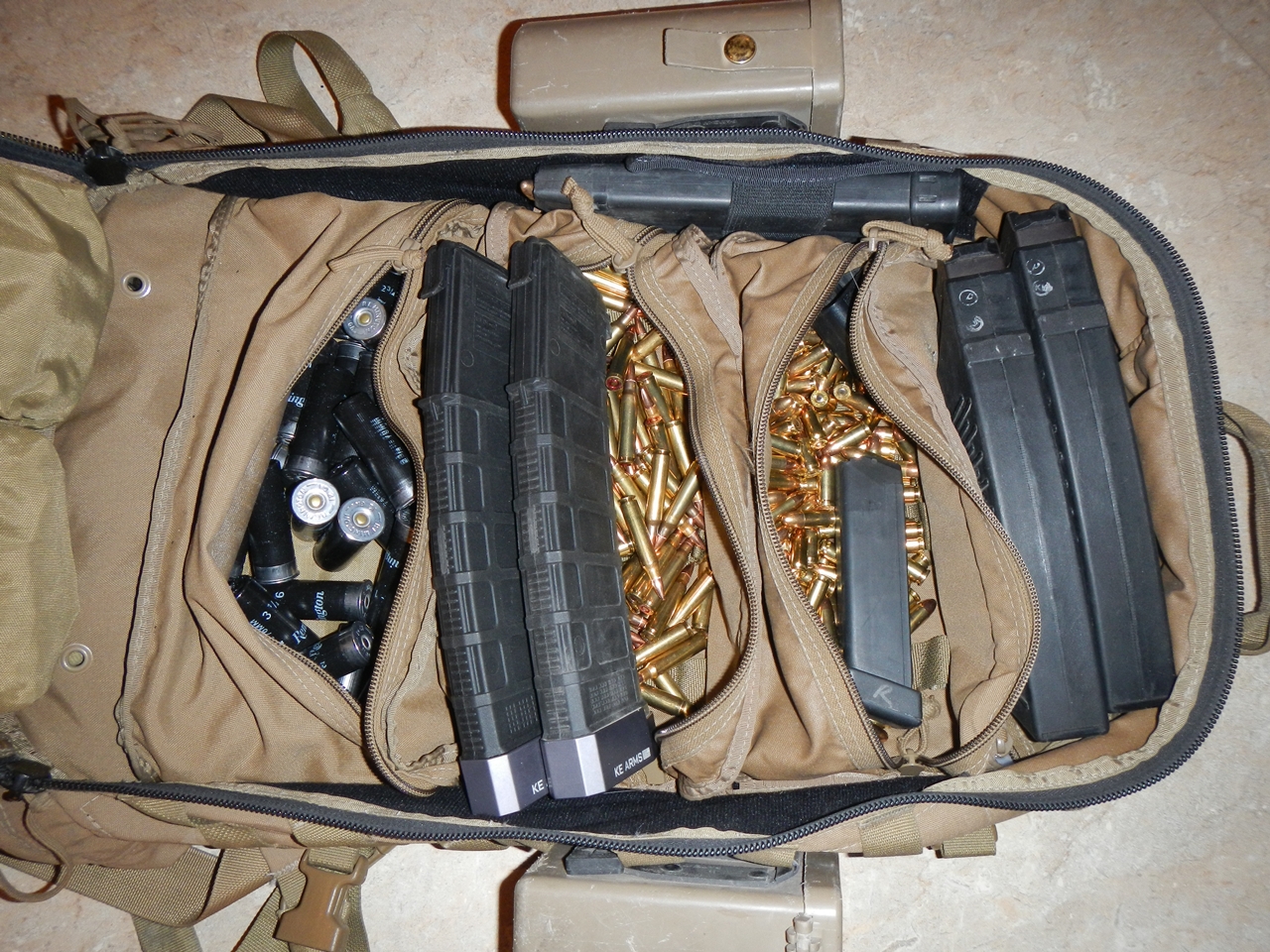
1My JACS as currently configured.  The external VIP Trauma Kit pouch is also made by Honor Point.  Inside it I have Israeli trauma bandages, Celox, and a CAV-MFG tourniquet.  I also have bandaids and disinfectant wipes to deal with common minor injuries that can occur during stages (mostly cuts to hands or scrapes).

7
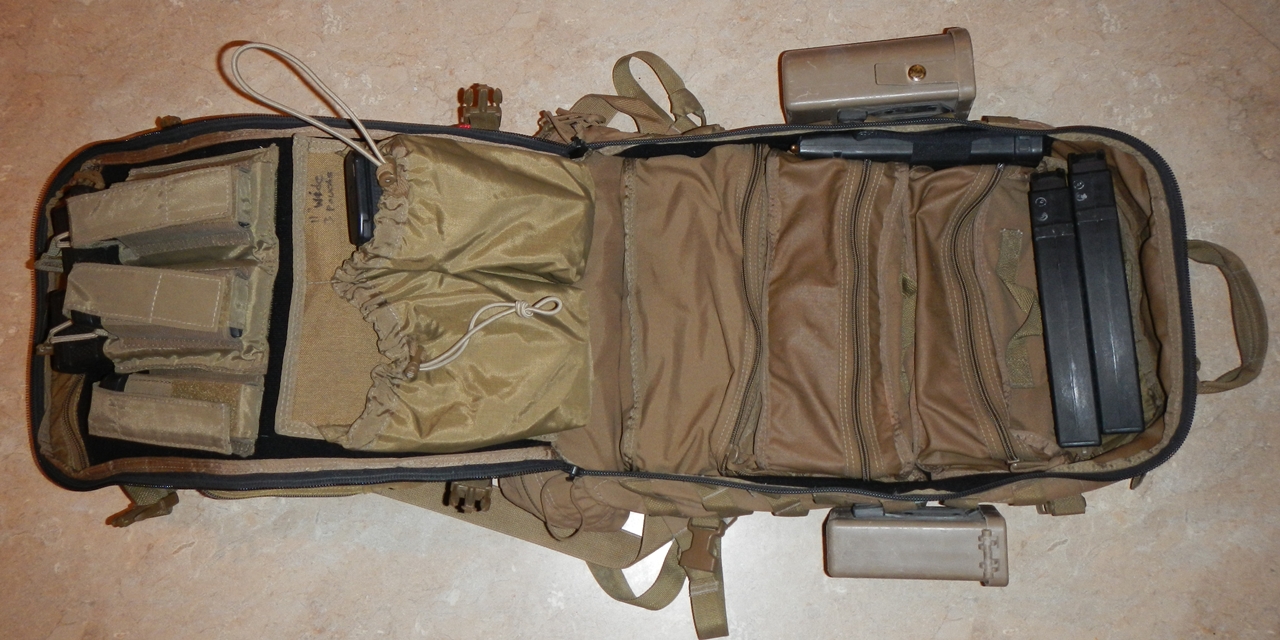
One of the things I really like about the JACS is that it lays open flat.  I don’t have to unload the whole thing to get at what I need.

8The inside of the JACS is lined with velcro that pouches can attach to.  Conveniently three removable bags fit one one side.  I use them for pistol ammo/mags, rifle ammo/mags, and bird shotshells.  How much ammo I load up with depends on the match I’m going to.  You can see that the JACS is wide enough to lay 40 round PMAGs with KE Arms extensions side ways.  These bags can also be flipped inside out and attached to MOLLE webbing with the straps that are sewn on.  On one side I also have a Maxpedition pistol mag pouch for my Glock 30 rounders.

9
On the front face of the pack folded open I have Honor Point’s Rifle/Pistol mag combo pouches and a single pistol mag pouch.  The bag style pouches with elastic cords I use for shotgun slugs and a coupled 30 round AR mags.

6
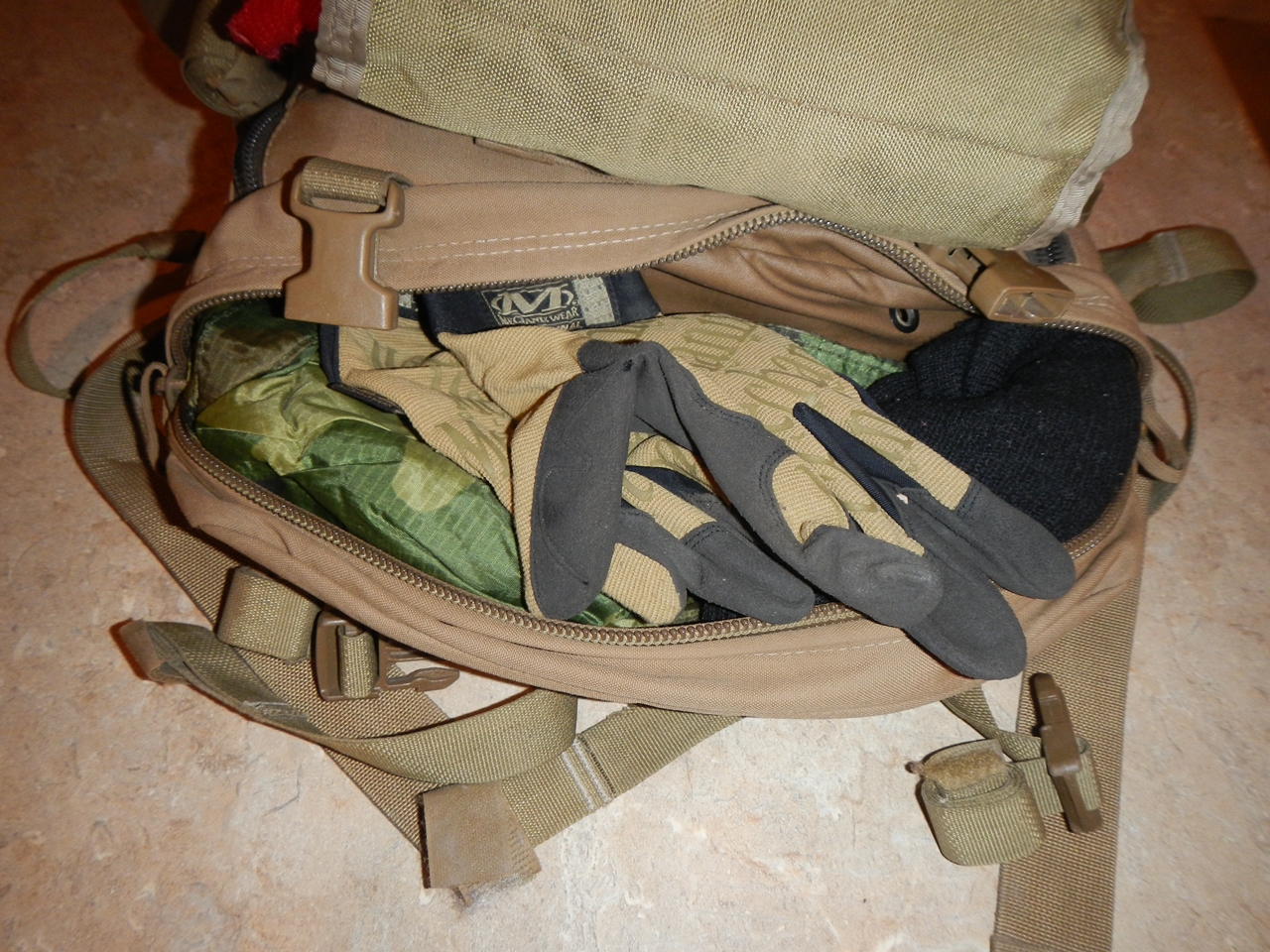
Gloves, Pancho, and knit cap in the bottom of the JACS just in case to deal with unexpected environmental conditions.

2 3
Hard cases by Tactical Tailor.  Left larger case is for my Wiley X Glasses (I have clear and tinted models).  Right smaller case is for my digital camera.

4
Spec Ops Brand Organizer Pouch.  This one I use for tools, spare parts, batteries, and lens care items.
Tools: Punch set and hammer, Leatherman multi-tool, allen key multi tool, eye glass repair kit.
Batteries: AA, CR2032, and CR123
Spare Parts: Glock Recoil Spring, AR15 fire control set, AR15 Bolt Group

5
Spec Ops Brand Organizer Pouch for cleaning supplies.
AR15 cleaning rods and brushes
Glock cleaning rod and brush
.223 and 9mm bore snakes
CLP and cleaning rag
Magazine cleaning Brushes for rifle and pistol mags

JACS-1 JACS-3
The JACS loaded down at Ironman 3 Gun 2014.

This may seem like a lot of stuff to carry around the range, but it should handle any issue I’m likely to encounter at a major event.

Posted in Competitions, Gear, Ironman 3 Gun | Comments Off on Inside My 3 Gun Range Pack

Airsoft as a Competition Training Tool

My uncle is a retired police firearms instructor.  In his retirement he got into shooting airsoft and air guns at his home to keep his marksmanship skills sharp.  It was cheaper and easier than going to the range for him most of the time.  I was skeptical at first of how well airsoft could replicate shooting real guns.  Last summer he invited me to attend an indoor airsoft 3 gun match hosted by Shoot Right American Jr. & Adult Air Gun Shooting Club.  The event convinced me that airsoft is a useful training tool for novices and juniors.

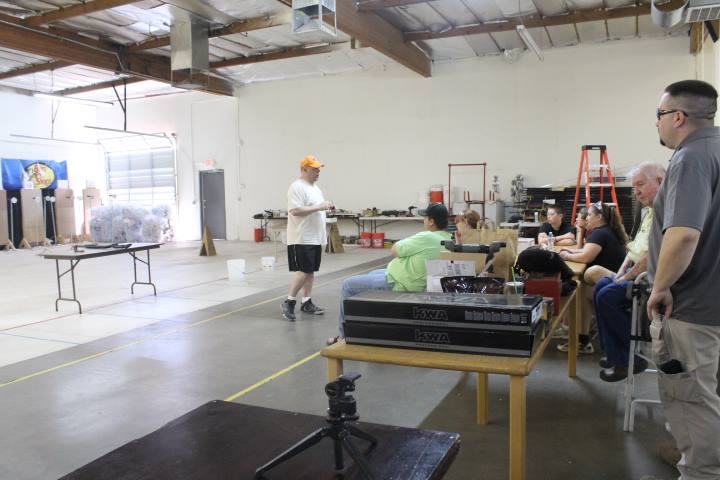
1924353_739538722758682_8903312143193112267_nWhen I attended the event there were a lot of junior shooters attending with their parents.   Watching both the juniors and adults handle the airsoft guns it became apparent that most would benefit from some instruction on firearms fundamentals including grip, stance, sight alignment, and trigger control.  Talking to the event organizer, Rob Potter, we turned the match into a clinic to work on the skills  required to compete successfully

10385570_827105074002046_5155819293199997640_n
My uncle, John Kennedy, runs an airsoft specific shot clock while I work the plates with an Airsoft 1911.

Cost Savings

10360470_739548136091074_6661235125115137251_nIf we want the shooting sports and gun ownership to continue in the future, getting youth involved and excited about shooting is critical.  .22lr ammo remains in short supply, the  cost of ammunition over all is greater and the industry is continually racked with various shortages.  Getting today’s generation into shooting sports simply isn’t as economical as it was for the previous generation.  Action shooting sports are on the higher end cost wise.  Airsoft is the answer for cost savings so juniors don’t have to learn the basics at $0.25-0.50 a shot.  Working with the juniors at Shoot Right, it was easy to give corrective action and let them try again.  Number of airsoft BBs or CO2 consumed was never really a concern.

No Ear Protection Required

10553387_739543522758202_3106679470727643449_nWithout ear protection communicating with students is a lot easier.  Unless people have electronic hearing protection in large groups having everyone hear and understand the instructor can be challenging.  Novices rarely have electronic hearing protection.  Using airsoft immediately allows for more effective instruction in this regard.  Muzzle report firing live ammunition also causes a flinch response in most novices.  Without the noise and blast it’s easier to get fundamentals right before going to live fire.

Reduced Risk

10882159_827106004001953_5392262985805334833_nAirsoft guns can hurt people, and eye protection is required at all times.  However, the chances of fatal or life threatening injury occurring from airsoft are minimal.  Action shooting sports require learning how to move safely with firearms and getting into and out of shooting positions safely without breaking the 180 or sweeping ones self.  For novices, airsoft is a great training aid in these areas.  I would rather watch a novice exercise these skills and take corrective action with an airsoft gun first, than doing this initial training with real firearms.

10414558_739549616090926_3878232166523673975_n
My uncle built this Man vs Man Steel Challenge Plate Rack for Airsoft.

10411852_739551056090782_8731231223041076406_n
At the end of the clinic we held a man vs man elimination shoot off.  The juniors really enjoyed shooting against their parents.  To keep things fair I had the top two shooters shoot off against me at the same time.

10346055_739552839423937_7048828417393314625_n
Rifle vs Rifle Shoot Off

Limitations

10850280_827105647335322_7877664670481151021_nUsing airsoft is not without it’s limitations and it is not a substitute for live fire.  Accuracy was good enough within 10 yards, past that it seemed the flight path of the airsoft BBs were unpredictable.  Malfunctions with airsoft guns are not cleared the same way as real firearms, care must be taken to emphasize these skills when transitioning to real firearms.  Similarly unloading airsoft guns is not exactly the same either; racking the action doesn’t necessarily get the BBs out of the barrel.  Magazines can’t be dropped because they are too fragile. The pistols were the closest to using real firearms with their reciprocating slides and blowback action.  The airsoft rifles were OK, but the point of aim vs point of impact was not exactly the same as a similarly zeroed real rifle.  The CO2 powered rifles performed the best.  Electronic Airsoft rifles have a noticeable delay between pulling the trigger and firing as the motor spins up.  The airsoft shotgun we had at this event did not really work that well and was hard for the juniors to operate.  Rob told me he has since gotten a better airsoft shotgun that is more reliable and eaiser to operate.  Still I don’t think firing 3 pellets at once realistically replicates using a real shotgun, and the way these guns load is nothing like working a real tube fed shotgun.  If I was teaching an intro class with airsoft I would make it a rifle/pistol class.

Junior Shooter Camp Concept

If I were to run a junior shooter camp for youths that had no practical firearms experience, I believe doing the first 3 days of a 5 day camp as airsoft only would be most beneficial from a cost/benefit perspective for the reasons listed above.  After the students had the fundamentals down by day 4, I would then transition to using real firearms that were the same basic models as the airsoft guns used.  Interested in the concept?  Leave a comment below.

Shoot Right has a number of events planned this year.  Like their Facebook page to keep up to date on what they have going on.

Posted in Competitions, Training | Comments Off on Airsoft as a Competition Training Tool

Berry’s Steel Open-LIMITED OPTICS and PCC Divisions

High Round Count, All Steel

I haven’t shot a pistol only match in a long time, but the Berry’s Steel Open sounds fun and challenging.  There will be 14 stages of 35+ rounds, 4 Steel challenge stages at 20 rounds. Basically bring a case of pistol ammo at least.  All steel means simple scoring and faster reset times on the stages.  Generally steel matches are fast paced, and a lot of fun.  I plan on attending.

canvas

The match is not sanctioned by USPSA, but it is run under similar rules.  I spoke with Match Director, Ken Nelson, about having a division for pistols with slide mounted optics to compete in.  Normally we would have to compete in open division with our RMR equipped Glocks.  Few people with slide mounted optics have them set up as full open division guns.  Ken agreed to run a provisional division, Limited Optics for slide mounted red dots.

Limited Optics Division

6a0133ec985af6970b01b7c72cbc6e970b

Minimum power factor for Minor: 125
Minimum cartridge dimensions; 9×19 mm (0.354” x 0.748”)
Minimum trigger pull: No
Maximum handgun size: No
Maximum magazine length: 5.561” (141.25mm) or 6.742” (171.25mm) in single stack guns
Maximum ammunition capacity: No
Maximum distance of handgun and mags/speed loaders from inner side of belt Handgun and Mags: 2”
Rule 5.2.3.1 applies*: Yes
Restriction on position of holster and other equipment: No
Optical/electronic sights permitted: Slide Mounted Red Dots with or without co-witnessing Iron Sights
Installed flashlights permitted: No
Compensators permitted: No
Barrel ports permitted: No
Slide ports permitted: Yes
Maximum weight: No
Handgun specifically approved for Division: N/A
Holster restrictions: No

*5.2.3
Unless specified in the written stage briefing, the belt carrying the holster and allied equipment must be worn during the course of fire; the belt must be worn at the waist level, which is deemed to be at the same level as the original belt loops on the lower garment. (See 5.2.3.1 for exceptions.) The belt or the inner belt or both must be either securely fixed at the waist, or secured with a minimum of three belt loops. The belt may be removed between courses of fire
5.2.3.1 Lady competitors are permitted to wear a belt, holster and allied equipment at hip level, however, the top of the belt must not be positioned below the furthest lateral point of the top of the femur (tuberosity major).

1

Pistol Caliber Carbine Division

photo 5

Ken has also added pistol caliber carbine division to the match.  Any PCC in 5.7×28 through .45ACP is allowed with Iron Sights or an unmagnified optic.

Competitors can shoot the match twice on the same squad so shooting the  match once with pistol and once with PCC is an option if you want to  pay two entry fees.

Match Details

From the Match Facebook Page:

Match starts: April 11, 2015 @ 9:00 AM · Match ends: April 12, 2015 @ 5:00 PM
Location: St. George, UT
18 stage all steel match combining action steel, par-time (also known as pro-am) steel, and steel challenge into one match. It’s the funnest match of the year, held at a great facility and great time of the year.

This year we will reduce the number of Steel Challenge stages to 4, and instead add in 2 of the super fun par-time steel stages.

Prize table is order of finish for top 20 across all divisions, and random after that.
General match, with the following divisions:
Production, Limited, Open, Single Stack, L10, Limited Optics

Cost to registed is $100.  Register online here

Posted in Competitions, Red Dot Glock | Comments Off on Berry’s Steel Open-LIMITED OPTICS and PCC Divisions

.300 Blackout in .223 KaBoom

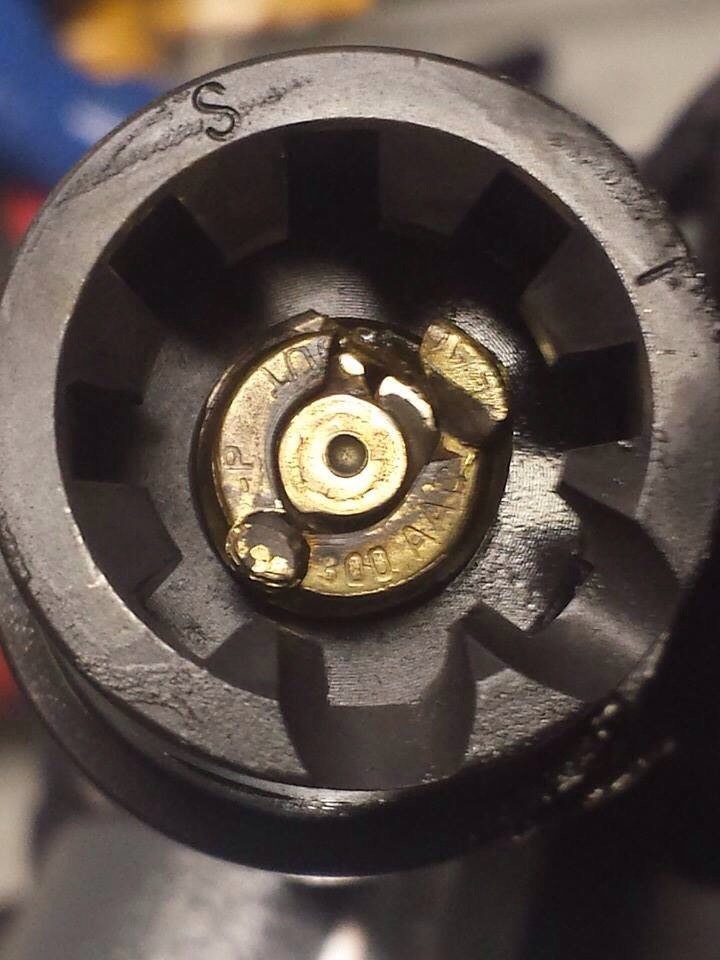
.300 Blackout has gained a lot of attention since it made it’s debut in 2011. There have been caliber conversions for ARs for decades, but they generally required a new bolt and magazine in addition to a barrel. What made .300 Blackout so appealing is it is just a new barrel and the bolt and magazines remain the same as .223/5.56mm guns. While this is logistically much easier for shooters, it can also be a contributing factor to catastrophic failures

I’ve heard of people accidentally clambering .300 Blackout in .223 chambers before and seen the photos. It’s often as simple as someone picking a round up off the range between drills and not recognizing it as .300 then mixing it into a mag with .223. With a bolt action it would be pretty hard to chamber .300 Blackout into a .223 barrel. In a semiauto, with the bolt slamming forward the projectile can be pushed back into the casing allowing the bolt to close.

This week it happened to one of my friends, John Brooks. Here’s his post from Facebook.

20150102-212058-76858613.jpg

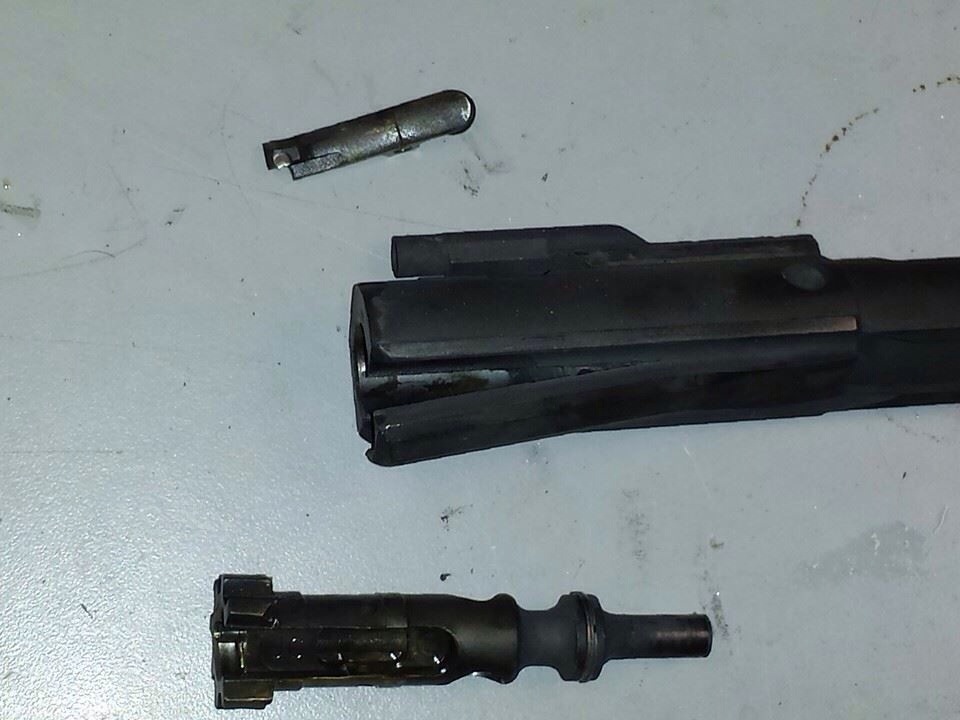
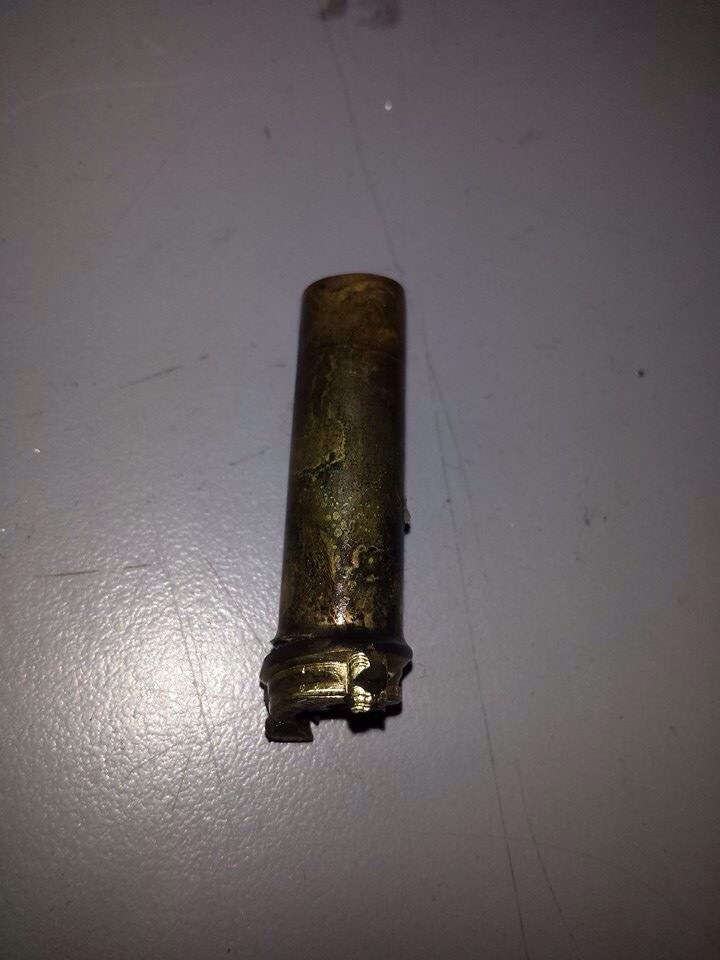
“IF YOU ARE A SHOOTER, A RELOADER OR KNOW ONE, I NEED YOU TO READ THIS PLEASE. On December 31st, 2014, there was a very real opportunity for me to either be killed or very seriously injured. We had been shooting all day testing out some of our new 308s. While we were finishing up our brass call and cleanup, I realized I brought one of our suppressed 10.5” 5.56mm machineguns to test fire. I had already packed up all our ammo, so I borrowed a mag from another shooter that was “clearly” full of 5.56.

Since it was suppressed and we were already done for the day and packed up, I got lazy and decided to not pull my eyepro and earpro back out from their cases. So I fired a few rounds in semi, everything seemed good, so I switched to auto. Braaap, braaap, braaaBOOOM! Catastrophic detonation.

20150102-212058-76858768.jpg

I was deaf, disoriented and in a semi state of shock. If any of you have been hit by a flashbang you know exactly what I am talking about. I quickly checked myself for new holes and made sure both eyes still worked. My right ear had shut off and the ringer was off the hook. Unbeknownst to me, there was a 300 BLK round hidden in the mag. It most certainly chambered fully, and the crazy thing is the barrel was clear and there were no baffle strikes on the can. So a 30 caliber bullet squeezed itself down to .22 and made a 10.5″ high pressure journey and exited and made it all the way through a YHM can. This most likely saved my life. If the barrel was any longer, I’m sure it would have found a new place to deposit gas; most likely right into my idiot face.

The upper receiver bulged out, the carrier split longways and the remaining contents of the magazine were launched out at my feet at Mach 2. I walked away from this (somewhat) unscathed. I was very very lucky because this could have gone a lot worse.

What I took away is this: Always, ALWAYS wear your eye and ear pro, no matter what you are shooting. You never know when it might save your eyes and hearing. If you are going to borrow ammo or reload your own, observe all safety precautions and verify all the rounds going into your gun! I have been shooting a long time, with probably millions of rounds downrange, but I am obviously not immune to my own stupidity. Complacency kills. Stay Frosty out there and Happy New Year.”

20150102-212058-76858910.jpg

If you own both .223 and .300 blackout rifles take care not to mix up mags or ammo. It would make sense to not have both calibers on the range at the same time.

Posted in Gear, Industry Insiders | Comments Off on .300 Blackout in .223 KaBoom

Internet Rumor Control: Epic KaBoom!

Hell, I was there…

They say anything that goes on the net will never go away. This is definitely true, In the past week an image of a rifle that suffered a catastrophic failure has gone viral. Again. Unfortunately when photos get shared the original story is lost and there is no context to what the viewer sees. A lot of internet experts have posited various reasons why it failed, most of them completely false. Perhaps the most absurd is that it was caused by firing .300 blackout out of a .223. At the time this occurred in December of 2010, .300 Blackout wasn’t commercially available. In an effort to set the record straight, here’s what occurred

IMG00129-20101226-1008

Background

Paul Shanks was part of our shooting team at Cavalry Arms Corporation (since closed, GWACS Armory now produces the CAV-15 MKII and offers service and support on Cavalry Arms manufactured units). He built a lightweight rifle on a CAV-15 MKII polymer receiver with these components:
Timney Trigger
9mm upper with gas tube hole drilled out (no forward assist or brass deflector making it the lightest he could get at the time.)
Young M16 carrier
Compass lake 18″ rifle gas SPR barrel, 1:8 twist 223wylde chamber.
Miculek brake
Clark Custom Carbon Fiber Free Float Tube.

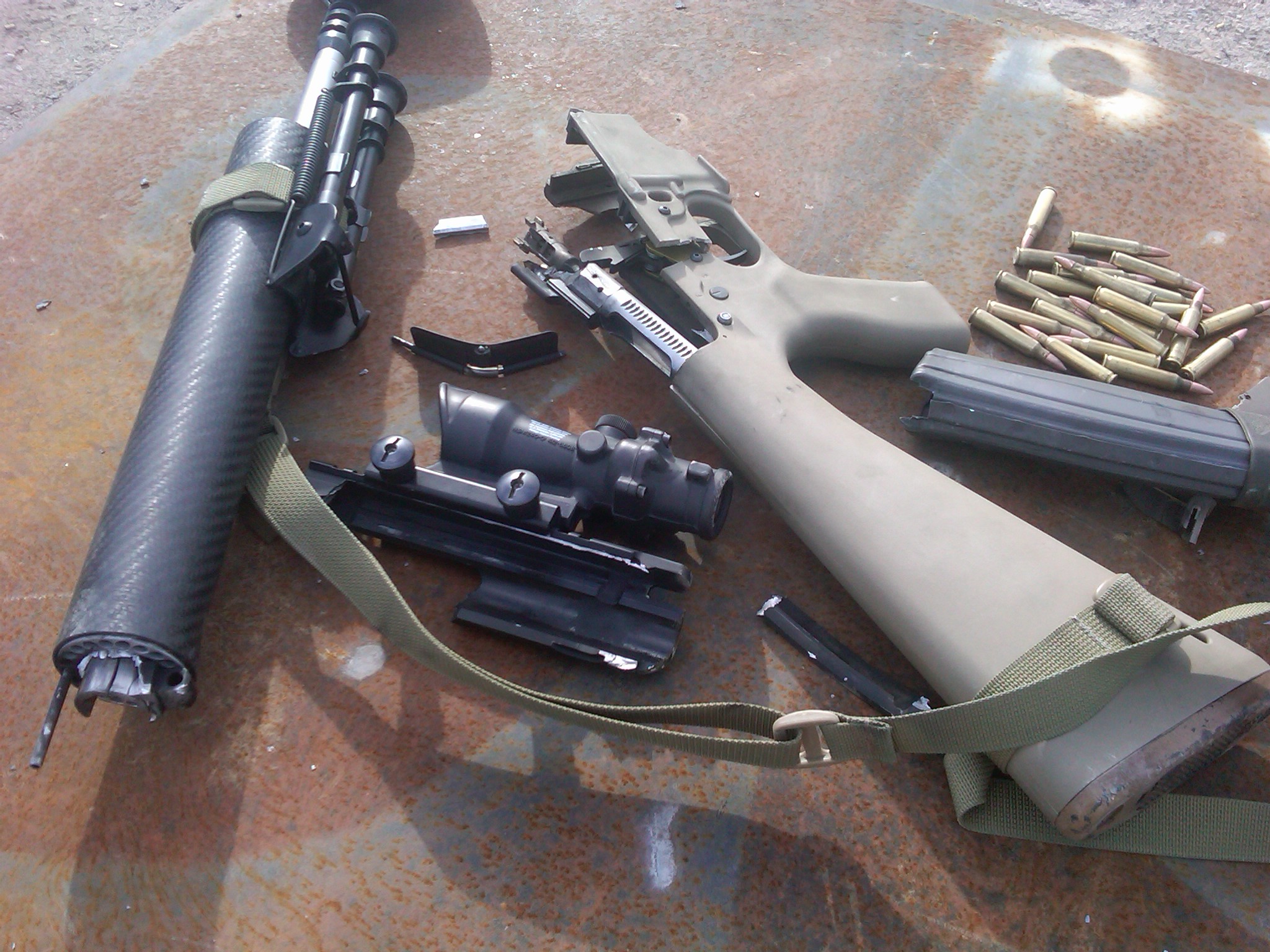
He had used this rifle for some time at local and national level matches. The failure occurred at the December 2010 Phoenix Rod and Gun 3 Gun Match. On the close range rifle stage Paul fired 3 rounds and on the 4th round the failure occurred (interestingly we did find all 4 holes in the paper targets).  Karl Kasarda, who was running the timer, saw Paul’s hat fly off and at first thought it was muzzle blast from his brake that caused it. I was conversing with other shooters when heard an extra loud muzzle report and turned in time to see the rifle fall out of Paul’s hand in pieces.

Paul was visibly shaken. We checked him for injuries and fortunately there was nothing major. He had some small scratches on his face and a fragment from the barrel extension in his inner forearm. He was wearing Oakley Half-Jacket glasses and while there was no visible impact on the glasses, Paul now uses glasses with more coverage for shooting.

The Damage

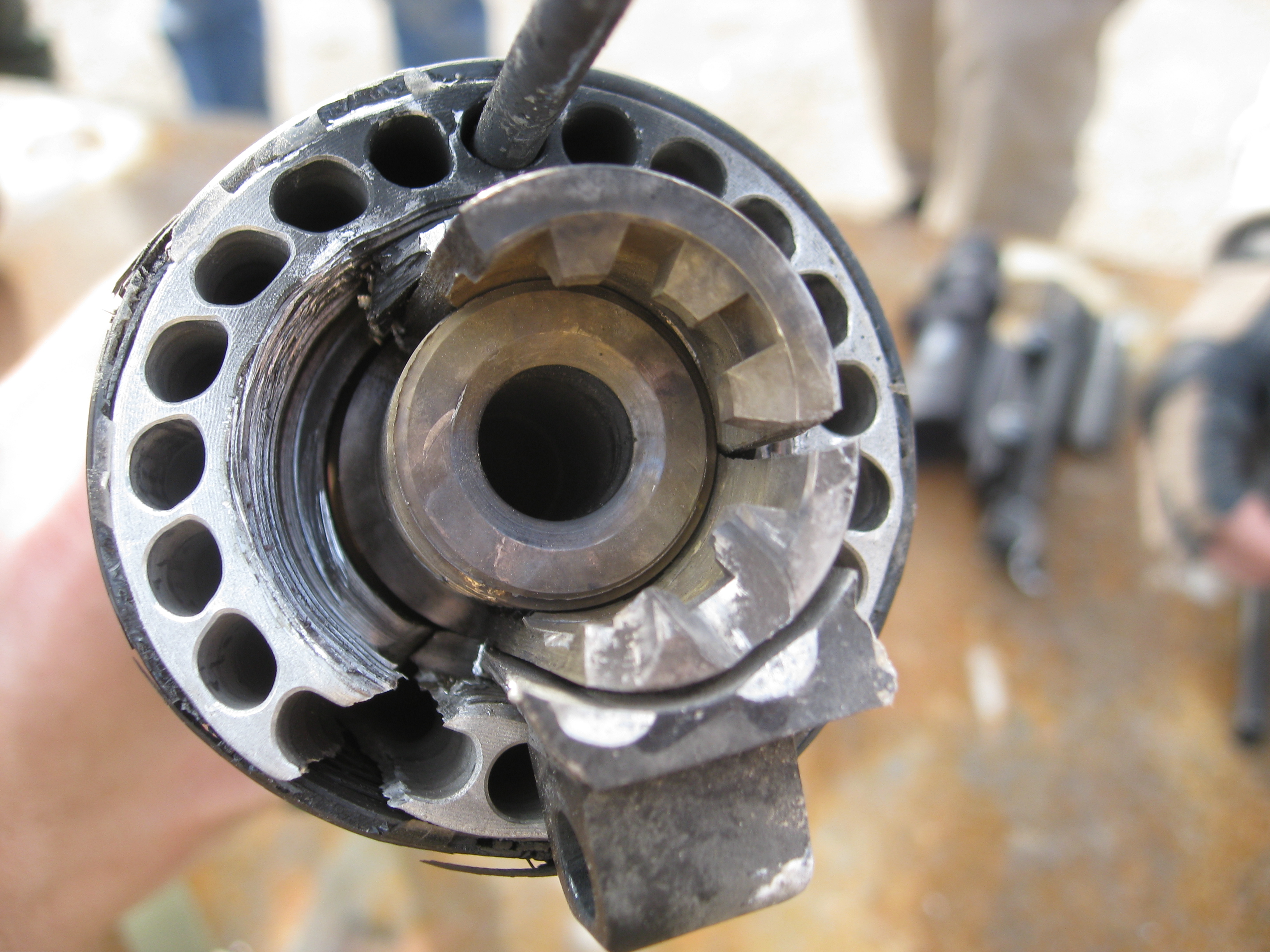
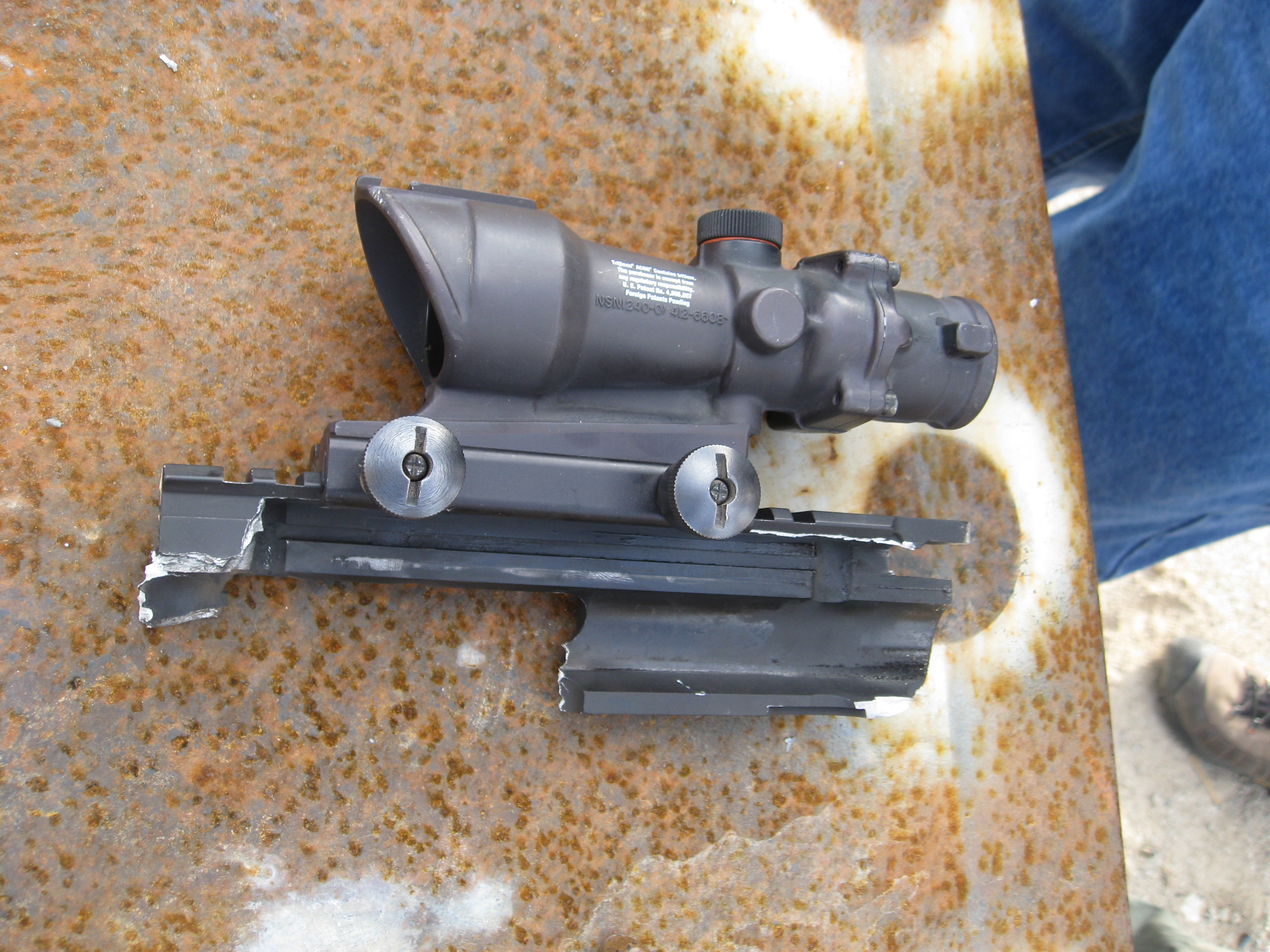
IMG_1657Cracked barrel extension.  The threaded area of the upper receiver and front lug separated from the upper.

IMG_1662

IMG_1661
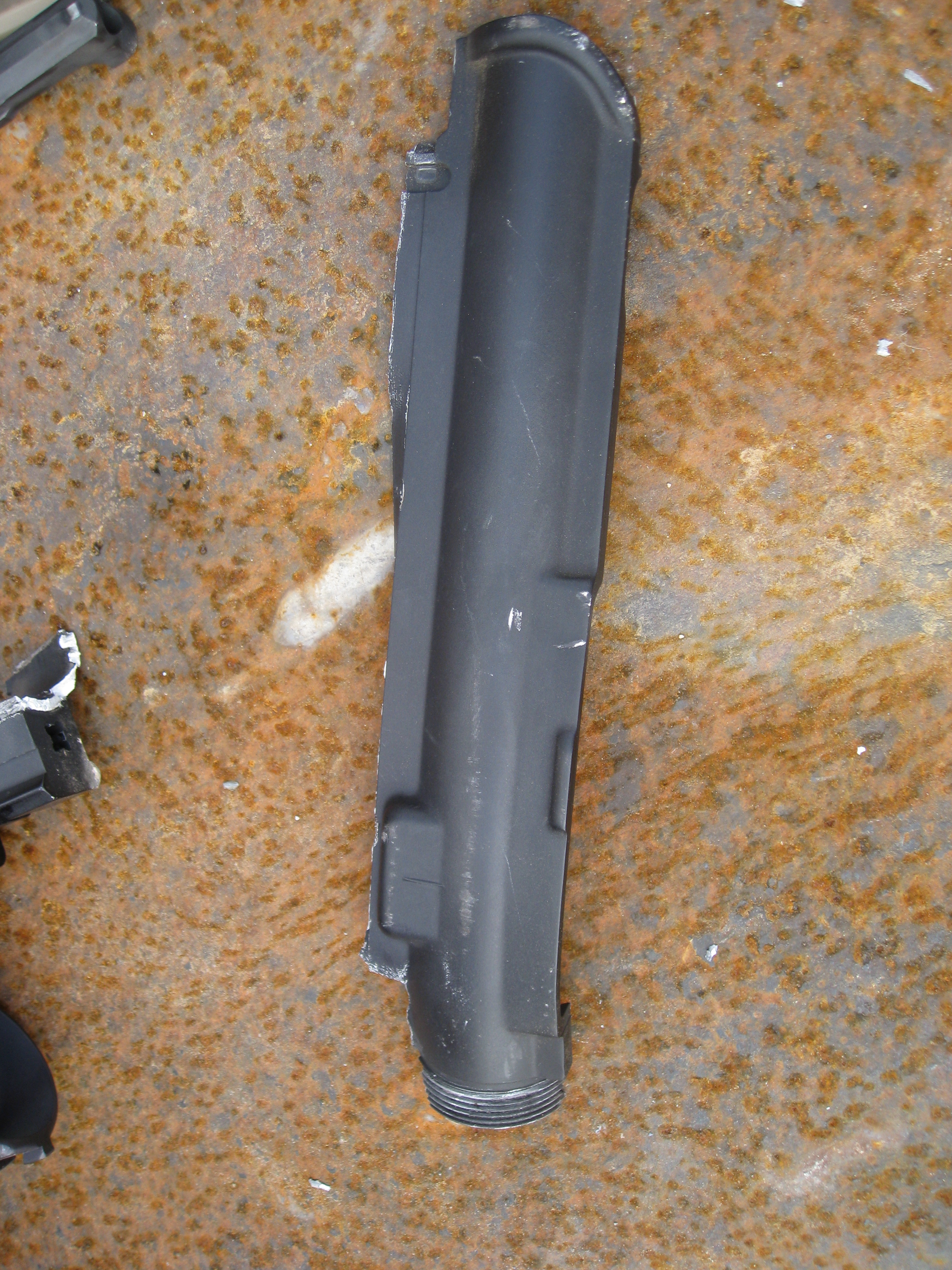
The upper receiver split in half
.IMG00127-20101226-1007
IMG_1663
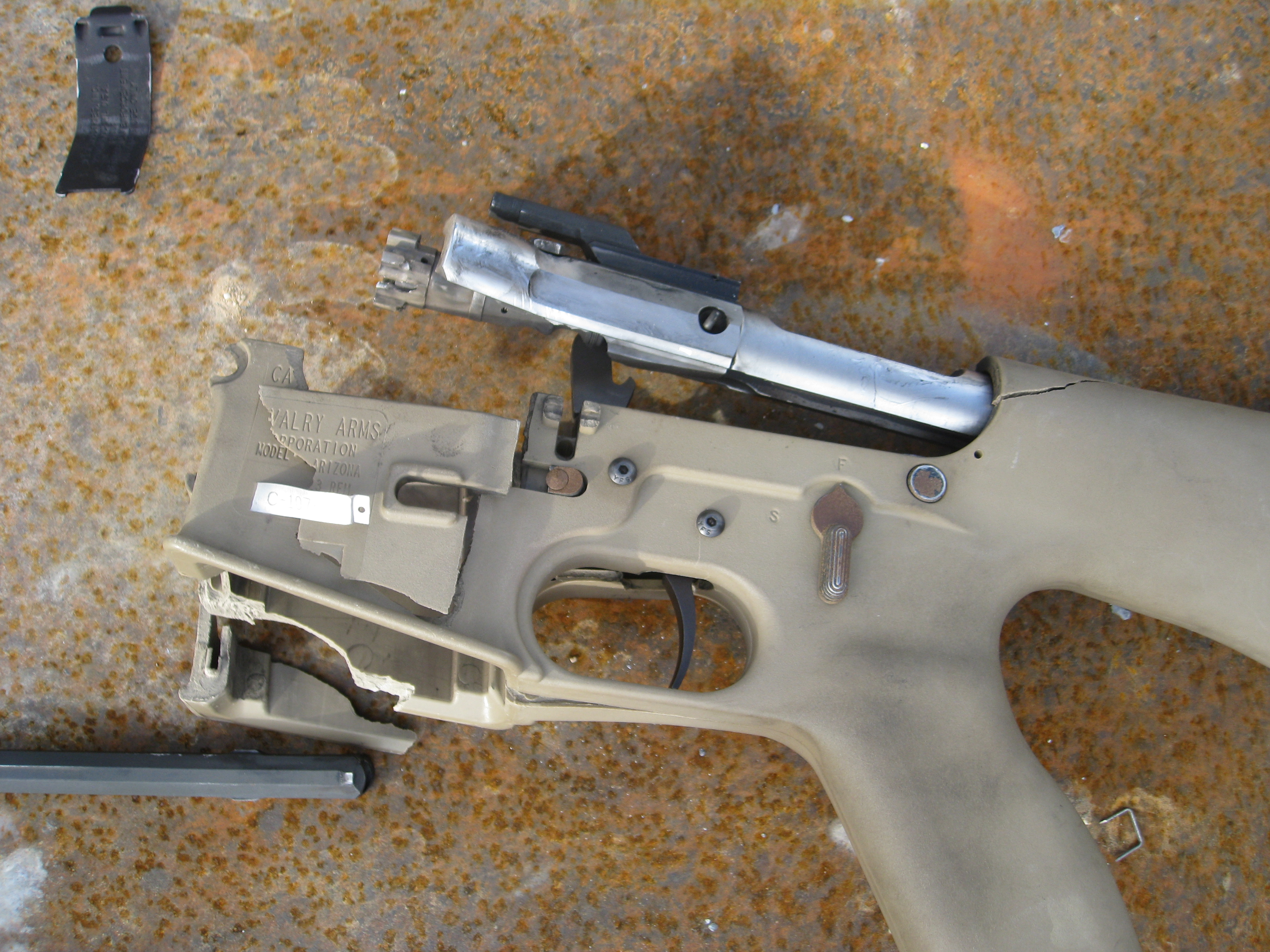
The bolt split right down the middle.  Extractor broke off.
IMG00125-20101226-1007IMG_1665
The CAV-15 MKII polymer receiver fractured at multiple points.  We speculated that the lower fracturing like this saved Paul from more severe injury as it gave the over-pressure more room to escape more rapidly.

IMG_1655 IMG_1660
The bolt carrier also suffered severe structural damage.

IMG_1656
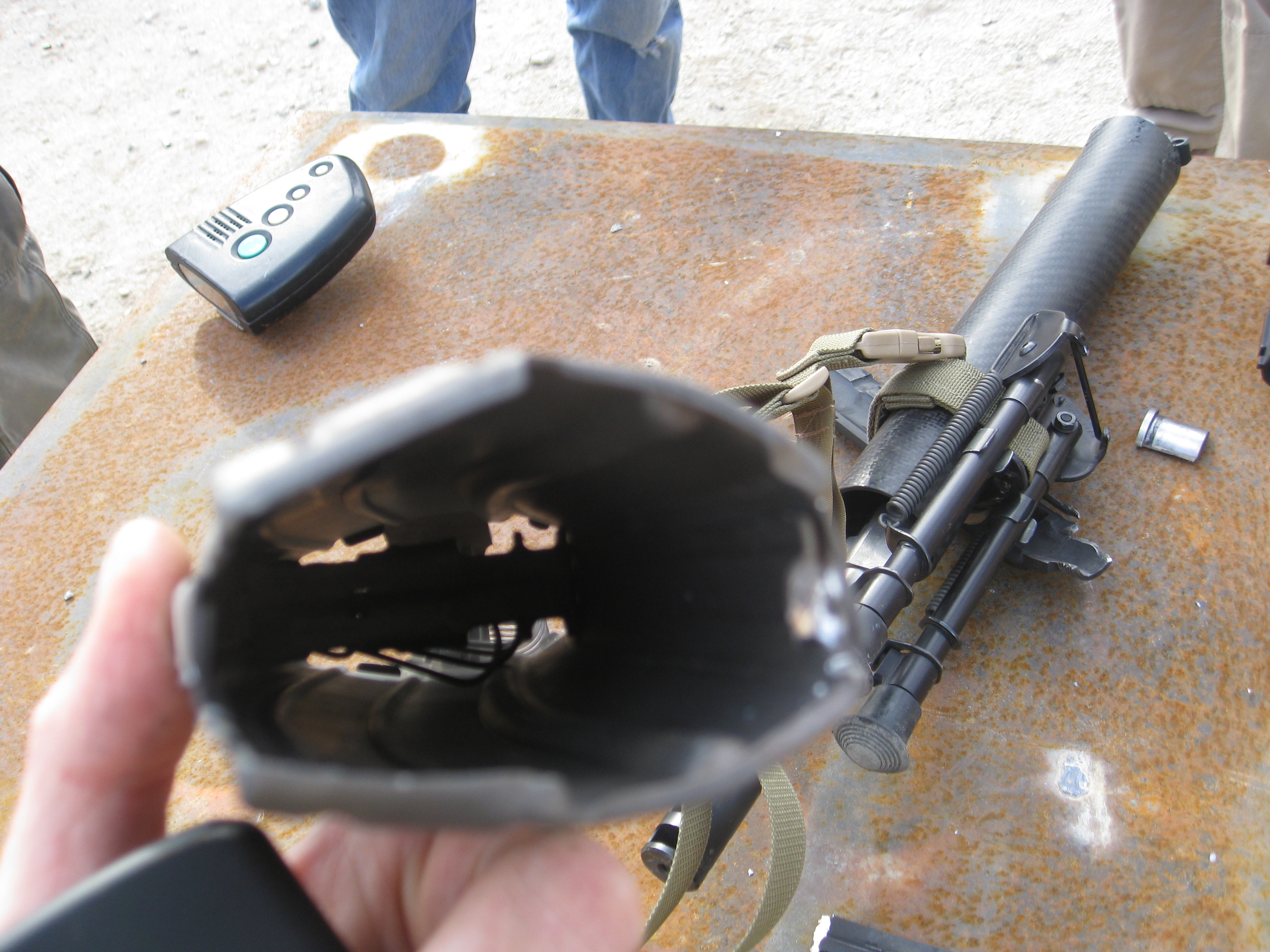
The magazine blew out as is typical with catastrophic failures.

The Cause

It wasn’t .300 Blackout in a .223 barrel.  It wasn’t head space.  It wasn’t “firing out of battery”.  It was a binary charge in the cartridge of pistol and rifle powder.  Pistol powder burns at a much more rapid rate than rifle powder.  That created the over-pressure that caused the rifle to fail like this.  Paul had purchased a lot of ammo from a commercial reloader.  They had not sufficiently cleaned out the hoppers when switching from pistol to rifle reloading. Fortunately for the public, Paul had bought the entire lot.  The manufacturer compensated Paul for the damage and the bad ammo.  Four years later I don’t feel the need to name the manufacturer because they took corrective action and Paul was satisfied with how they handled it.

I’m sure this will keep coming up every so often in the cycle of the internet.  Please direct people here for the entire story.  This is a cautionary tale for reloaders, and emphasizes the need to wear quality protective lenses.

Posted in CAV-15, Competitions, Gear, Industry Insiders | Comments Off on Internet Rumor Control: Epic KaBoom!