Here is a run down on some of the Saiga-12 accessories I am currently using that have increased the functionality of the shotgun and held up well under regular use.
RS Regulate Aimpoint Mount
The RS Regulate mount attaches to the side rail of the Saiga-12 (or any other AK with side rail). The Aimpoint has minimal bore offset for natural cheek weld, and iron sights can co-witness through it (if your gun has them). It also allows disassemly of the Saiga-12 with the optic still in place. This is an important feature as Saiga-12s require much more regular cleaning than traditional AKs. Most of the other side rail optics I’ve tried either sit too high or require removal (and thus rezeroing) to field strip the gun.
I witness mark all the screws so I can tell at a glance if something is coming loose.
The RS Regulate mount also allows side to side adjustment to center the optic over the bore.
AGP Arms Side Folding Stock
The AGP Arms side folding stock has a rugged hinge and latch for a solid lock up. The injection molded stock is strong and light. The rubber butt pad effectively reduces recoil. This particular gun has about 2,000 rounds through it with this stock and it’s still solid. I shot an ACE stock apart before in ~1500 rounds. If you want a folding stock on your Saiga-12 this is the one to have. You will need an adapter block and to cut off the tang of the trunion, but it is easy for end users to install.
Krebb’s Iron Sights
The Krebb’s Iron sights consist of the front post pictured above and a ghost ring rear that sits in the slot on top of the gas tube of the Saiga-12. Windage is zeroed by rotating the front sight right or left (locktite the screws in place) and adjusting the AR15 style front post. I have an XS big dot front sight in mine; its a natural fit for use on a shotgun.
Tromix Do-It-Yourself Trigger Guard/Fire Control Conversion
I converted the guns pictured above with the Tromix DIY Trigger Guard and fire control sets. Removing the factory fire control and installing these parts is a simple job with a dremel tool and/or a drill. Swapping out these parts allows the use of standard AK stocks and pistol grips and helps meet 922(r) parts count requirements. There are a number of guides online for how to do the conversion yourself. No need to spend hundreds of dollars on a gunsmith or wait weeks/months if all you want is a simple conversion.
King Armory Gas Piston
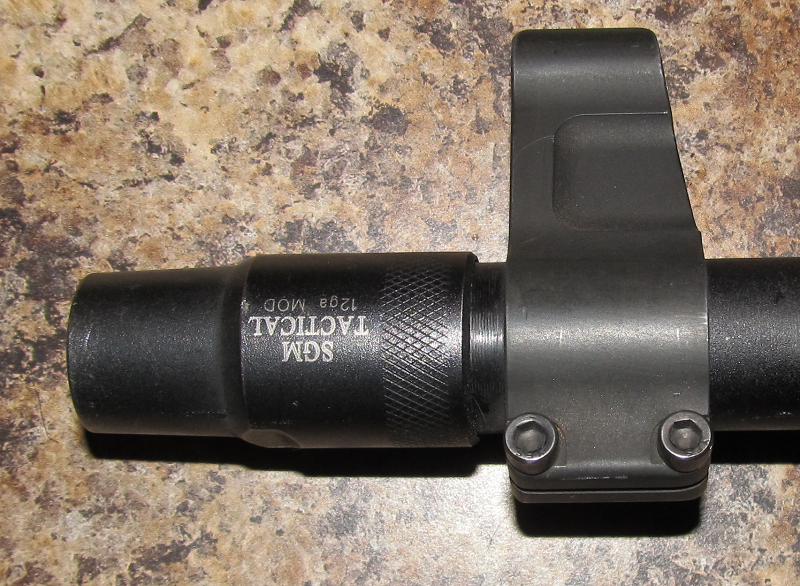
The Saiga-12 has a small removable piston in the gas block between the gas setting adjuster and what is normally the piston on an ak, but acts as an operating rod on the Saiga-12. The King Armory Gas Piston features a bevelled front edge to help keep debris (lead and plastic shavings come through the gas ports from clogging the operating system). It also counts as a US part to help comply with 922(r)
Posted inSAIGA-12|Comments Off on Saiga-12 Accessories Worth Having
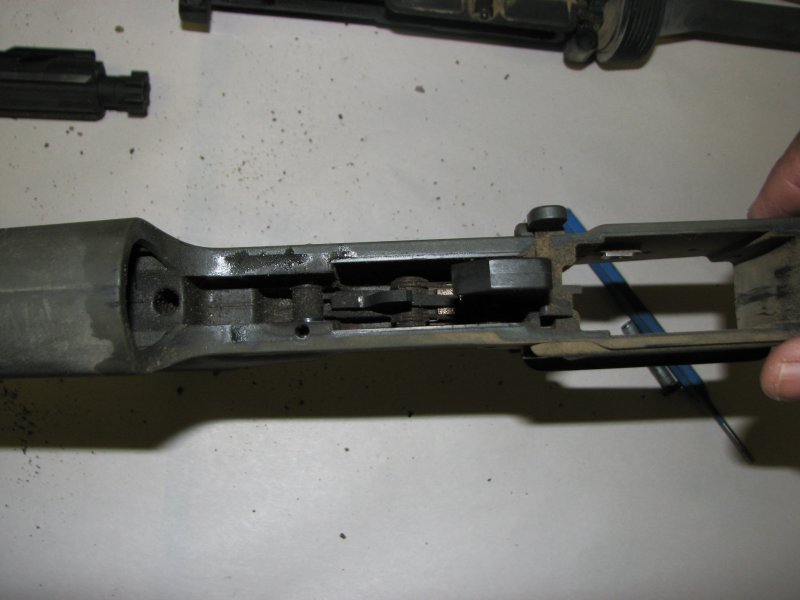
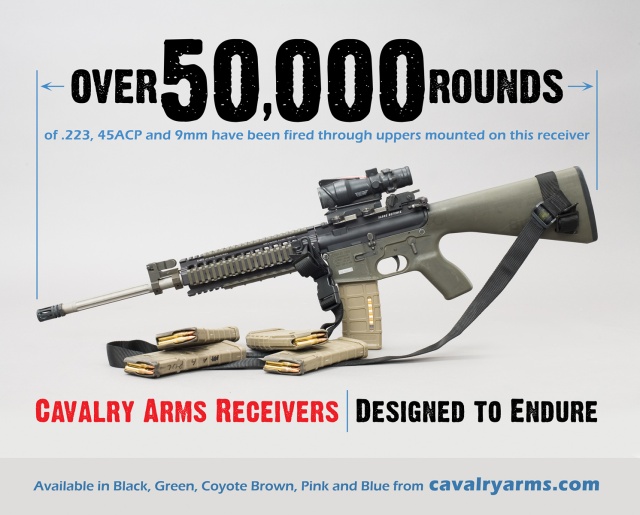
The flagship product of Cavalry Arms Corporation was the CAV-15 polymer lower receiver, and later starting in 2003 the CAV-15 MKII lower receiver. You can read all about the design history of the CAV-15 here. I worked for Cavalry Arms Corporation from 2001 to June of 2010 when it closed down. During that time I was able to participate in all aspects of production, testing, assembly, and testing. I also used the CAV-15 extensively in competitions during that time. Some of my personal receivers had 15,000 rounds on them, and some withstood abuse that would have damaged or destroyed aluminum receivers. The CAV-15 MKIIs worked so well because of the one piece design that gave it strength, and the nylon material that allowed it to flex and return to its original shape.
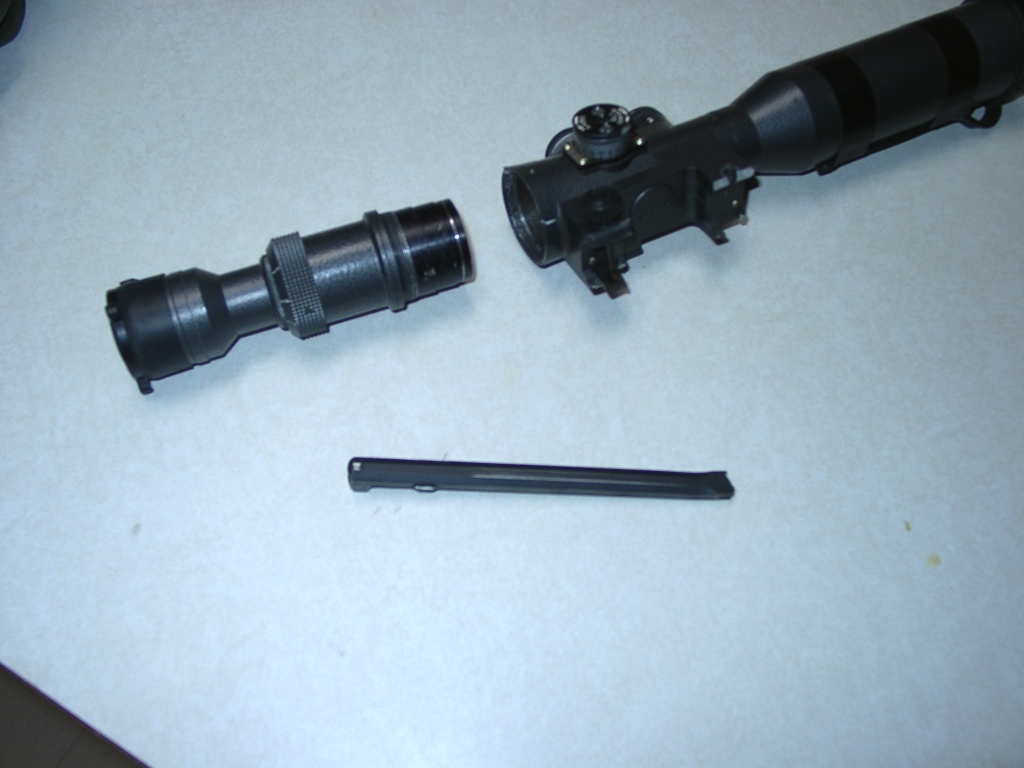
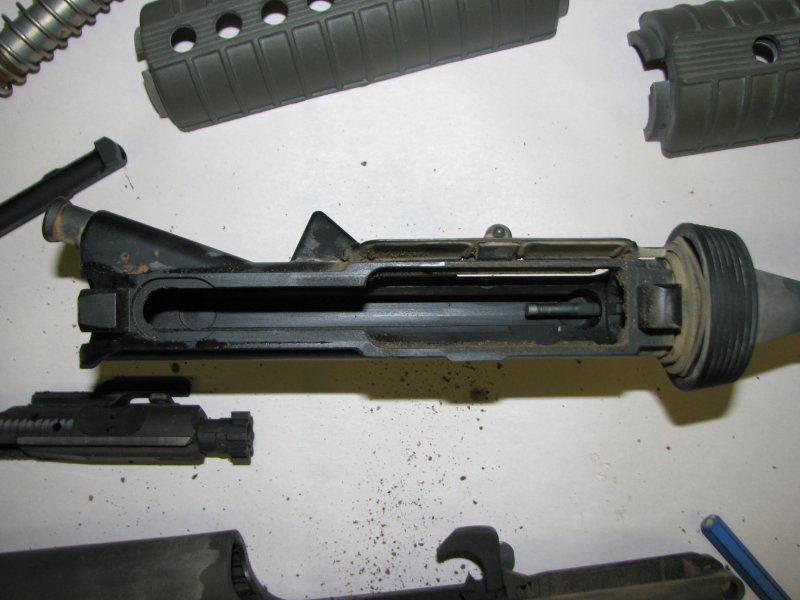
Late in the day on Saturday while waiting to shoot, my partner’s rifle and mine were both run over by another competitor’s truck. This was an unfortunate accident, he didn’t see our gear pile on the side of the range (don’t worry, insurance is covering the damage). My rifle and my partner’s were in a soft double rifle case, his was on the side facing up. My partner’s scope (Russian POSP) was broken in half, offeset Burris red dot broken off and damaged, rail handguard damaged, charging handle broken, and buffer tube bent. The rifle was seriously out of action, the bolt could not travel to the rear.
Damage pics of his:
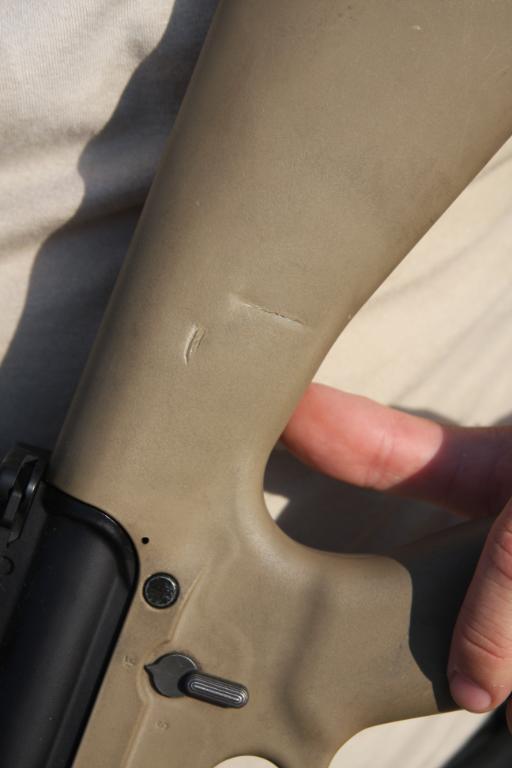
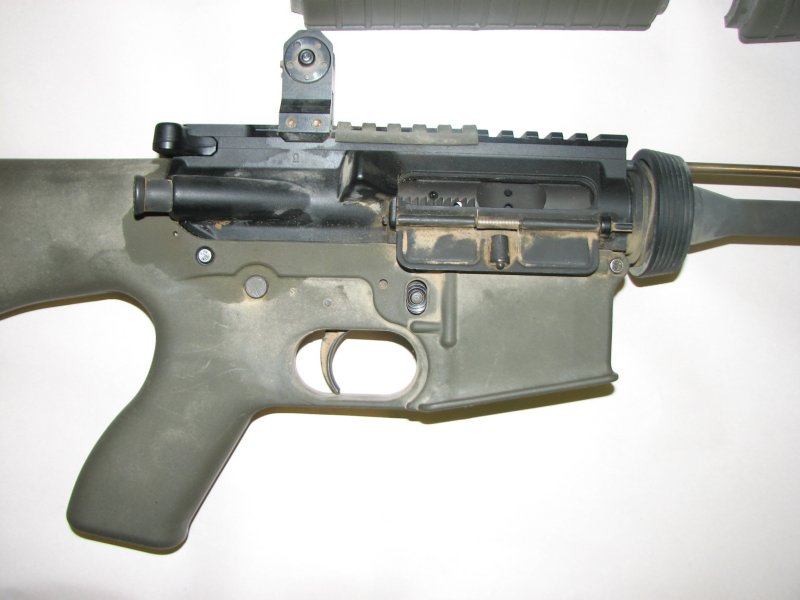
My rifle on the bottom was damaged with some large gouges in the stock where the scope on the other hit into it. There was no other obvious damage. The zero shifted (upon disassembly, the upper receiver was found to be cracked at the barrel extension), and the rifle was not as accurate for the rest of the match, but it functioned flawlessly. Every round chambered fired, the bolt cycled fine, and locked back on empty mags. Plastic has the ability to flex where metal will just bend.
Trijicon proactively replaced several components in my ACOG, even though no damage was apparent. Aimpoint said there was no damage to my Aimpoint T1 Micro at all.
A month later I used this same rifle at the American Heroes Team Challenge in Las Vegas, NV and it performed reliably and I was able to hit targets out to 250 yards without issue.
I suspect that the CAV-15 performed better than a traditional AR15 would have with this abuse. The buffer tube area is much more open with the buffer and spring riding on ribs rather than a solid tube. I believe this allowed more debris to blow past into these areas rather than causing binding.
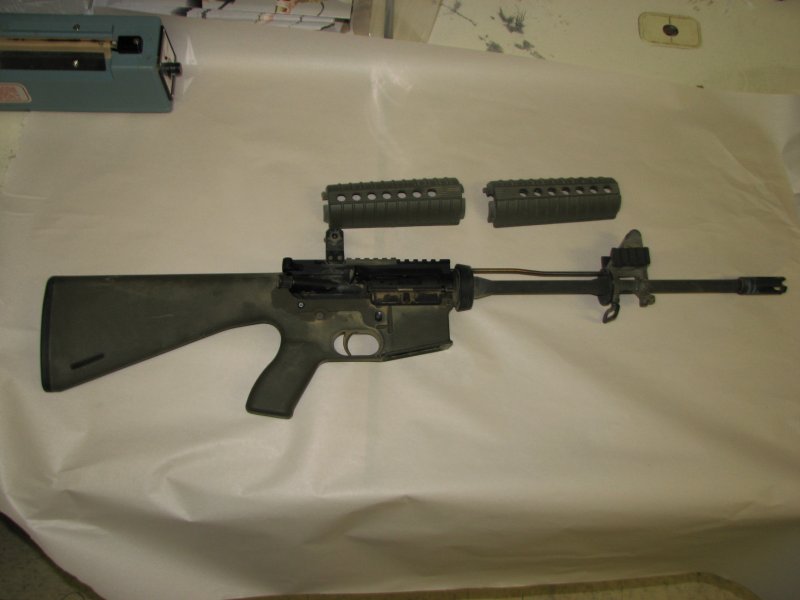
Cavalry Arms Corp ownership and staff was all shooters. We put a lot of rounds down range in competition, testing, and just shooting for fun. The particular lower in this photo had gone through several uppers that were shot to the point they were no longer accurate.
Posted inGear|Comments Off on CAV-15 MKII Durability and Longevity
The March 2012, AZ Acts match was my first match after a 6 week long break from shooting. Work had kept me busy from February all the way through Mid-March. Whenever I go more than a month without shooting a match I feel rusty when I go back; it requires more mental focus on stage descriptions and match procedures to make sure I am doing everything correctly. Nonetheless I placed 4th/47 over all, and 2nd/16 in Open.
I used an ACOG TA11J at this match because I will be using it at the Tiger Valley Team Match April 28th-29th. That match is mostly 100-400 yard shooting with very little close range shooting. We actually had some decent distance at this match with targets at 150 yards, but I still felt using the ACOG was slower than if I had been using an Aimpoint by a small percentage. ACTS stages force us to reacquire our sights multiple times (see stages 1, 2, and 4) in the video. With a magnified optic every time I have to reacquire the sight picture after setting it down or moving to a new area it takes a fraction of a second longer to get my head in the right position to see through the scope and acquire the target; all these fractions add up for a longer stage time. Past the ranges we shoot at in ACTS, I prefer the ACOG to an Aimpoint; but no one optic can do everything optimally. Its important to try them in all these different conditions to see what compromise is best for your application.
This was also the first match I used my standard Safariland ALS holster. It retained the pistol securely throughout the match, and the mechanism didn’t get jammed up from crawling around in the sand (I’ll continue to pay attention to this over time). Even with minimal use, it is faster than my SLS safariland holsters I’ve been using for 10 years. I intend to do a test in the future comparing exactly how much faster it is.
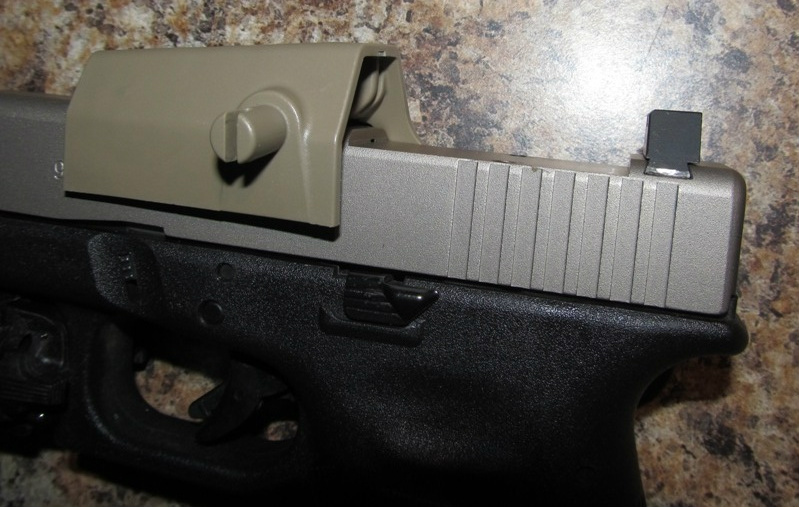
I read an article on military times a couple months ago about a Safariland ALS holster designed to accommodate Glocks with red dots mounted. I had been wanting to try the ALS system after using the SLS roto-hood system for 10 years and compare the two for speed and ease of use. So I ordered one direct from Safariland customer service and 4 weeks later it arrived.
Unfortunately, the Safariland 6354DO will not work out of the box with OST-TSD modified slides that have iron sights in line with the Trijicon RMRs. It will only work with RMR mounted in the rear sight dove tail mount. I think this is a major oversight on the part of Safariland. Having the iron sights in line with the dot is what makes it practical as a carry/duty gun in the event the dot loses power or is broken. The OST-TSD configured slides are also the most common as they offer both off the shelf ready to go slides and machining services for your Glock factory slides. I would think that among serious users this configuration would be a lot more common than just dropping the dove tail mount in the rear of the slide.
Aside from those reasons, not making it work out of the box with the OST-TSD configured slide makes even less sense considering how minute the difference is to make it work. I was able to modify the holster to work with my OST-TSD Glock 34 in about 10 minutes, this included determining what I needed to change on the holster.
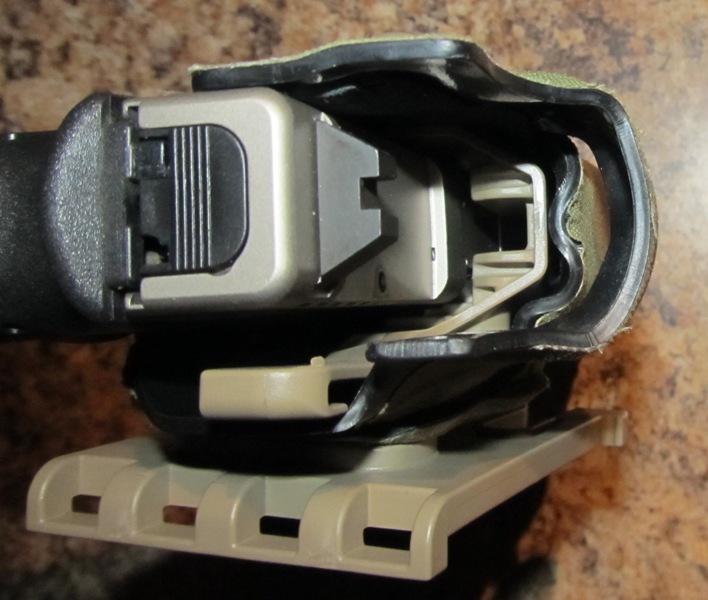
In this picture below you can see that the retention mechanism sits back about 1/8″ too far to allow the OST-TSD slide to sit all the way into the holster:
I used a belt sander to remove about 1/8″ of material from the top of the retention device and cleaned up the edges with a razor blade.
Before:
After:
I used a heat gun for about 20 seconds on the front of the holster to reshape it so the RMR could drop all the way in
Before:
After:
It locks up like it should and cleanly releases.
If you’re used to using the ALS holster and want commonality of training, or your department/agency requires the ALS mechanism you can make the 6354DO work with your OST-TSD slide.
If you want something that works out of the box with your OST-TSD slide, your best option is to buy the Bladetech unit that OST is selling.
Posted inGear, Red Dot Glock|Comments Off on Safariland ALS Holster for Red Dot Glock
I ran an informal test with fellow competitive shooter, Karl, to see how fast the SCAR-H MK17S handles at close range compared to our AR15 carbines. We expected the SCAR-H to be slower as it is in 7.62mm NATO and the AR15s are in 5.56mm NATO, the idea was to see if a shooter using a SCAR-H for better terminal performance at long range was giving up much at close ranges.
Equipment used:
My AR15
Mid-length gas, Spike’s heavy buffer, Hogan MFG 4.5# trigger, PWS FSC556 brake
Aimpoint M4S 2MOA, 3x Magnifier flipped to side.
Karl’s AR15
Carbine gas, RRA 2 Stage, Spike’s heavy buffer, A2 flash hider
Leupold CQT on 1X
MK17S
Stock trigger, stock PWS .308 brake
Aimpoint M4 2MOA, 3x Magnifier flipped to side
We ran 2 series of drills both with our respective AR15s, and with the MK17S. The first drill was double taps on three paper targets spaced about 6 feet apart at 10 yards. The second drill was a triple threat; single paper target at 7 yards; 3 shots to center of mass, one head shot, one pelvis shot.
As you can see from the data below, the difference between the AR15s and the MK17S was marginal. The most obvious difference to the shooters was firing 3 rapid shots on the triple threat drill; the recoil was harder to manage proportionately than double taps and the group opened up more with the MK17S. The split times shot to shot were slower, but not by much, this could be from the factory trigger vs match triggers as much as increased recoil. The recoil from the MK17S is very manageable, but noticeably more than the AR15. While our results in speed and accuracy (we punched out the A zones of the targets) were similar between platforms we both felt the MK17S required more “work” (using more muscle strength to control the gun during the recoil cycle). More testing, and more ammo, would be required to see how long it would take for fatigue to become a factor using the MK17S vs the AR15
It is interesting to note that my first shots fired with the MK17s were consistently faster due to the ambidextrous controls given that I am a lefty. On the extreme side I was 0.30 seconds faster with the first shot with the MK17S than with the AR15 as sweeping off the selector with my trigger finger and acquiring the grip takes longer than merely using my thumb with the SCAR. Testing on the clock answered the question of whether or not I should switch to ambi selectors on my ARs; every little bit of time saved counts whether your opponents are other competitors at a match or bad people intending you harm.
In conclusion, the MK17S SCAR-H does not appear to be significantly slower in operation at close distances than the AR15 and should not weigh heavily to the user analyzing the costs and benefits of one system vs the other.
Russell-AR15
3x Double Tap
First target
Split
Second Target
Split
Third target
Split
Total
String 1
1.04
0.14
0.55
0.17
0.62
0.15
2.67
String 2
1.02
0.14
0.59
0.16
0.56
0.16
2.63
String 3
1.09
0.15
0.59
0.16
0.57
0.17
2.73
Average
1.05
0.14
0.58
0.16
0.58
0.16
2.68
Russell-MK17S
First target
Split
Second Target
Split
Third target
Split
Total
String 1
1.2
0.2
0.59
0.19
0.58
0.18
2.74
String 2
0.93
0.18
0.6
0.18
0.6
0.18
2.67
String 3
0.95
0.22
0.56
0.2
0.55
0.2
2.68
Average
1.03
0.2
0.58
0.19
0.58
0.19
2.7
Karl-AR15
3X Double Tap
First target
Split
Second Target
Split
Third target
Split
Total
String 1
0.7
0.15
0.32
0.12
0.33
0.15
1.77
String 2
0.68
0.14
0.52
0.15
0.55
0.13
2.17
String 3
0.76
0.14
0.34
0.15
0.33
0.13
1.85
Average
0.71
0.14
0.39
0.14
0.4
0.14
1.93
Karl-MK17S
3X Double Tap
First target
Split
Second Target
Split
Third target
Split
Total
String 1
0.69
0.18
0.42
0.18
0.33
0.17
1.97
String 2
0.66
0.18
0.37
0.17
0.35
0.18
1.91
String 3
0.64
0.16
0.4
0.15
0.44
0.17
1.96
Average
0.66
0.17
0.4
0.17
0.37
0.17
1.95
Russell-AR15
Triple Threat
First Shot
Split
Split
Head
Pelvis
Total
String 1
1.25
0.15
0.15
0.52
0.5
2.57
String 2
1.1
0.14
0.14
0.49
0.51
2.38
String 3
1.15
0.13
0.14
0.4
0.48
2.3
Average
1.17
0.14
0.14
0.47
0.5
2.42
Russell-MK17S
Triple Threat
First Shot
Split
Split
Head
Pelvis
Total
String 1
0.96
0.18
0.14
0.53
0.53
2.34
String 2
1.1
0.19
0.18
0.56
0.58
2.61
String 3
0.94
0.19
0.16
0.47
0.65
2.41
Average
1
0.19
0.16
0.52
0.59
2.45
Karl-AR15
First Shot
Split
Split
Head
Pelvis
Total
String 1
0.66
0.16
0.14
0.31
0.34
1.61
String 2
0.72
0.15
0.1
0.35
0.5
1.82
String 3
0.7
0.16
0.12
0.47
0.49
1.94
Average
0.69
0.16
0.12
0.38
0.44
1.79
KARL MK17S
First Shot
Split
Split
Head
Pelvis
Total
String 1
0.68
0.18
0.18
0.47
0.42
1.93
String 2
0.66
0.29
0.21
0.43
0.5
2.09
String 3
0.62
0.22
0.25
0.4
0.53
2.02
Average
0.65
0.23
0.21
0.43
0.48
2.01
Posted inGear, Training|Comments Off on AR15 vs SCAR-H MK17S Speed Test
I wasn’t very interested in gettng a 7.62mm battle rifle until I handled a friends Mk17S SCAR-H. After shooting the SCAR-H, I was immediately impressed. For a .308/7.62mm NATO Rifle it is very light weighing in at just 8 pounds; about the same as some of my 5.56mm AR15s equipped with rail systems. The recoil is also more like that of a carbine gas system AR15, than a full size 7.62mm battle rifle.
I recently acquired my own SCAR-H. Thus far I am happy with my purchase. The SCAR-H is reliable and reasonably accurate with the ammo I’ve shot so far. The ambi controls and 45 degree selector will take some getting used to as a lefty thats always made do with unmodified AR15s (not a fan of modifying basic operating controls). I’m looking forward to trying out the new platform in some action shooting matches and testing new accessories for it coming out this year.
My SCAR-H outfitted with Aimpoint M4 and Magnifier in LaRue Mounts
There’s been been discussion recently on other blogs and forums about Saiga-12s, their reliability, modifications required out of the box, and durability. I was an early adopter of the platform, and started using them competitively in action shooting sports in 2006 well before it was “cool” to do so. There were some other shooters in Texas that were using them before that including fabricating their own magazines, but it really didn’t appeal to me until AGP Arms came out with their 10 round magazines and I was able to participate in beta-testing those magazines.
I used Saiga-12s very actively from 2006-2010 as you can see in the videos below.
Saiga-12 Highlights 2007-2008
I started using Drums in 2009
Halloween Shotgun Match 2009:
Loading magazines vs individual shells proves advantageous at Tiger Valley 2010 where freezing temps and wet conditions limited dexterity:
During that time I had many Match Wins and high placements using the Saiga-12
1st Place Open Division 2006 AZ State Shotgun Match
3rd Place Trooper Division 2007 Ironman 3 Gun Match
1st Place Trooper Division 2007 Michigan State 3 Gun Match
2nd Place Open Division 2007 AZ State Shotgun Match
3rd Place Trooper Division 2007 Fort Benning 3 Gun Match
1st Place Trooper Division 2008 Ironman 3 Gun Match
2nd Place Open Division 2008 Michigan State Shotgun Match
1st Place Trooper Division 2008 Michigan State 3 Gun Match
3rd Place Trooper Division 2008 Fort Benning 3 Gun Match
1st Place Trooper Division 2009 Ironman 3 Gun Match
3rd Place Trooper Division 2009 Michigan State 3 Gun Match
1st Place Open Division 2009 Halloween Shotgun Match
3rd Place Trooper Divisions 2009 Fort Benning 3 Gun Match
3rd Place Trooper Division 2010 Ironman Match*
5th Place Trooper Division 2011 Ironman Match
3rd Place Open Division 2011 Halloween Shotgun Match
The reason I mention all this is demonstrate that I am more than a casual user of the Saiga-12 and I’ve gotten a lot of trigger time with the system and given it more than a fair chance. I estimate that I have something around 15,000 rounds fired through Saiga-12s in total based on training sessions, test fire, and matches I have used them at.
In chronological order here is my experience with the Saiga-12 shotgun, representing 8 different guns that I have personally owned. Names have been with held as everyone that did work on my guns made it right in the end.
Gun 1 was imported with a 17.2″ barrel…it had to be sent back to RAAC under a mandatory BATF recall.
Gun 1 comes back it is ugly as hell with this welded on choke thing. I sent it to a reputable smith to be reworked into a pistol grip configuration and have a comp put in its place.
Gun 1 comes back, it now has plastic wadding shaving into the gas system making neat little hockey puck things. It goes back and forth to the smith a couple times and he gives me a new Gun, Gun 2.
Gun 2 runs great for about 1500 rounds. Then the plate that was welded on to attach the stock starts splitting off. Off it goes to the gunsmith for repair. I sold it when I got it back and got two stock Saigas Guns 3 and 4
Gun 3 runs great, and ends up serving me for almost 3 years with 9,000 rounds fired. (I will go over the maintenance log with that one later).
Gun 4 has crooked gas ports. It has intermittent failures. I never got the opportunity to fix this one.
Gun 5 is purchased to replace Gun 4. I send it off to a different reputable smith to be converted. It comes back and doesn’t work (it did before). Gunsmith fixes it. When I get it back I shoot it for a while, but it doesn’t run as well as Gun 3, so I sold it.
Gun 6 is purchased to replace Gun 5. Gun 6 is part of a faulty batch of imported guns with only 2 gas ports. Gun 6 is sent back, and the importer sends me Gun 7.
Gun 7 only has 3 gas ports and doesn’t run that well. Out of exasperation I have my machinist press the gas block off and drill another hole. Gun runs ok now with everything I shoot through it, just like Gun 3 did. It does like to malfunction with lighter loads when it starts getting dirty; maybe 1-3 times out of 100 rounds fired it will eject but not chamber the next round. Simply racking the bolt fixes the problem.
Gun 3 having seen several years of use and 3 Ironman Matches is starting to look worse for the wear.
Factory fire control parts wore out at about 3,000 rounds
Recoil springs have been replaced 4 times.
surfaces on the bolt and barrel extension are peening over and have to be polished.
The rear trunion has shifted significantly and the top cover only has 50% engagement.
The gun once fired merely by turning the safety off
Gun 8 is purchased to replace Gun 3. Gun 8 is about 0.040″ smaller in the receiver width than any of my earlier guns and it pinches AGP mags so they will not feed fast enough. It works with Surefire mags though which are apparently 0.025″ smaller in width than AGPs. After several hundred rounds fired and a few local matches I take this gun to the 2010 Ironman 3 Gun Match. I do not have any problems until during the match; the Surefire mags themselves proved to be unreliable and could not feed fast enough to keep up with the bolt speed. I assume that as the springs wore in they got weaker and just couldnt push the shells up fast enough. This left me with an empty chamber several times during the match with flying clays in the air; costing me 120 seconds in penalties plus time spent racking the bolt. In Trooper division we are not allowed to swap out equipment unless we carried it with us the whole time, I have to make do with what I have. I download my 12 round mags to 8 rounds to make them work, which resulted in a lot more time spent on reloads. The malfunctions with the Saiga easily cost me 2nd place.
Gun 7 still works, and I use it from time to time to train for the Ironman 3 Gun/Trooper Division. I am reluctant to use it hard because I don’t want to wear it out and there isn’t anything else out yet that I am ready to buy. When I do shoot 3 gun now, I often compete in Tac-Limited or Tac-Scope and use a Benelli M2 field that runs great and will easily last 100,000 rounds or more.
When Saigas, work they are AWESOME. I have won and placed in the top 3 of my division in several big matches because I was using a Saiga. I absolutely hate loading tube fed shotguns. I am however, getting sick of the maintenance cycle and going through on average 3 guns to find one that works well out of the box. If the gunsmiths can guarantee that your gun will run when you get it back from them, it may very well be worth the cost if you are lacking in patience and mechanical aptitude. All of these guns are different, even within the same batches, and you have to look at it as a project. I would only consider using a Saiga-12 if you are a serious 3 gunner and it will help with your score.
There is a market for a quality detachable magazine fed shotgun. Some gunsmiths and competitors are switching to the AKDAL MK1919 platform, saying it is more reliable and easier to work on. I’m going to wait and see what happens for a while before I invest in that system.
A recent BATF study on sporting shotguns makes it clear that detachable magazines alone do not make a shotgun “unsporting”, and domestic manufacturers should no longer be scared of Destructive Device rulings. Its time for American manufacturers to step up and make a reliable, durable, detachable magazine fed shotgun. With the amount of money people are dumping into foreign designs to make them work and more useable, the market is definitely there.
There are a lot of free float rail system options available for AR15 rifles now. In the past few years manufacturers started producing lightweight options without as much rail on them. Most users don’t mount much more than a sling, bipod, and/or light, and 28″-48″ of rail really isn’t needed for mounting those accessories, while the rest gets covered in plastic rail covers. There’s also the totally slick aluminum free float tubes favored by competition shooters and hunters that have also been available for some time. While both systems save weight and reduce cost to the consumer, they have a limitation; they both get a lot hotter than a quad rail system with plastic rail covers.
I began using the Troy TRX extreme free float tube last year and within a few months I had found that that handguard was uncomfortable to hold after 2-3 30 round magazines fired quickly. I have nothing against Troy I like the design over all and several other brands I have tried exhibit the same symptoms of rapidly getting hot. It would also get too hot to hold comfortably from merely being in the trunk of my car in the summer (inside of vehicle is easily 160+ degrees in Phoenix). I had seen another competition shooter that had added a nylon sleeve to his fore end to solve the heat issue; so I asked Coyote Tactical to make some for me.
The fore end wraps worked as expected and reduce heat transfer to the shooters hands, both from gun fire and environmental conditions. It is a simple cost effective solution that improves the functionality of a rifle equipped with an aluminum free float tube.
Edit: 12-2017 Order these online from KE Arms http://www.kearms.com/shtf-wrap
Posted inGear|Comments Off on Coyote Tactical Fore End Wrap
The Tucson ACTS crew continues to ramp up the physical challenges at their matches. While I still performed OK this month at 5th/41 over all, 2nd/19 in Open I didn’t feel at my best after a week of eating too much and being slothful in Vegas attending the 2012 SHOT Show. Time to ramp up the exercise back up…
Fellow lefty-shooter Brad placed 1st in Enhanced and 2nd/41 Over All. He just did the Arizona Tough-Mudder race the weekend before and had been training for that; physical preparedness makes a big difference. Also note that he’s using an AK-74 with Aimpoint Micro; ACTS is one of the only venues I know of where gun type used has very little if any impact on performance on the stages.
Posted inCompetitions|Comments Off on 1-21-2012 ACTS Tucson, AZ
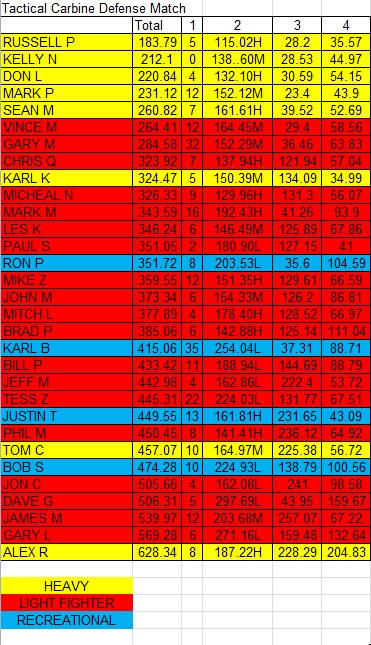
Phoenix Rod and Gun’s January Tactical Carbine defense match was a test of physical fitness and accurate shooting under stress. The stages put more emphasis on accuracy than typically seen at action shooting competitions with increasing amounts of time added based on the scoring zones hit. Stage 3 featured a V-TAC Triple Threat drill, with a 100 second penalty if any shots were outside the scored zones.
I placed 1st/8 In Heavy Division (hard armor plates required) and 1st/31 over all. Having the fastest time running and carrying the 70 pound kettle bell on stage 2 and shooting stage 3 clean is what allowed me to win the match.
Some general observations from the match were as follows.
1) Physical challenges defeat people mentally before they even attempt them. There was a lot of talk before the kettle bell stage about how hard it was. I knew it wasn’t going to be pleasant, but I knew it was something I could do, and that I could be uncomfortable for 2 minutes while going as fast as I could and still shoot well. I think many people went slower than they could have gone because they just didn’t like what they were doing or decided it was too hard before they started. A moderate exercise routine and knowing what you are capable of for how long go along way on these type of stages.
2) Knowing where your rifle and pistol hit at different ranges is critical for accurate shooting. People need to shoot at various ranges to become comfortable with their equipment at those distances. A lot of dropped points and the 100 second penalties were caused by this.
3) When accuracy is more important slow down and make the hits count. With a 100 second penalty on the line, there is no other option but to treat every shot as a critical hostage rescue shot, get a clean sight picture every time. Only go as fast as you are sure you can make the hit when the consequences are so severe.
Posted inCompetitions|Comments Off on 1-8-2012 Tactical Carbine Defense Match








 SinistralRifleman
You must be logged in to post a comment.