AGP Arms Ruger 10/22 Take Down Kit Review/Test

AGP Arms of Tempe, Arizona is a spin off from custom car parts maker AGP Turbo.  AGP’s Owner/President Kevin T. answers my questions about getting into the gun business and his products below.  My questions are in bold, his answers are in italics:


After years of making custom car parts with your business AGP Turbo, what made you want to transition into the firearms industry with AGP Arms?

The parts we make are simply things we personally wanted but nobody was building (at least to our standards). We honestly consider AGP Arms a completely out of control hobby more than a business. We have some amazing manufacturing abilities and very high standards, so the sky’s the limit on what we will do. It can be pretty risky when you are $100,000+ into a project just because you thought it was a cool idea. You are certainly crossing your fingers that customers like it as much as you do.  

How much of the manufacturing technology you use for AGP Turbo was applicable to AGP Arms?

We used all of our resources to get going in the firearms industry and had to add a couple. My background prior to the turbo business was in aerospace manufacturing, and neither of those fields utilizes injection molding. So getting up to speed with the molding industry was a pretty interesting and frustrating learning experience.

From a technical standpoint, what is harder to design and produce, car or gun parts?

Designing the car parts is certainly more of a task and requires more engineering. But producing any of the individual parts, is pretty similar. The size of each project is quite different, our new twin turbo kit for the 2010+ Camaros was mammoth compared to any of the gun projects.

What were the first products AGP Arms offered for the firearms market?

Our first big deal was the 10rd. mag for the Saiga-12. We were the first aftermarket company to make a mag for the S-12. Back in those years you could get a S-12 with one 5rd. mag included. You pretty much couldn’t even find another 5rd. factory mag unless you bought another gun. I thought the S-12 was really something special but held back by the lack of magazines. So we started that project shortly after the AW ban expired and were extremely concerned that we could get the S-12 declared a DD and banned from importation. It was a crazy time back then, we were tip toeing around many potential issues. That first molding project took 10 times longer than it should and we had to start completely over, right when we thought we were done. We became serious experts at feeding flat faced, rimmed shells of various lengths from a magazine. Not many people have pulled that off reliably.

Your side folding stock is compatible with a variety of platforms including AR15s (with specific uppers), Sig Rifles, AK variants, and Saiga-12s.  In addition to its adapability, what were your goals in designing it to produce a better product than others on the market?

We wanted something lighter weight and with a push button latch. The storage space inside was designed around our SBR barrel for the our 10/22 takedown. A few years ago we were working on our own US made S-12 type shotgun and the folding stock was going to be integral in that too. That project fizzled as profitability on the S-12 mags has gone away.

What made you want to make a 10/22 take down kit?

The smaller you can make a gun, the more likely you’ll have it with you. Just like a CCW pistol, a .380 in your pocket beats a double stack .45 in your safe. A take down .22 is easily carried on any outing, or stashed away somewhere useful. I use to be a big Marlin Papoose fan for this purpose. But in my nature, I always pick my things apart for how they could be better(guns, gear, cars, motorcycles, ATV’s). Nothing I own is ever good enough to avoid this scrutiny. The Marlin was the best off the shelf rifle for my needs but short comings left me wanting more.  Main problem is still really big even taken apart. Too long to fit in a normal sized backpack, poor trigger design, lower capacity mags, no aftermarket support. So rather than beat my head against the wall fixing all the things I didn’t like about the Marlin, it was less work to just make the superior 10/22 a take down.Smaller, Lighter, Faster, Stronger. Those four words were the hub of the design intent on the take down project but really applicable to any great firearm.

Now that Ruger has come out with their own 10/22 take down rifle, what makes the AGP kit better than the Ruger factory rifle?

Ruger’s factory take down has been great for our sales as it got people thinking they wanted a take down 10/22. My guess is once they start looking into it further they come across ours and prefer it. Ours having the folding stock, shorter threaded match grade barrel, handguard options, superior return to zero, storage compartment in stock. A customer can use our folding stock on the Ruger factory take down with a little modification. 

(AGP has started offering a specific kit for the Ruger factory 10/22 take down rifle since this interview)

We understand some fitting may be required on the 10/22 reciever for the quck take down adapter to be installed.  Is this something the end user should be concerned about, how easy is it to do?

It’s very minor but when installing our barrel adaptor into the receiver you should look out for things that will keep it from seating all the way down. A build up of paint in the inside corner or burrs at the very front edge where the factory v-block goes over. 

You’re offering an enhanced extractor for the 10/22, how is it superior to the factory extractor?

We EDM a hardened tool steel extractor for the 10/22 and use a dual spring to tension it. We build these into all of our complete rifles. This keeps the gun running longer as it gets more dirty. While we’re on the subject of reliability, it’s pretty simple.1. Junk mags- use factory mags, those BX-25 need cleaned and lubed.2. Ammo- CCI mini mags run cleaner3. Oil the gun- especially on the guide rod4. Clean the gun

How is the barrel you are offering superior to a factory barrel?

Our barrels are drilled straighter, match grade blanks to begin with. Machined with a Bentz dimension chamber and trued up to make OD perfectly concentric to the bore. All our barrels are threaded 1/2-28 concentric to be bore with a machined in flange so your suppressor seats up perfectly square. The factory barrel retention system is a ‘V’ shaped block that hooks on the bottom of the barrel and the more you tighten down the v-block, the more the barrel droops. Our retention system squares the barrel up as you tighten it, by design pressing evenly all the way around the barrel’s flange.

While other manufacturers might make all their own accessories for a handguard system themselves your tubular handguard is compatible with Magpul’s MOE accessories.  How do you feel this kind of compatibility improves the function and consumer appeal of your products?

Magpul makes good stuff and I like parts interchangeability in my gear. In this case we are able to use Magpul’s MOE rail segment by just making our own locking plate for it to screw into. We only want to reinvent the wheel when we have to.  

What’s next for AGP Arms?

More 10/22 parts and options.
Posted in Gear, Industry Insiders | Comments Off on AGP Arms Ruger 10/22 Take Down Kit Review/Test

Don Langworthy wins Pecos Run-N-Gun 2012

The Pecos Run-N-Gun is a shooting and foot race biathlon held in the West Texas desert.  It has never really been advertised and if you Google it most of what you will find are old forum posts of people talking about it.  The important thing to know about this competition is it is one of the few that equally tests both the competitor’s skill with firearms and their physical conditioning.

Don Langworthy recently won first place at the 2012 Pecos Run-N-Gun competition.  I have known Don since 2002.  Don is a competitive shooter, but he is also an athlete; a rare combination in the competitive shooting world.  Most people in competitive shooting world neglect the physical aspects of the sport; or do just enough physical training to be effective in shooting competitions.  Don has a passion for fitness and shooting, and those things are what drew him to the Pecos Run-N-Gun.  Don recently placed first this year after a 2ndplace finish in 2011.  Don currently works as Gun Manager of Shooter’s World, where he applies his knowledge and experience with firearms to better serve his customers.

I spoke with Don to get his thoughts on the match and what went into his win this year. My questions are in bold, Don’s responses are in italics

How many times have you done the Pecos Run-N-Gun?

2012 was my third time.  I placed 5th in 2009 and 2nd in 2011.

How has it changed from year to year?

In 2009 and previous years the run was held in August, which was substantially hotter than the October dates for 2011 & 2012.  Also, the course changed in 2011 to a slightly different location, but the the overall distance seemed to remain the same.  2011 and 2012 were virtually identical in all aspects except how the running order was determined.

What have you changed in regards to your equipment from the first time to your win this year and why?

This match doesn’t require much equipment-wise, but each shooter has to determine the balance between carrying too much or not enough. I scaled my gear down to what I confidently felt was the minimum safe level, but I certainly could have taken a smaller pack or less ammo.  Overall my kit for all 3 years has been very minimalist, although I still carried a basic AR field repair kit (with 3-piece rod) and emergency medical supplies.

What have you changed in regards to your fitness routine to optimize for the Pecos Run-N-Gun?

It might sound obvious, but if you want to win a race you need to start running.  In the weeks leading up to the match I tried to do a 3-mile run twice a week, and a 5-mile run every other week, in addition to my normal workout routine.

What does your daily/weekly exercise routine consist of?

Earlier this year I completed the P90X program, and was about 2/3 of the way through it a 2nd time prior to the Pecos trip.  It is a pretty rigorous total body workout that alternates cardio, upper & lower body, core strength and flexibility to produce great results.  On top of doing P90X 6-7 days a week I did the above-mentioned runs and generally bike 20+ miles a week as well.

What are some other extreme competition events you have participated in?

Does shooting Trooper Class at the MGM Ironman 3gun count?  I’ve done that quite a few times.  Earlier this year I began participating in various “Mud Run” events such as Tough Mudder and Spartan Race, which I’m also signed up for in 2013 as well as various shorter events.  Last weekend I did the “Dirty 6” Mud Run in Phoenix, which was 6.5 miles, where I placed around 50th out of 500+ runners (final results are still being tallied at this time).

How does the Pecos Run-N-Gun compare to Tough Mudder or Spartan Race with regards to physical difficulty?

Other than running, the Pecos Run-N-Gun doesn’t really force you to do anything else physical, although shooting long-range targets when winded is incredibly challenging.  Spartan Race and Tough Mudder are 8-12+ miles, and in addition to getting you muddy and freezing cold pushes your entire body through series of obstacles and phsyical challenges.  However, you can power through them with brute strength, whereas Pecos requires you to settle your mind and body and make hits from unorthodox shooting positions out to 400 yards.

How much water/fluids did you take with you?

I carried a full 3-liter Camelbak, which I consumed about 80% of.  I drank a lot of water before starting too.

Did you use any energy or electrolyte replacement products, if so how much did they help?

I had a long wait at stage 4, so I ate a pack of Clif Shot Bloks which was refreshing (along with a 15 minute wait which gave me time to recover before shooting).  5 minutes before my run I took a Clif Shot Double Espresso Gel which gave me a bit of a push out of the starting gate too.

You own many types and configurations of rifles, what rifle and optic combo did you choose for the competition this year and why? 

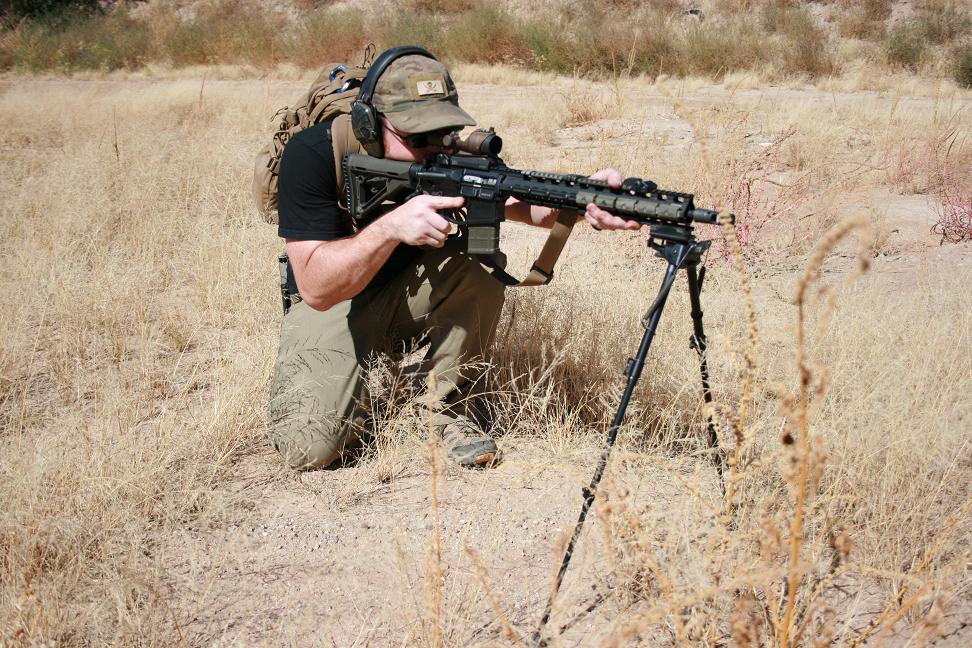
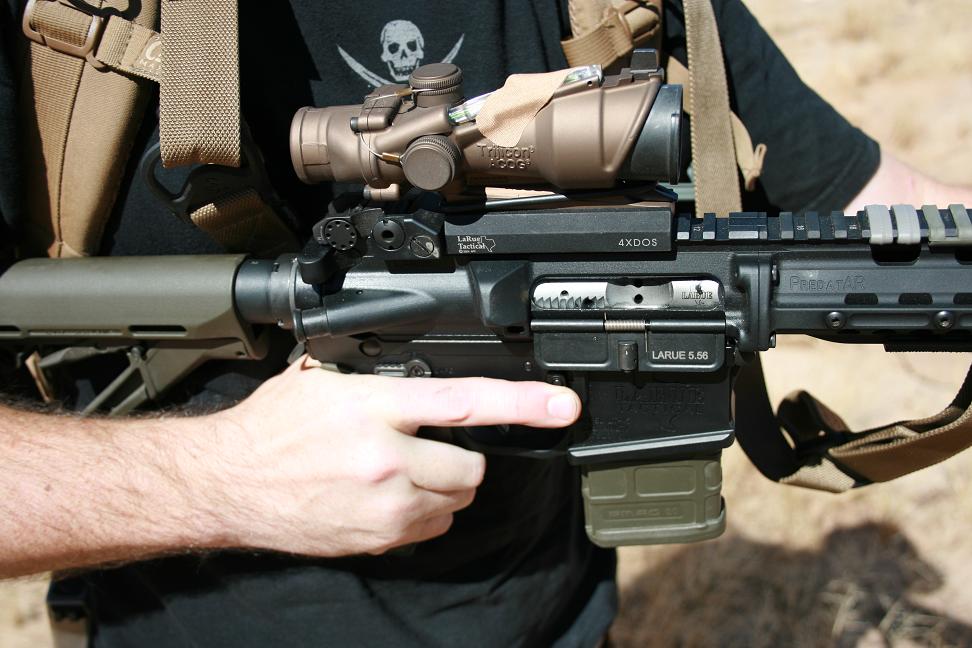
Earlier this year I got a hold of a Larue PredatAR in .223, which I’ve been using heavily for 3-gun competition.  I felt it was the perfect gun for Pecos because it is sub-MOA accurate, but ridiculously lightweight (only 6.5lbs from the factory).  It has a long 15″ freefloat handguard that is great for shooting off barricades like stages One and Two required, because you can rest solidly without contacting the barrel and getting deflection.  I topped it off with a Trijicon ACOG TA31H-G which is a great compact 4x scope that was ideal for the 100-400 yard targets at this match.  


What type of ammo did you use?

PMC Bronze 55gr FMJ.  Although a heavier bullet may have helped fight the wind on longer shots, this is my default 3-gun load that my gun was zeroed for.

How do you think your experience in action shooting sports helped prepare you for the competition?

Knowing your hold for longer ranges, shooting from awkward positions, and shooting support side were all required for this match, and fortunately I practice those regularly at the local matches I participate in.  Competing several times a month in events that push your speed, accuracy, and endurance on the clock prepares you for a match like the Run-N-Gun, where you might be exhaused and taking a 200+ yard offhand shot.

Tell us about the shooting courses, what distances were the targets at?  Were they more accuracy or time based?

Most of the targets were between 100-200 yards, except stage 5 where we shot out to 400 yards.  There were also close-range pistol targets on Stages 2 and 6.  All stages had a 4-minute time limit, but most required less than 10 rounds and could realistically be finished in 30-60 seconds.  I shot as fast as I could with reasonable accuracy, and was in the top 10% for 5 of the 6 stages.

What environmental factors did you need to consider when shooting the stages?

Most of the shooting positions at this match won’t allow you to go prone or even kneeling in many cases because of the brush and ground cover.  Therefore the ability to make hits from an unsupported standing position is invaluable.  Stage 5 had the longest targets, but had enough clearance to get fairly low to the ground and support your rifle; I shot from a kneeling position with an extended bipod.  The wind was deceptive on that stage for me, because there was no breeze at my position, but a pretty decent crosswind at the 400 yard plate.  I underestimated the wind (and was not heeding the RO’s advice), and wasted a lot of rounds before I scored my 2nd hit on that target.

What was the required round count vs the amount of ammo you expended?

I think the minimum round count would have been about 40 rounds.  I always carry more than enough to be safe, and fortunately I did because I struggled with the 400 yard plate on stage 5 and expended almost 30 rounds before clearing the stage.  Because of that I used about 70-80 rounds total for the match.  There were approximately 15 pistol targets and I used about 25 of the 50 rounds I was carrying.

Did you use any accessories that made the courses easier?

At last minute I borrowed an extended Harris bipod (13-27″ I believe) with a QD Larue mount.  I started with it mounted on the gun, but due to the weight ended up taking it off and on between stages and stuffing it into my pack.  I thought it would help me out on some of the more rugged shooting positions but a few times I found it to still be too low to clear cover even when fully extended.  Another competitor showed me his super-lightweight shooting sticks that folded up into a tiny pouch, and in the future I’ll probably try a set of those out.

Tell us a little bit about the load bearing gear and pack you wore for the match, why did you choose it?

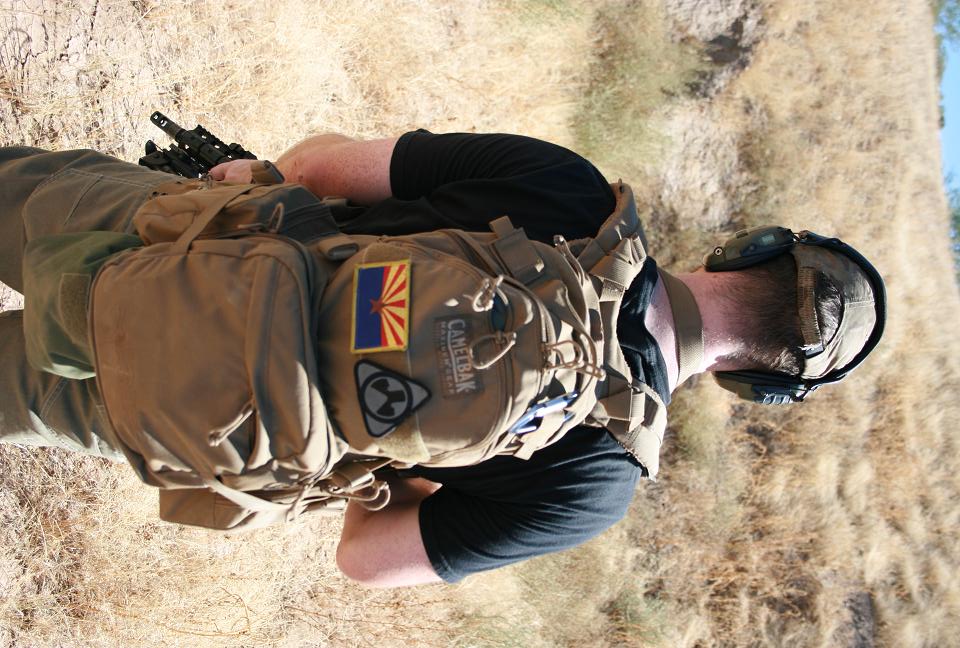
I tried to keep clutter off of my belt, and use a pack that allowed me to access the items I needed on the move without a lot of fumbling.  I wore a Wilderness Instructor Belt, a Galco Triton IWB holster (with Glock 19), and a single pistol and AR mag pouch on my support side.  I also had a Maxpedition RollyPoly pouch to store my earmuffs on the move. My pack was a Camelbak Linchpin which was much larger than necessary, but the outer pockets are sized for AR15 mags, and there is a generous “dump pouch” area that was perfect for stowing the bipod.  


What would you do different for next time?

Probably find a smaller backpack with a similar layout, and swap the bipod for shooting sticks.  I wouldn’t reduce my ammo load because you never know what might go wrong, and an extra pound of ammo can go a long way on a tough course.  Other than that I felt like I chose my gear wisely this year.

For the athletes reading this, how should they get started if they want to do these kind of physical shooting events?

Start shooting local 3-gun and carbine matches, and incorporate physical activity into your shooting practice as much as possible.  Simply doing a light jog, or a minute of jumping jacks or burpees can dramatically alter your shooting, and knowing how to compensate for that fatigue can be a huge advantage at any match.

For the shooters reading this, how should they get started if they want to participate in more physical competitions?

The same advice as above applies to shooters as well.  Push yourself out of your comfort zone during training, and find your limitations.  Start hiking, running, or biking during the week and you’ll be surprised how much it helps you in competition.  No one ever regrets being in better shape, or wishes that they couldn’t run farther or faster.  Physical fitness is a very inexpensive discipline to improve on versus shooting, so use that to your advantage. 

Posted in Competitions, Industry Insiders | Comments Off on Don Langworthy wins Pecos Run-N-Gun 2012

The Suarez Group and Red Dot Glocks

Advancing/Improving technology and products and trying new concepts has always been one of the things I enjoyed most about working in the firearms industry and competing in the action shooting sports.  There is always room to improve products and make them better.  There are many companies in the firearms industry making and selling products staffed by people who do not really shoot or use the products they sell.  Consequently, little product advancement is seen from them and the products stagnate and do not improve or move in less logical directions.  It is rare for company to have most or all of the staff be serious shooters, whether they be martially oriented, competition oriented, or a mix of the two.

The Suarez Group has always stood out to me as being a company that really bucks the status quo when it comes to the products and ideas it promotes.  Gabe Suarez himself is focused on advancing the art of small arms technology and techniques, and has staffed his company with serious shooters with a wide range of practical experience.  While their focus is on the martial side of shooting, many of the things they are doing appeal to myself as a competitor that prefers to use equipment with practical application and value.  The Suarez Group really grabbed my attention in early 2010 when they began advocating the use of the Trijicon RMR on Glock pistols.

I had been looking for a practical way to use a red dot on a pistol for several years.  The Ironman 3 Gun match I have participated in since 2002 has such a large volume of small targets at longer ranges that must be shot with pistol, it seemed like a natural solution.  I had tried various red dot sights on pistols before and found them all lacking.  They were too large to use in anything but race style holsters, which are a liability for the types of matches I compete in.  Smaller sights were not durable enough.  One sight I tried blinked on and off between shots.  The mounting systems available were clunky.  Even the micro sights available before had less than ideal mounting options.  The biggest problem I had using these systems is without any iron sights in line with the dot, the sights could easily be misaligned and I couldn’t see the dot.

When I saw the first Trijicon RMR equipped Glocks on The Suarez Group’s Warrior Talk forums in early 2010 I immediately knew it was the solution to the problem I was looking for.  The iron sights being in line with the red dot would make the sight alignment a non-issue, the Trijicon RMR was being reported as a very durable sight, in the event it failed the Irons were right there, and the whole package was small enough to fit in a normal duty holster.

I sent my Glock 34 slide off to One Source Tactical Technical Services Division and got it back in April of 2010, modified a Safariland holster, and had just enough time to train with the system before going to the Ironman 3 Gun match in June.  The RMR equipped Glock helped me get a 3rd place finish in Trooper Division that year.  I did indeed find it helpful with regards to accuracy on the numerous small and farther targets, shooting from awkward positions, and making hits while physically stressed.  I used the RMR equipped Glock again in 2011 and 2012 making a lot of pistol shots I do not believe I could have done as easily with an Iron sight pistol if at all.  With few exceptions the RMR equipped Glock usually allowed me to keep up with competitors using sub-machine guns or pistol caliber carbines.

The Suarez Group has expanded their product line since 2010. They are now offering their own complete slide assemblies ready to mount the Trijicon RMR, added several holsters to their product line designed for the RMR equipped pistol, and are now modifying other pistols to accept the RMR.  Trijicon has also advanced RMR itself to include new options like adjustable brightness.

OST-TSD RMR Glock Use and Benefits

With the increasing popularity of optics on pistols and The Suarez Group’s continuing expansion of their product line and promotion of new ideas, I wanted to know more about the thought process and philosophy that goes into the way they seek advancements in firearms technology. The Suarez Group’s General Manager, Tom Cornelius, was kind enough to answer my questions below.


Tom Cornelius on the range

My questions are in Bold, Tom’s answers are in Italics.

What role do you have in deciding what products endorses and sells?

My role concerning product selection is focused on: 1. The quality of the item. 2. It’s utility / value to the customer. 3. Formulating a test protocol to evaluate the product under simulated “real world” circumstances.

What was your background before coming to The Suarez Group, how has it influenced how you evaluate firearms and equipment?

I have served as a Police Officer, Deputy, Corrections Officer, Firearms Trainer, Suarez International Instructor. These experiences have provided me with a focused view of what is needed for an individual to prevail in a fight. Just as there are trends in the world of fashion, there are trends in the realm of firearms training and equipment. Sometimes these “new” products or techniques have real value and move everyone forward in terms of performance. AND sometimes they are nothing more than a trend. At the Suarez Group, we field test all of our mid & high end products before any customer gets their hands on it.

The Suarez Group distinguishes itself from other companies by promoting new technology and platforms others might not consider; Is advancing the art of small arms use and technology part of the philosophy of The Suarez Group?

The Suarez Group is absolutely focused on the pursuit of quality and improving performance in the martial realm. Our philosophy is: “Yesterday’s excellence is tomorrow’s mediocrity.” Technology is something we embrace and study with the idea of improving the products we offer. We have noticed many other organizations that cling to techniques or a certain platforms no matter how much data is out there demonstrating the technique or platform is less than optimum for the end user. We do not blindly embrace any equipment or technique without first testing it. Technology in the firearms / training field is just science being applied to a situation. To ignore advancements because of a lack of vision or ignorance is to cheat your students / customers. The TSD Slide Program is an excellent example of this. We spent two years, a considerable amount of capital and around 100,000 rounds of ammunition in a quest to identify the best “recipe” if you will, of how the optic equipped pistol should evolve. This effort required research in to no less than five different fields of expertise to become a finished product. (Metallurgy, Electronics, Ophthalmology, Kinesiology, Physics) Product research and testing at this level is nothing less than navigating through uncharted waters with raw data as your compass. All the driving forces come from technological advancements.

Why do you feel this is important?

The importance of technology can be something as mundane as a better score for a competitor OR the life saving edge a warfighter needs to prevail in a CQB engagement. The metrics of improved performance are quantified over time. I remember 15-20 years ago when a lot of folks in the firearms training community were ignoring red dot optics and low power scopes for fighting rifles. If a trainer did that today he would be deemed ridiculous by his peers. Those technological improvements in the field of rifle optics have saved untold numbers of lives.

How has teaching classes in addition to selling guns/equipment influenced what The Suarez Group views as effective?

The Suarez Group has the ability to evaluate gear like no other organization. We have a world wide training cadre that can provide evaluations in not only a varied tactical setting, but extreme environmental conditions too.

What methodology of testing does OST/SI use before officially endorsing a piece of equipment or firearm?

The methodology concerning testing products varies. Rifles are typically tested by not only in house staff but contractual staff that can put them in play under extreme environmental conditions. ie arctic, jungle, desert, water borne operations. This thoroughness tends to vet weak performers and shows the top performers. High round counts do become part of this protocol too. In a nutshell, we beat the #!!#// out of everything before it is deemed G2GO. This is not cheap. But it has value to our customers & students!

What set The Suarez Group on the path of the Red Dot Glock?

Well, handguns are the primary tool most people can have with them at all times. It is realistically, the most likely firearm non military individuals will put in to play. While the training & gear industry was attempting to re invent 10,000 different ways to run a pistol class or market a holster, Gabe Suarez began studying handgun performance in gunfights. Not just law enforcement engagements but civilian also. Very few of these gun fights occurred under optimum conditions. To the point, Murphy’s Law was always a factor. Poor lighting, non standard shooting positions, challenging angles, varying distances, etc… etc… Because the pistol has the greatest potential for use, it’s continuing development in terms of combat accuracy under less than perfect conditions is where Gabe chose to align our efforts. An optically equipped pistol that is reliable and has a manageable profile was the answer.

I recall seeing a Kelly McCann video many years before The Suarez Group was offering Red Do Glocks where he was using a Doctor optic on a Glock 19; What advances in technology in the past 10 years have made the red dot equipped pistol a more practical option than it was 10-15 years ago?

Kelly McCann was a true innovator in terms of experimentation of the concept. The Doctor Optic was an early attempt to produce a compact, rugged optic that is compatible with a fighting pistol. It has been our experience that the Doctor Optic is best suited for light to moderate use at best. With the introduction of the Trijicon RMR Series of Red Dot Sights the concept could finally demonstrate the expanded capabilities of a optic equipped fighting pistol.

What makes the Trijicon RMR a better sight for slide mounted use on a pistol than other contemporary options?

The RMR Series is very rugged and functions well in a myriad of environmental conditions. Before Trijicon introduced this excellent product, there was nothing to take the concept where it needed to go. We have evaluated and destroyed just about every optic out there that could be put on a pistol. The RMR was the only thing that held up to consistent hard use.

The Suarez Group appears to have been very influential in popularizing the red dot equipped pistol over the past several years; why has The Suarez Group succeeded in this where others have not?

Our success is based on the pursuit of excellence. Others have attempted to duplicate our efforts but they always fall short. We have seen folks cutting corners on what optics they install, the accuracy of their machining, the compatibility of barrels with their products any many other poorly conceived actions. We focus on quality and the very best materials in our designs. Something a bit sad but becoming a trend, is folks who had slide work done elsewhere approaching us with slides that are messed up and want us to fix the issues from hobbyist machinist’s efforts. Sadly, we cannot help those folks due to liability they created.

OST-TSD offers complete factory Glock slides with match grade barrels, how is this a better option than having a factory slide modified?

I think of our TSD Slide Packages as a system. The TSD Slide is specifically manufactured for optic use from 17-4 heat treated stainless steel. Our barrels are slightly tighter in fit to offer match grade qualities. They are purposely matched for accuracy & fit. The TSD Barrels are suppressor capable and will function with non jacketed ammunition if desired. There is nothing wrong with having a factory slide milled, it’s just not what that item was originally designed for.

OST-TSD is now modifying Sig and S&W M&P slides to accept Trijicon RMRs, What other pistols might be considered in the future?

You never know. We have a staff member that does nothing except explore new platforms and their compatibility with the Trijicon RMR.

10-20 years from now do you think optical sights will be as common on pistols as weaponlights are now?

I don’t think it will be that long… Great ideas have a way of pushing aside skeptics and cheapskates.

What technological advances would you personally like to see in regards to optical sights on handguns?

I can’t say… We are working on that as I write this.

Visit these links to learn more about the products and services offered by the Suarez Group:
www.suarezinternational.com
www.onesourcetactical.com
www.warriortalk.com

Posted in Gear, Industry Insiders, Ironman 3 Gun, Red Dot Glock | Comments Off on The Suarez Group and Red Dot Glocks

Arizona Security Professionals Armed Guard Class

I have been exploring new career opportunities and came across a few that would require an Arizona Department of Public Safety Armed Guard certification. Arizona Security Professionals (ASP) was recommended to me by several people as being the best company to take training from in the Phoenix Metro Area. I took their armed guard class based upon these recommendations. The course is designed for the novice that knows nothing about firearms or the relevant sections of the Arizona Revised Statutes, and the curriculum is mandated by AZ DPS. With those things in mind, the legal portions of the class were still beneficial for someone with my level of experience with firearms.

The class was instructed primarily by ASP Sgt. Gary Hayden, with other ASP personnel dropping in for additional instruction throughout the course. Sgt. Hayden and the other instructors have a lot of practical experience. Relating those experiences when discussing the legal portions of the class made the class more engaging and gave the students a better understanding of the law.

In Arizona security guards operate in the same capacity as any other citizen with no special powers; thus the legal portion was equally applicable to the armed citizen/concealed carrier. It is worth noting, that ASP also offers CCW classes and we were told the curriculum is very similar. I last took a CCW course in 2003, so the refresher was a good thing for me. While the state no longer requires training or qualifications for renewals of CCWs, it is probably a good idea for the armed citizen to do both occasionally. Formal documentation of training and shooting skills can be a good thing, should you find yourself in court.

The shooting qualification was more advanced than that of a CCW class with a total of 50 rounds required at 15-3 yards, including drawing from the holster and reloads. Par times were used for each string, but they were fairly generous. While not particularly challenging for an experienced shooter, getting a formal state recognized demonstration of shooting ability is likely a good thing for the courtroom.


250/250 Points

I would recommend ASPs Armed Guard course to anyone looking to get into that profession. I also think it might be of benefit to property/business owners for educational purposes on use of force, criminal law, and arrest powers in the state of Arizona.

Here’s their promo video:

Posted in Training | Comments Off on Arizona Security Professionals Armed Guard Class

October 2012 Multigun matches


3/9 Open, 6/62 Overall

Rifle: 20″ Palmetto upper with Samson Evo 15″ handguard and Leupold HAMR
Shotgun: 24″ Saiga-12 with Aimpoint M2 in RS Regulate Mount. Note the new tan AGP magazines


1st/41 overall, 1st/5 Open

Rifle: 16″ CMMG with Aimpoint M4S and PWS FSC 556
Pistol: OST-TSD Glock 34 with Trijicon RMR01

Posted in Competitions, Red Dot Glock, SAIGA-12 | Comments Off on October 2012 Multigun matches

September 2012 Multigun Matches

ACTS 9-15-2012

10/46 overall and 3/9 in Open.  With the weather cooling down the physical difficulty has been ramped back up. Agility was definitely a factor at this match.

My Rifle is Century Underfolder AK with US PALM mount for Aimpoint M2. Pistol is my Glock 34 with OST-TSD Modified Slidewith Trijicon RMR

Phoenix Rod and Gun 9-23-2012

1st/6 in Open Division

I’m really enjoying the Leupold HAMR for long range.  Unfortnately the pistol grip on my rifle broke (the screw was holding part of it on while the rest was loose), so I borrowed Don’s TA31 equipped LaRue rifle for the last 100 yard stage.  Both the HAMR and that TA31 have the same magnification and a horse shoe reticle, so that wasn’t a problem.  I’m used to a single stage trigger and the LaRue rifle had a two-stage trigger, which took me a couple shots to get the feel for.


Posted in Competitions, Red Dot Glock | Comments Off on September 2012 Multigun Matches

Rio Salado 2012 3 Gun Team Match

The Rio Salado Sportsmans Club hosted their second annual 3 Gun Team Match on 9-8-2012.  Teams consisted of 3 shooters, with only one open division shooter allowed per team, the other 2 shooters could be of any other division.  The stages were relay race style or shooting gallery style with the team working together to neutralize all the targets.

Team Sun Devil defended their title and won the match, followed by Kelly’s Heroes in second place.


My team was 5th place out of 27 teams.
Don used his SCAR-H on stages 1 and 3, Benlli M2 on stages 2 and 4
Karl used his Daniel Defense DMR rife on Stage 1, and cut a swath of destruction with Saiga-12 on the others.
I used my SCAR-L on stage 1, Glock 34 on stages 2 and 3, and Benelli M2 on stage 4

I shot the match twice on another team with my girlfriend (Steff) and another shooter’s wife, Sarah.  While not very experienced, both of them had a good time. The team format is just more fun than shooting stages by yourself.

I used my SCAR-L on stage 1, Benelli M2 on stages 2 and 4, and Glock 34 on stage 3
Steff Used her lighweight blue AR15 on stages 1 and 3, and her Benelli M2 tactical on stage 2 and 4.
Sarah used her AR15 with scope and bipod on stage 1, Glock on stage 2, and Saiga-12 on stages 3 and 4.

Russell’s Bunnies 25/27

To better understand what’s going on in the video here are the stage diagrams and descriptions:

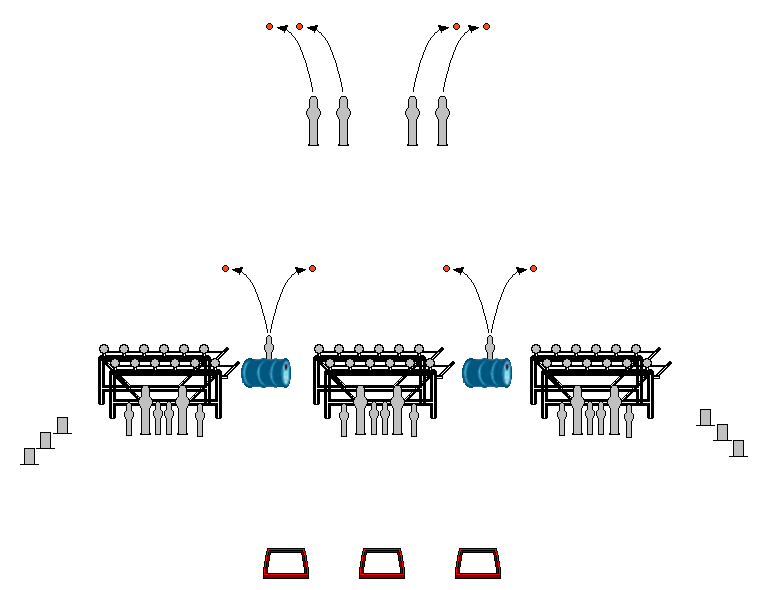
Stage 2: “Flippin’ The Bird” – 2 x SHOTGUN, 1 x PISTOL
Start in shooting boxes, shotguns loaded/safe, pistol loaded/holstered. On start signal, team will engage all targets; steel to fall, clays to break by shotgun fire.

Comments: The flippers on this stage required a pistol shooter to activate them most of the time.

Stage 3: “Smells Like Team Spirit” – 1 x SHOTGUN, 1 x RIFLE, 1 x PISTOL
Start in the team corral, guns loaded and staged in respective containers. On start signal, the shotgunner will engage shotgun targets from shotgun shooting box and then tag the rifleman, then the rifleman will engage rifle targets from rifle shooting box and then tag the pistoleer, then the pistoleer will engage pistol targets from the pistol shooting box; shotgun steel to fall (buckshot or birdshot only), rifle steel to ring and rifle frangibles to break, pistol steel to fall.

Comments: The shotgun targets required buckshot to fall.

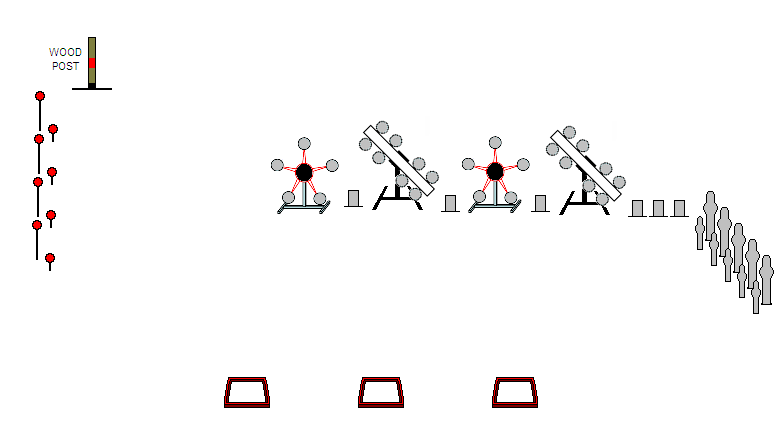
Stage 4: “Slug It Out” – 3 x SHOTGUN
Start in shooting boxes, shotguns loaded/safe. On start signal, team will engage all targets; steel to fall (birdshot only), clays to break by gunfire (birdshot only), wood post to be severed (slugs or birdshot only).

Comments: The stick took a lot more slugs than we expected to fall.

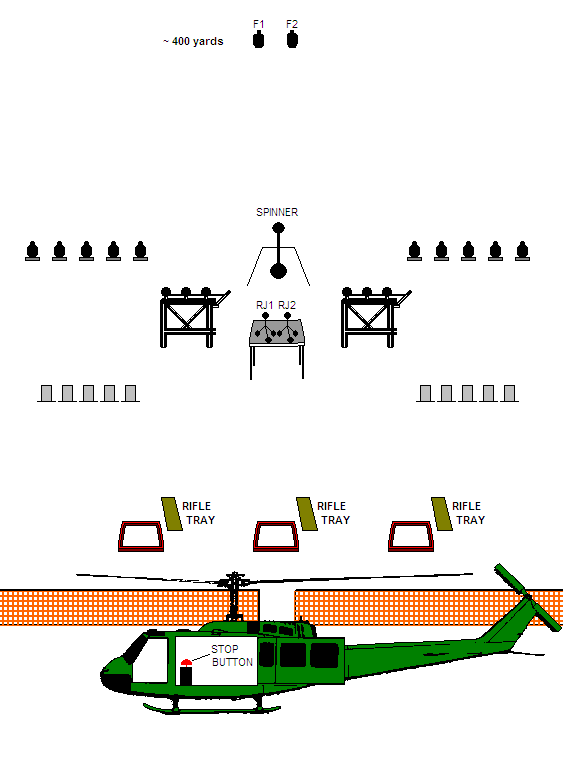
Stage 1: “Jack Off (the table)” – 3 x RIFLE
Start in the helicopter, rifles loaded/safe on trays at shooting boxes. On start signal, team will engage all targets; steel to fall, flashers to flash, spinner to spin 360 degrees, rifle jacks to walk off the table. Once targets have been engaged to the team’s satisfaction, the team must get back on board the helicopter before hitting the STOP button.

Comments: The double spinner was much easier with a .308 rifle.  The rifle jacks required multiple good hits to fall off the table.

Posted in Competitions | Comments Off on Rio Salado 2012 3 Gun Team Match

ACTS 8-18-2012

2nd/26 Enhanced, 3rd/50 Overall.  There were a lot of opportunities to incur penalties this month, and I got a few myself, watch the video with comments on for complete explanation.

Arizona ACTS is now allowing muzzle brakes in all divisions, rather than just open.  Accordingly I reconfigured the rifle I normally use for ACTS with a Primary Weapons FSC556.  I prefer having one over a flash hider for competition purposes because it makes getting zero zone hits doing double taps easier.  The FSC556 strikes a good balance between reducing muzzle jump and not making the rifle too loud or increasing muzzle blast to absurd levels.

Posted in Uncategorized | Comments Off on ACTS 8-18-2012

July 2012 Multigun Matches

Here’s all the videos of the July 2012 matches in Arizona.  I don’t have much to say about this other than shooting in the summer here isn’t very fun due to the heat, and I tend to get sloppier as my head really isn’t in the game as much.  I’m eager for the temperature to get back under 100 degrees.

Posted in Competitions | Comments Off on July 2012 Multigun Matches

2012 Independence Day Action Rifle Match

The Rio Salado Sportsman’s Club 3 Gun Division hosted the annual Independence Day Action Rifle Match to benefit the Arizona Citizens Defense League.  All proceeds minus range fees went to support AZCDL.  The match had the largest attendance ever with 79 shooters competing in five divisions.  Registration filled up in eight days, with more people still wanting to get in.  A number of participants were not regular Rio Salado practical match attendees and chose to participate because of the rifle only format.

The match consisted of four stages with three being a combination of close range and long range (300+ yards) shooting, and one that was close range only.  Shooting started just after 7AM and wrapped up at about 1PM.  The weather was overcast with light rain for a short period; this kept the temperatures down in the ’90s making the day on the range less draining than in previous years.  The match ended with sandwiches provided by AZCDL and prizes awarded by random drawing to the competitors.

I chose to shoot my Mk17 SCAR-H for this match in Heavy Metal Limited.  I normally wouldn’t shoot in this division in 3 Gun because I don’t have a .45ACP pistol or a pump action shotgun.  I placed 1st/7 shooters in my division, and 17th/79 Overall.  Planning to shoot stages with a 20 round capacity was the main difference I found compared to shooting in Tactical Limited.  Pulling single A zone shots seemed more worthwhile in some cases to make for only one reload on a stage rather than two.  The extra energy of the 7.62mm NATO cartridge was also great at putting the long range LaRue targets down with authority.

Results:

Open (11 Competitors)
1st Kelly Neal
2nd Brian Williamson
3rd Chris Huey

Tac Scope (26 Competitors)
1st Nils Jonasson
2nd Kalani Laker
3rd Josh Manski

Tac Limited (32 Competitors)
1st Mark Stephens
2nd Mike Pannone
3rd Mitch Barlow

Heavy Metal Scope (3 Competitors, so overall results listed too)
1st Gary Mowry 9th overall
2nd Jon Copeland 11th overall
3rd Don Langworthy 23rd overall

Heavy Metal Limited (7 competitors)
1st Russell Phagan
2nd Chris Gotie
3rd Paul Shanks

The Independence Day Action Rifle Match is a great way to celebrate the founding of our country.  Given the level of participation we have seen here in Arizona, it would be a good idea for other states to run similar events to make shooters aware of their local gun rights organizations and generate support for them.

Posted in Competitions, SCAR-H | Comments Off on 2012 Independence Day Action Rifle Match