
I’ll be doing more videos for the KSG including, Unloading and Disassembly, Accessories, and more methods for running it effectively.
I’ll be doing more videos for the KSG including, Unloading and Disassembly, Accessories, and more methods for running it effectively.
First Place/4 Open Division
Rifle: GWACS CAV-15 MKII with Leupold HAMR/Vortex SPARC and Z-Comp
Shotgun: Saiga-12 with Aimpoint M2 in RS Regulate Mount
Pistol: OST-TSD Glock 17 with RMR07
3rd/50 Shooters Over All, 1st/4 Open
Rifle: Sig 556R with Aimpoint M4
Pistol: OST-TSD Glock 17 with RMR07
Given the present ammo shortage, I’m glad I have a lot of 7.62x39mm and that it is still relatively available compared to .223/5.56mm. The Sig 556R is only a noticeable disadvantage over an AR15 when it comes to standing reloads; if I can reload on the move, there’s no time lost.
Youtube deleted this video for violating community standards years after it was uploaded. It is now on GunStreamer here:
I worked for Cavalry Arms Corp from 2001 until it ceased operations in June of 2010, beginning as shop help and ending as Vice President of the company. During that time I was able to participate in all aspects of manufacturing, product testing, warranty and repairs, and product improvement. It is funny now to think about this all in a historical context, because at the time we were just running a business. My goal in writing this is to provide the firearms community with the historical context of the CAV-15 receiver and it’s various revisions over that time frame. Working on the CAV-15 receiver was a learning experience for everyone involved; from where it began to where it ended up as a durable, reliable product was a long journey. In an ideal world the CAV-15 MKII would have been what the first CAV-15s were released as. Revisions and enhancements were incorporated constantly as issues were identified and resolved. The CAV-15 MKII has remained largely unchanged since it was released in late 2003.
Origin
The history of Cavalry Arms and the CAV-15 begins with Shawn Nealon. Nealon’s parents owned an injection molding and mold manufacturing company. Nealon would learn about injection molding, machine work, and manufacturing working for his parents. Nealon grew up with an interest in firearms including hunting, target shooting, and serving as a rifle instructor at Boy Scouts summer camps. Not long after High School, Nealon enlisted in the US Army and served in the first Gulf War in the 1/7 CAV as a Cavalry Scout. As a Cavalry Scout Nealon learned to appreciate the benefits of lightweight equipment and minimizing the weight one carried in the field. After the Gulf War, Nealon remained active duty for a period of time, and later in the Arizona National Guard. Nealon spent some time as a unit armorer. In civilian life, Nealon spent some time working for Accumatch, a company that manufactured firearms accessories, then as a partner in Advanced Tactical Firearms (which was later bought by Armscor). After the sale of Advanced Tactical Firearms, Nealon founded Cavalry Arms (named after his branch of service) and began working on what would become the CAV-15 receiver.

Nealon with CAV-15 MKI and MKII and prints circa 2003.
CAV-15 “MKI”
The CAV-15 injection molded AR15 receiver was first unveiled by Cavalry Arms at the 2000 Soldier of Fortune Convention in Las Vegas, Nevada. The first CAV-15 receivers shipped to consumers in December of 2000.
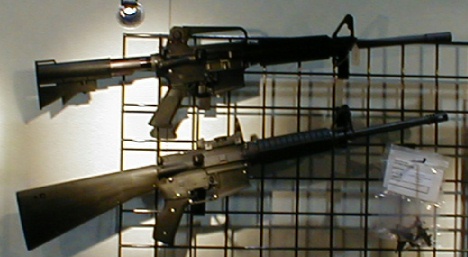
All CAV-15 receivers were injection molded in two halves from glass filled nylon 6, but the design went through 4 generations of revisions as assembly techniques were perfected and issues with the product addressed.
CAV-15 “MKI” Generation 1: The plastic of these receivers was untextured, and the halves were assembled together using screws only. Very few of these receivers remain in existence, most were remanufactured as later versions.
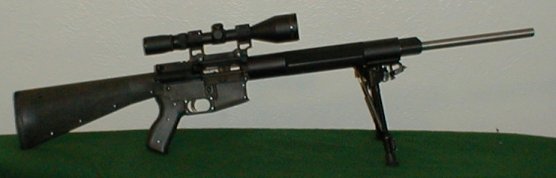
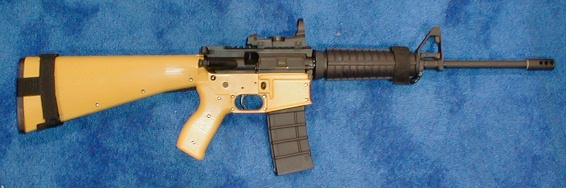
CAV-15 “MKI” Generation 2: The plastic of these receivers was untextured, and the halves were assembled together using a combination of screws and sonic welding. Very few of these receivers remain in existence, most were remanufactured as later versions.
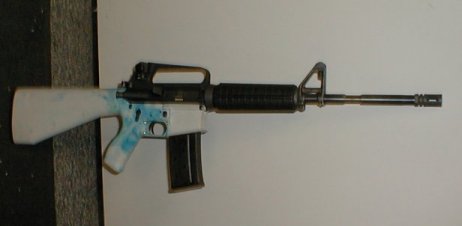
CAV-15 “MKI” Generation 3: The plastic of these receivers was untextured, and the halves were assembled together using screws and more sonic welding. Internal structural enhancements were incorporated as well.
Note the longer reinforced area at the back of the stock. This was added to reinforce the buffer tube that used a rifle length buffer. The rifle buffers were cracking the back end of the buffer tube.
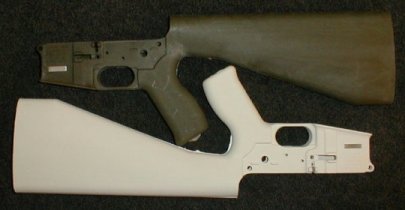
CAV-15 “MKI” Generation 4: Same as the Gen3, except texturing was added to the plastic.
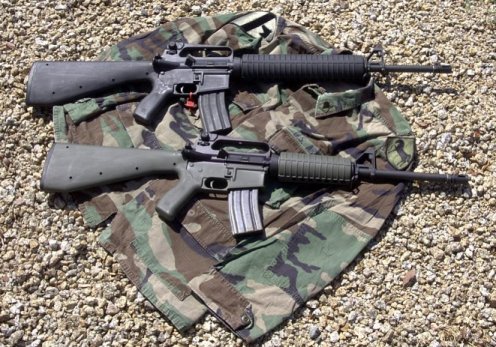
Other Notes
Colors: Cavalry Arms made receivers in a wide varieties of colors including Black, OD Green, Desert Tan, Purple, Yellow, Blue, and Pink. Cavalry Arms got into manufacturing AR15 furniture out of necessity to have matching handguards for its lower receivers. Later the OEM side of manufacturing handguards, buttstocks, and pistol grips for most of the industry would make up the bulk of Cavalry Arms’ sales compared to the CAV-15.
Speed Pins: To reduce scrap rate and increase product durability, Cavalry Arms switched from standard military style take down pins to “Speed Pins” that have the spring and detent built into them. The hole for the standard rear spring/detent was found to be a fail point that could crack all the way into the pistol grip. The front spring/detent area was prone to chipping. Speed Pins are still standard mil-spec diameter. Some Gen3 and roughly half of the Gen4 receivers in existence use these pins. All CAV-15 MKIIs use speed pins.
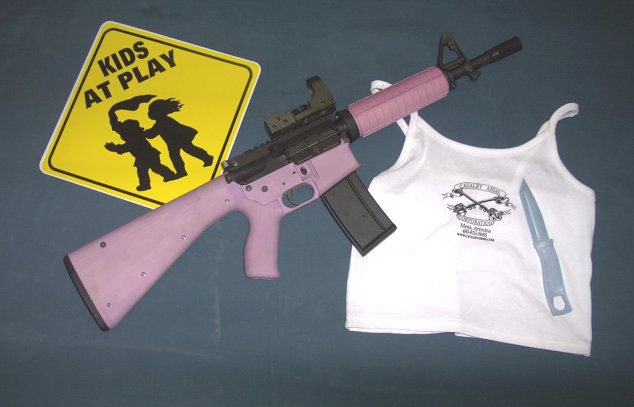
Shortened Receivers: The CAV-15 “MKI” had a 14.5″ length of pull, making it longer than an A2 stock. To meet the demand for requests for shorter stocks, Cavalry Arms offered stock shortenings for their receivers making them roughly A1 length. The process involved chopping off the end of the stock, running a delrin plug into the buffer tube that the buttplate would screw into. Screws were run into the sides of the stock into the plug for structural support. This process also made the receiver use a carbine buffer system. The popularity of this modification resulted in the A1 length of pull on the CAV-15 MKII.
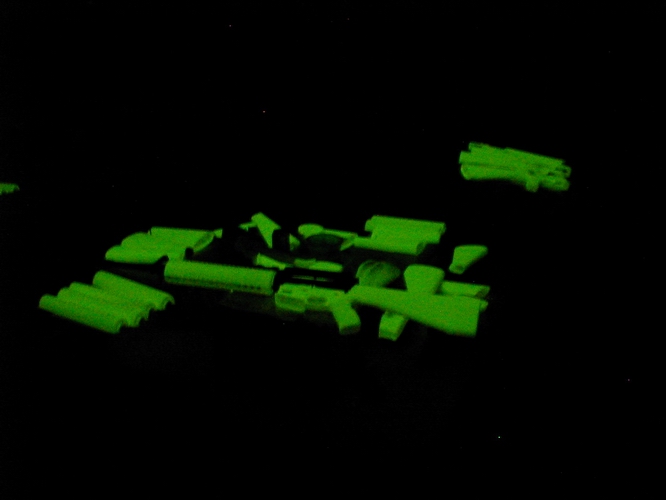
Seven Glow in the dark receivers were made and given to company investors and staff in 2002.
CAV-15 “MKI” receivers were discontinued in February of 2003 with the announcement of the upcoming CAV-15MKII at SHOT Show. Existing inventory of CAV-15 MKI receivers was sold off to wholesalers. The CAV-15 MKII replaced the CAV-15 “MKI” in the Cavalry Arms Product line.
CAV-15 MKII
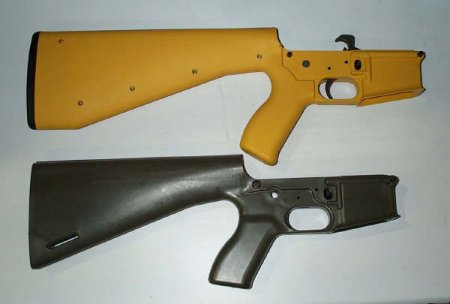
CAV-15 “MKI” receiver (top), with its successor the CAV-15 MKII (bottom)
CAV-15 MKII receivers were released in November of 2003, replacing the CAV-15 in Cavalry Arms Corp’s product line. The original CAV-15s were called “MKI” retroactively to establish their difference from the CAV-15 MKII. Cavalry Arms Corp. sold CAV-15 MKIIs until it gave up its FFL in March of 2010
The delay between discontinuing the CAV-15 MKI and release of the CAV-15 MKII was caused by the fact the CAV-15 MKII was originally to use the same sonic welding process as the MKI. It did not work and the parts wouldn’t stay together. The decision was made to switch to Linear Vibration Welding, and the mold was modified to accommodate for this different process. Ultimately, the delay was worth it as Linear Vibration Welding was faster and more consistent, producing a stronger weld. The machine required for this process was significantly more expensive however.
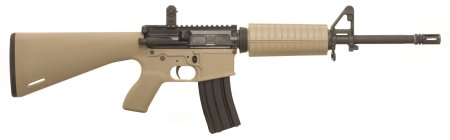
CAV-15 MKIIs are the most prolific CAV-15 receiver with thousands having been produced. Standard colors included Black, OD Green, Coyote Brown, Foliage Green, and Dark Earth. Special production runs in Pink, Light Blue, Dark Blue, Blaze Orange, Electric Green, Pigeon Gray, Urban Gray, Yellow, and others. Some colors are much more rare than others. 11 Glow in the Dark MKIIs were also made.
The CAV-15 MKII was also produced under marking variances for Sabre Defence as the SR-15 “Light Sabre” and for Eagle Arms as the M15P. Both of these were only available in black.
CAV-15 MKII Receivers were injection molded from glass filled nylon 6, a polymer material very similar to that used by other firearms companies. Polymer offers unsurpassed corrosion resistance, finish durability. and is significantly lighter than aluminum based receivers.
The receivers were molded in two halves and assembled using a linear vibration welding process. Linear vibration welding formed the two halves into one solid piece. Every contact surface between the two halves was bonded together with a weld that was even stronger than the parent material.
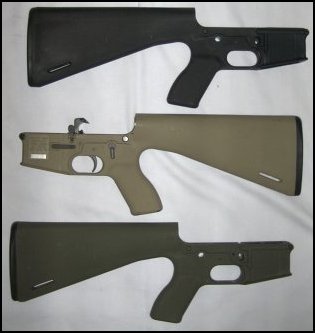
CAV-15 MKII Receiver Features:
• A1 Length integral Stock (5/8″ shorter than A2) with sling loop. 13″ Length of Pull.
• Carbine buffer system (reinforcement ribbing behind the buffer tube area to absorb impact)
• Ergonomically enhanced integral pistol grip
• Wider magazine well capable of accepting .45 Greasegun magazines with caliber conversion upper receivers and magazine blocks. Standard AR15 magazines can be used without modifications.
• Receiver weight (complete) is 1 full pound lighter than complete aluminum receiver with A2 stock
• Uses all standard mil-spec parts with the exception of the take down pins. The front pivot and rear pins are a Quick Take down style with Detents built into them, This allows for quick and easy removal of the pins while maintaining a positive lock.
Other Notes:
Serial Number Tags: Sometime in 2008 Cavalry Arms changed the serial number tag to comply with new BATF guidance to make them more tamper proof. Many polymer firearms manufacturers made similar changes around the same time; look at older Glocks vs newer Glocks for example.
Safety Selector Spring and Detent Hole: The hole for the safety selector spring and detent is drilled from the top down into the pistol grip on the CAV-15 receiver. Later MKII receivers had the upper half of this hole formed in the mold to make production easier. The preformed U shaped hole in this area served to help center the mill or drill press for drilling the hole down into the grip. It also prolonged drill life and prevented the drill from walking as it went down.
Single Point Sling Slot: Cavalry Arms offered a factory service to slot the receiver to accept a single point sling
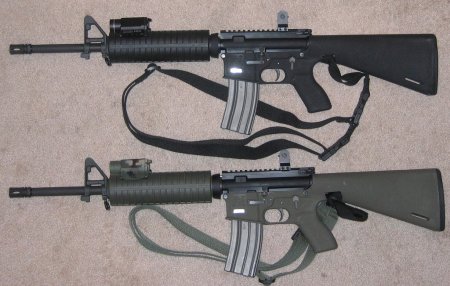
CAV-15 MKII Shortened Receiver by Echo 93
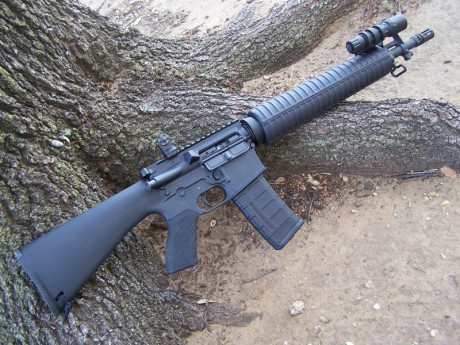
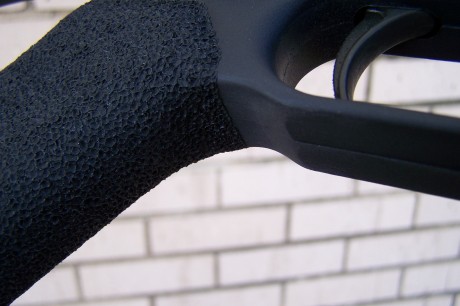
Joe Elledge of Echo 93 was authorized by Cavalry Arms to perform modifications to the CAV-15 receiver including shortening the stock and modifying the pistol grip
CAV-15 MKIII Prototype
Cavalry Arms Corp. exhibited a prototype CAV-15 MKIII at the 2008 SHOT Show. This prototype showcased several new features:
• 9.5″ Length of Pull Stock, that could be extended with spacer plates.
• Club foot stock for supported shooting
• Redesigned pistol grip allowing for a higher hold
• Texture and finish enhancements
Unfortunately Cavalry Arms Corp. was never able to bring this receiver to market. Only one prototype existed and it was destroyed.
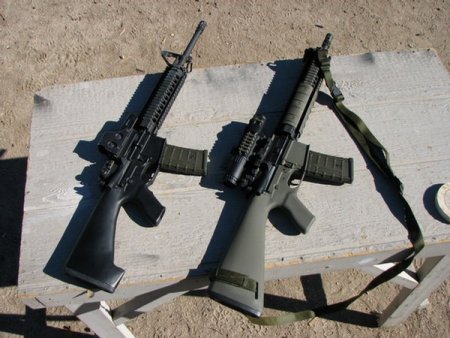
CAV-15 MKIII prototype (left), CAV-15 MKII (right)
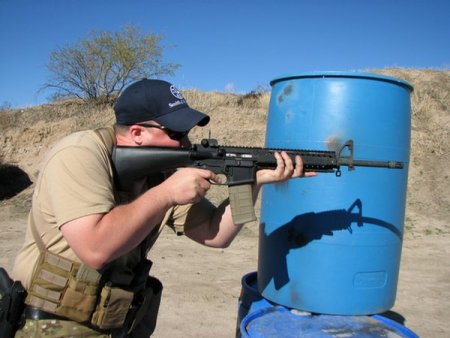
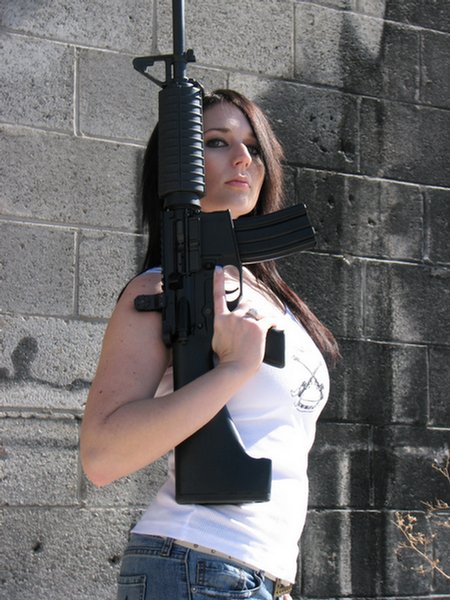
Sale to GWACS Armory
I purchased the CAV-15 and CAV-15 MKII Mold/Tooling when Cavalry Arms was closing operations in mid-2010. I was intending to manufacture them under my own company. After six months of interviews and meetings with BATF, and no definite answer on getting an 07 FFL manufacturing license, I elected to drop my application and sell the CAV-15 MKII Mold/Tooling. GWACS Armory of Tulsa, OK eventually purchased it in December 2011, and began manufacturing operations in 2012. GWACS is currently offering service and support for existing CAV-15 type receivers if you already own one.
Update March 2019
In the few years the CAV-15 MKII had been off the market, other lesser polymer designs that did not use an integrated buffer tube and stock became prevalent. These designs developed a bad reputation for breaking. Once GWACS resumed production of the CAV-15 MKII reintroducing it was made difficult by general public ill-will against polymer receivers in general.
I worked with GWACS helping them with sales and general consulting/product knowledge. To address some of the durability concerns, in 2014 I made this video with my friend Karl Kasarda, who would later go on to start InRange TV with Forgotten Weapons’ Ian McCollum:
Sales continued at a moderate pace for GWACS until in 2017 InRange TV announced their What Would Stoner Do Project
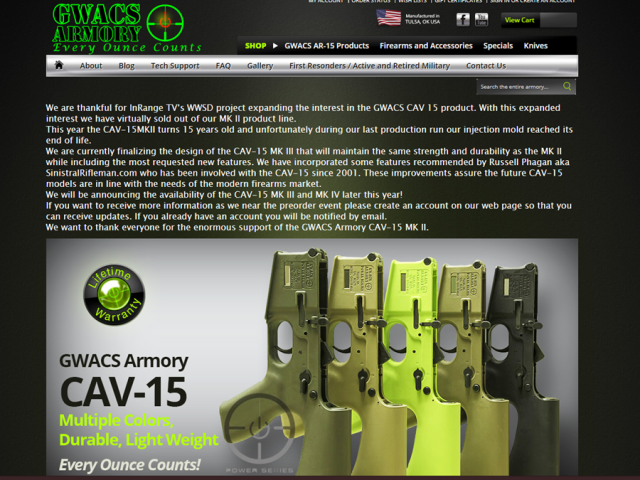
GWACS Sold out of CAV-15 MKII Receivers by the summer of 2018 thanks to the interest generated by InRange. Unfortunately, the CAV-15 MKII was worn out at this point. GWACS announced that they intended to develop and release 2 new models and posted this message mid 2018:
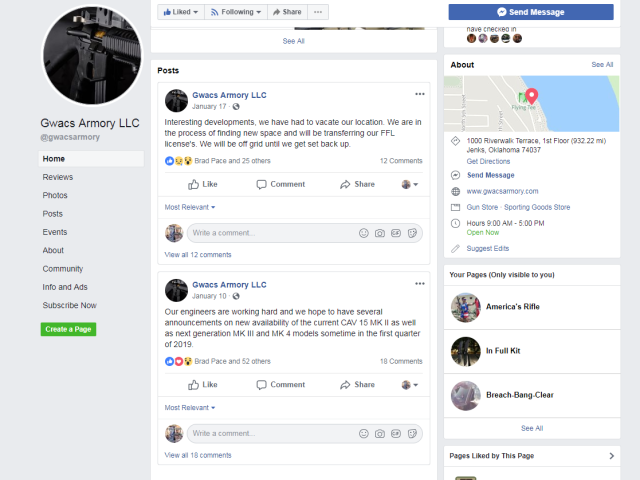
In January of 2019 these messages were posted to the GWACS Facebook page:
I have not had any direct contact with GWACS for some time now. My Point of Contact no longer works for that company, and the president never responded when I reached out.
What is the future of the CAV-15 Receiver? As long as I’m alive the concept of a CAV-15 style receiver is not dead. Be patient and stay tuned…
UPDATE: Read the post about KE Arms Triggers in the CAV-15 MKII. These triggers are the easiest to install and use.
The CAV-15 MKII receiver, while being very similar to an AR15 receiver has some differences that allow some match triggers to work, and others to not work well at all.
What Won’t Work
Rock River Arms 2 Stage Triggers. Over the years I have tried 4 different RRA 2 stage triggers in CAV-15 MKIIs with varying results.
One didn’t work at all, one immediately started doubling, one worked for about 500 rounds then wouldn’t reset anymore, and the last worked for a few hundred rounds then starting doubling.
Timney Triggers
The Timney trigger tensions against the bottom of the lower. This works in a normal aluminum receiver. In the CAV-15 MKII it just makes the lower flex, and the trigger will not reset correctly.
What Works
ALG Combat Trigger
The ALG is a good option for people wanting Mil-Spec style trigger, but cleaned up to be as crisp as possible and the minimum mil-spec weight. This unit installs just like a GI trigger and requires no modification to the CAV-15 MKII lower
Spike’s Battle Trigger
This is a mil-spec trigger with nickel boron coating. It features standard installation, and a trigger pull of 5-9 pounds depending on individual spring variances. No modifications are necessary for installation in the CAV-15 MKII.
Modular cassette type triggers like the McCormick AKA CMC.
I feel these are of particular benefit in the CAV-15 MKII because they are not effected by the flex of the plastic. While USGI style triggers have no issues in the CAV-15 MKII due to their generous engagement surfaces; match triggers that function in the normal manner may not have enough engagement surface to accommodate for the flex the plastic may experience through function. Modular triggers are self contained and immune to this issue.
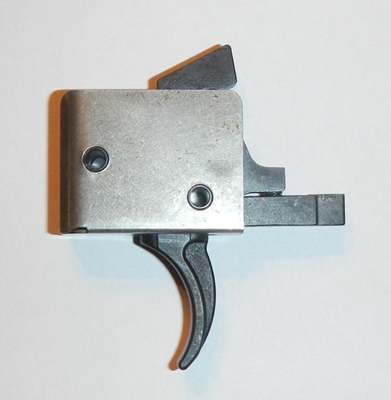
Modular triggers also do not require any adjustment to the trigger on the part of the user. Triggers that require set screw adjustments to work are best installed by gunsmiths, and sometimes require readjusting. I also recommend the CMC for use in aluminum receivers for this reason; I have over 40,000 rounds between my several CMC triggers and they’re still working without issues. The Wilson Combat trigger is a similar modular cassette type unit and will likely work the same way.
Modifications are required for use in the CAV-15 MKII.
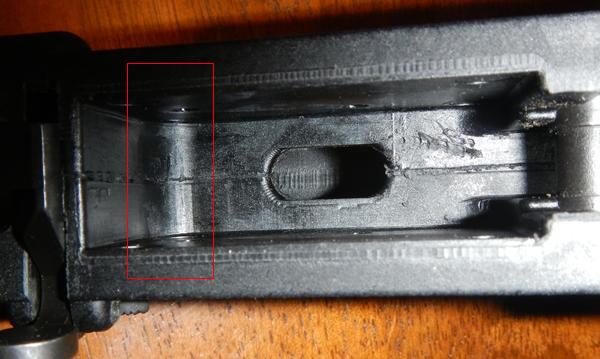
The front of the fire control area of the CAV-15 MKII has a radius that will prevent the modular unit from sitting all the way in. This is easily remedied with a dremel tool in a few minutes.
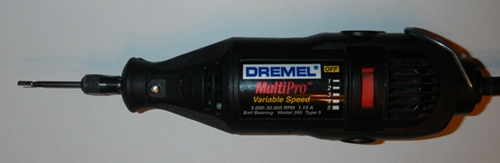
Use a small cutting bit with a flat top to remove the radius inside the lower. Do not cut too far forward, or cut deeper into the fire control area. Remove material slowly and check fit frequently.
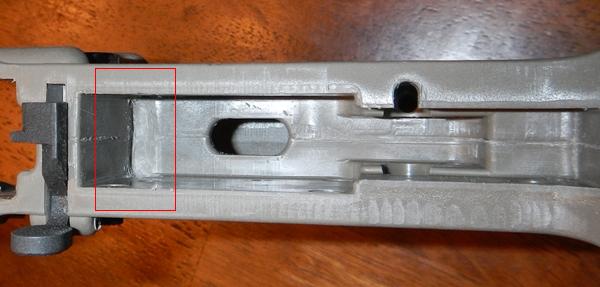
The required material removal is finished in this picture.
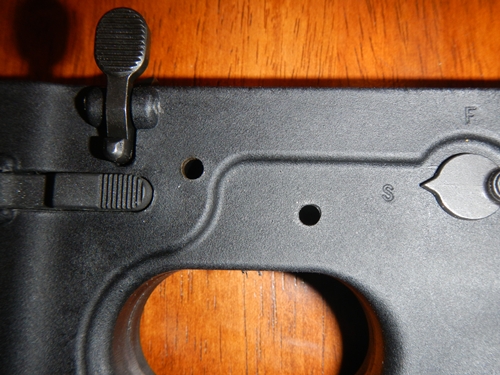
The hammer pin area on the CAV-15 MKII receiver is wider than an Aluminum receiver. Standard USGI triggers and the ALG use a J-pin in the hammer to hold the hammer pin in place and thus a longer pin is not needed with those triggers. Modular triggers do not use a J-Pin to capture a standard fire control pin like USGI triggers or the ALG; they generally use pins with small screws or C-clips to be held in place.
There are several Options for the modular trigger user with the CAV-15 MKII to deal with this issue
1) UPDATE: These pins are no longer available.
Cavalry Manufacturing Big Pin for the CAV-15 MKII receiver. This pin is sized to correctly fit through the CAV-15 MKII receiver for use with modular triggers and is retained with E-Clips. These have been out of production for a few years, but Cavalry Manufacturing will be resuming producing them now that GWACS Armory is producing CAV-15 MKII receivers again.
2) Use a long machine screw and nut through the hammer pin area. While it won’t look pretty it will work.
3) Have a machinist mill down the outside areas of the receiver to be flush like an AR15 lower. I saw a few examples of this working at Cavalry Arms, but there was no long term testing conducted with regards to structural integrity issues. This will also probably void your warranty
4) The modular trigger may fit tightly enough that the longer hammer pin is not required at all and the trigger pin alone is sufficient to hold it in place. If you choose this method, test it thoroughly for reliability.

Top to Bottom: JP Trigger Pin, CMC Trigger Pin, Cavalry Manufacturing Big Pin.
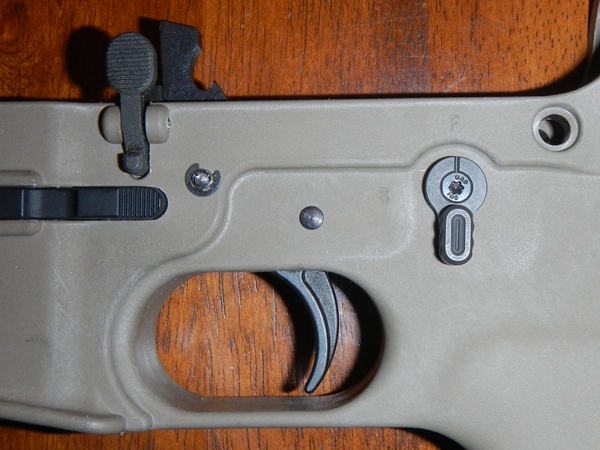
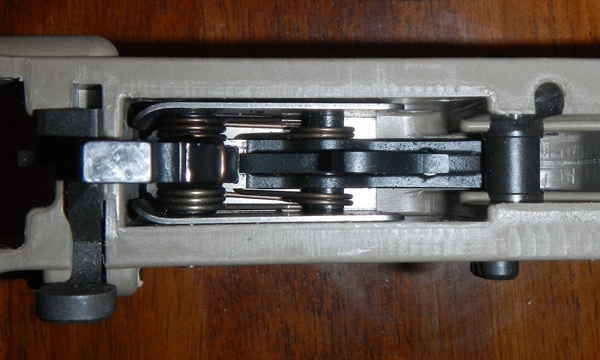
CMC Trigger installed with Cavalry Manufacturing Big Pin
Cavalry Manufacturing has been working on a new lower for the SCAR MK17S for some time now. I was recently given a prototype to test with my MK17S.
The upper on the SCAR is the regulated serial numbered part, so the lower is basically a trigger pack/magwell module. The Cavalry Manufacturing unit is machined from aluminum billet and accepts the parts out of your existing SCAR MK17S lower.
I will be testing a production unit in the future.
Contact Cavalry Manufacturing at http://www.CavalryManufacturing.com
Lots of multi-gunning this month…
Rio Salado Multi-Gun
7th/58 Over all, 2nd/11 Open
2 Gun Action Challenge
2nd/42 Overall, 1st/4 Open Division
I got a Sig 556R in 7.62x39mm and used it at the last two matches of the month. I really like it so far, I will be posting a more in depth review after I use it more:
Phoenix Rod and Gun 3-Gun
3/4 Open (not a big turn out right before Christmas)
Rio Salado Last Blast Rifle Match:
27/92 Shooters
This match was very beginner friendly as it was all close range and not very physically challenging. While I generally prefer more difficult events, it was fun. Matches like this definitely have their place in encouraging less experienced shooters to participate.
My girlfriend, Stephanie, competed as well and finished for the first time with no penalties. Here’s her video:
Dear Family and Friends,
In the past week we have been contacted by many of you for advice when looking to make your first firearms purchase due to security concerns, or looking to add more to the collection based on the potential for legislation. We appreciate that you trust our knowledge and experience when it comes to the technical aspects of firearms. If you have made purchases, we welcome you to the fold as gun owners. As Jeff Cooper once said, “Owning a handgun doesn’t make you armed any more than owning a guitar makes you a musician.” You have started on the path to being self reliant, it is now time to continue on that path with training.
From basic safety, basic operation of the firearms, maintenance and cleaning, to advanced shooting techniques and improving your skills, we can train you to become more proficient in the use of your firearms. We prefer small class sizes of 4-6 students. Individuals, couples, or families, are all welcome. We can present a class specific to the firearms you own and make you and your loved ones comfortable and capable of handling them safely and effectively.
With rights come responsibilities, and as a gun owner it is your duty to seek out training and improve your skills. If not from us, please consider taking training from any reputable training school.
Please contact me privately at SinistralRifleman@hotmail.com to discuss your firearms training needs
Sincerely,
Russell Phagan
http://www.SinistralRifleman.com
 SinistralRifleman
You must be logged in to post a comment.