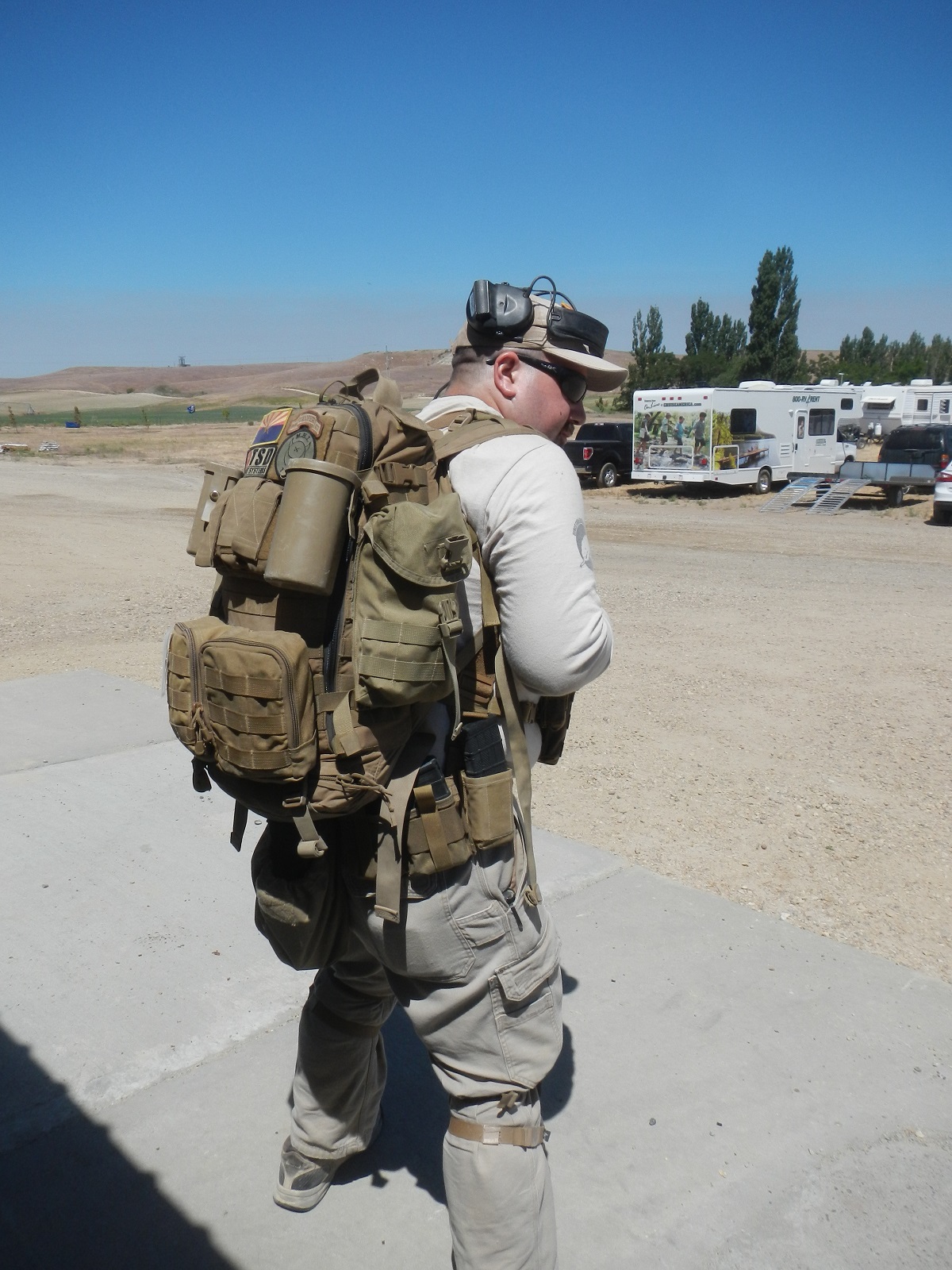
I’ve never been a fan of using carts or converted strollers to carry my ammo and gear around the range at 3 Gun Matches. Using a pack and a double long gun case works at any range regardless of terrain and stores in a vehicle much easier. Conversely traditional range bags are often too heavy when fully loaded down to carry comfortably with a single shoulder strap. A good backpack makes carrying everything stage to stage much easier.
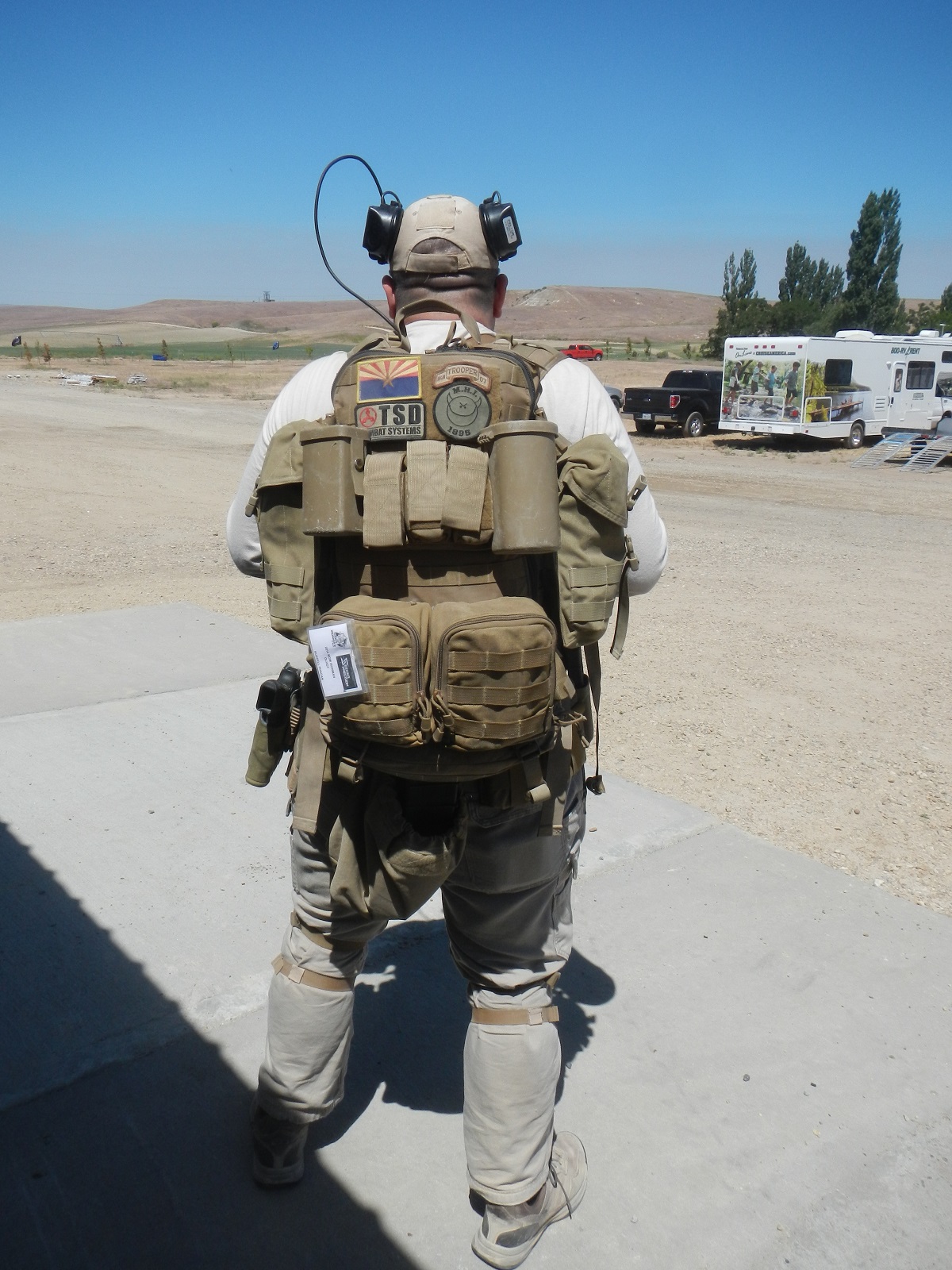
My JACS as currently configured. The external VIP Trauma Kit pouch is also made by Honor Point. Inside it I have Israeli trauma bandages, Celox, and a CAV-MFG tourniquet. I also have bandaids and disinfectant wipes to deal with common minor injuries that can occur during stages (mostly cuts to hands or scrapes).
One of the things I really like about the JACS is that it lays open flat. I don’t have to unload the whole thing to get at what I need.
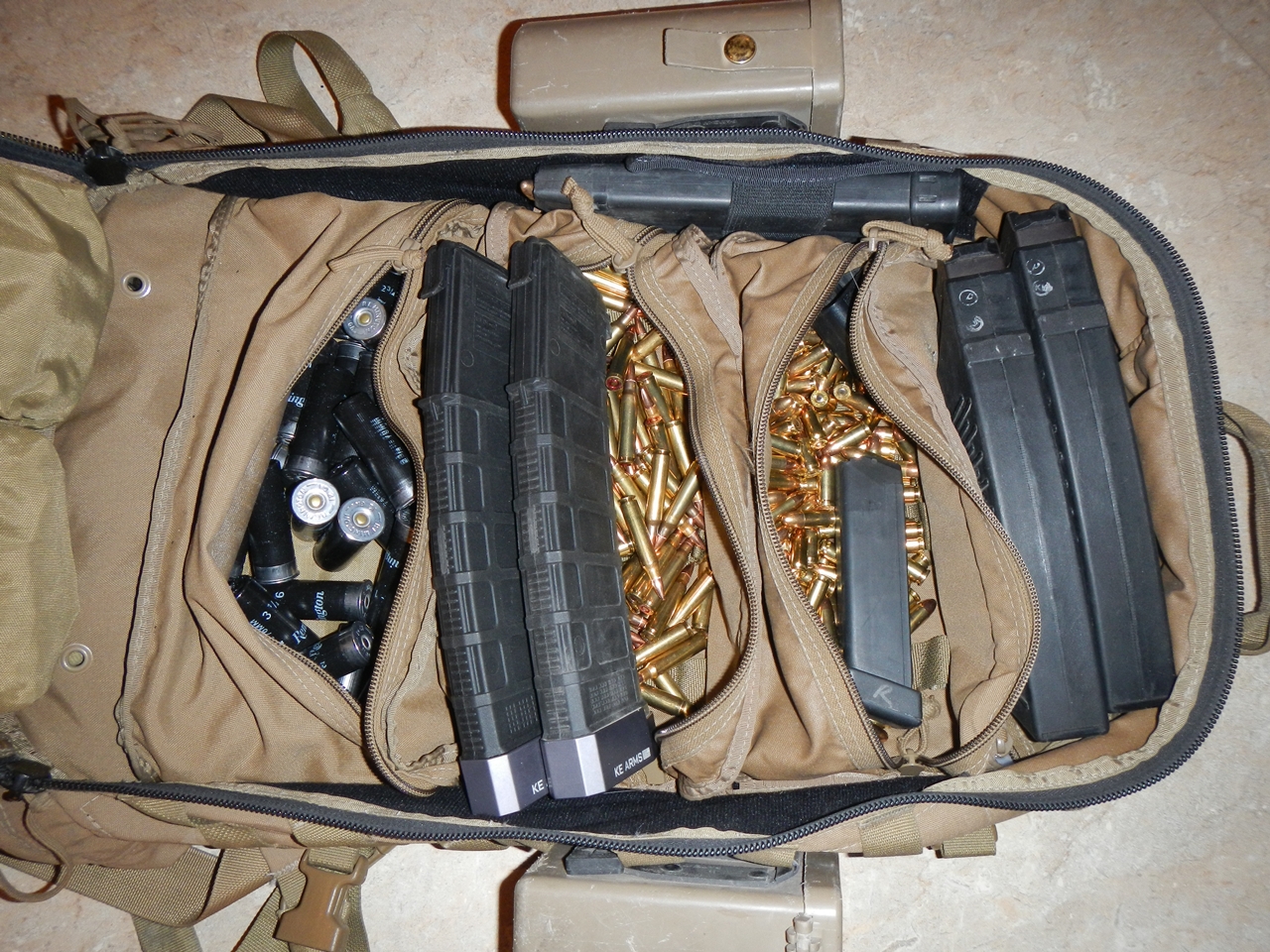
The inside of the JACS is lined with velcro that pouches can attach to. Conveniently three removable bags fit one one side. I use them for pistol ammo/mags, rifle ammo/mags, and bird shotshells. How much ammo I load up with depends on the match I’m going to. You can see that the JACS is wide enough to lay 40 round PMAGs with KE Arms extensions side ways. These bags can also be flipped inside out and attached to MOLLE webbing with the straps that are sewn on. On one side I also have a Maxpedition pistol mag pouch for my Glock 30 rounders.
On the front face of the pack folded open I have Honor Point’s Rifle/Pistol mag combo pouches and a single pistol mag pouch. The bag style pouches with elastic cords I use for shotgun slugs and a coupled 30 round AR mags.
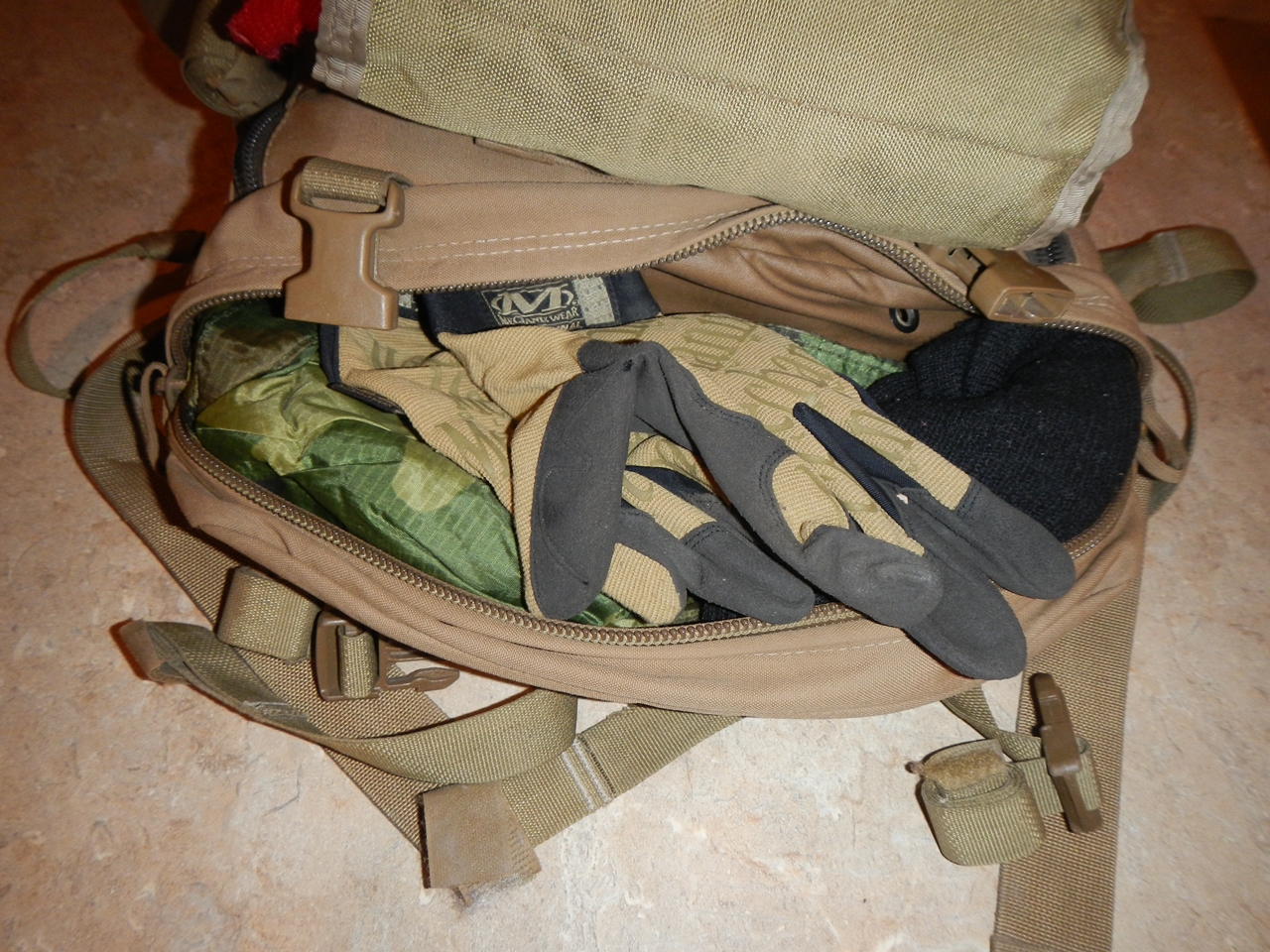
Gloves, Pancho, and knit cap in the bottom of the JACS just in case to deal with unexpected environmental conditions.
Hard cases by Tactical Tailor. Left larger case is for my Wiley X Glasses (I have clear and tinted models). Right smaller case is for my digital camera.
Spec Ops Brand Organizer Pouch. This one I use for tools, spare parts, batteries, and lens care items.
Tools: Punch set and hammer, Leatherman multi-tool, allen key multi tool, eye glass repair kit.
Batteries: AA, CR2032, and CR123
Spare Parts: Glock Recoil Spring, AR15 fire control set, AR15 Bolt Group
Spec Ops Brand Organizer Pouch for cleaning supplies.
AR15 cleaning rods and brushes
Glock cleaning rod and brush
.223 and 9mm bore snakes
CLP and cleaning rag
Magazine cleaning Brushes for rifle and pistol mags
The JACS loaded down at Ironman 3 Gun 2014.
This may seem like a lot of stuff to carry around the range, but it should handle any issue I’m likely to encounter at a major event.
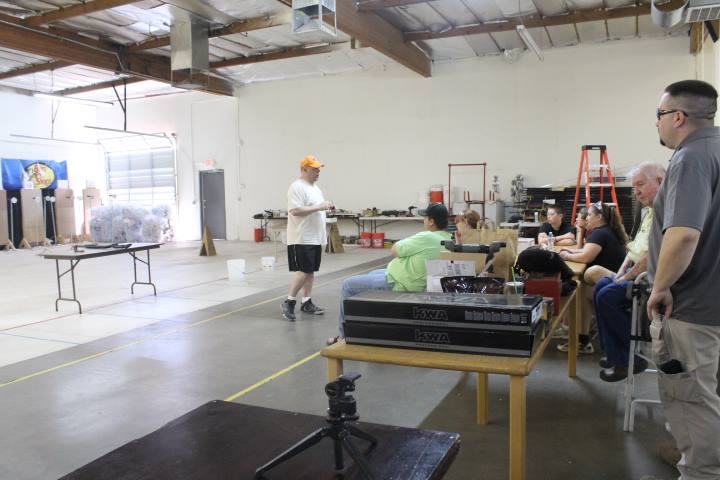
My uncle is a retired police firearms instructor. In his retirement he got into shooting airsoft and air guns at his home to keep his marksmanship skills sharp. It was cheaper and easier than going to the range for him most of the time. I was skeptical at first of how well airsoft could replicate shooting real guns. Last summer he invited me to attend an indoor airsoft 3 gun match hosted by Shoot Right American Jr. & Adult Air Gun Shooting Club. The event convinced me that airsoft is a useful training tool for novices and juniors.
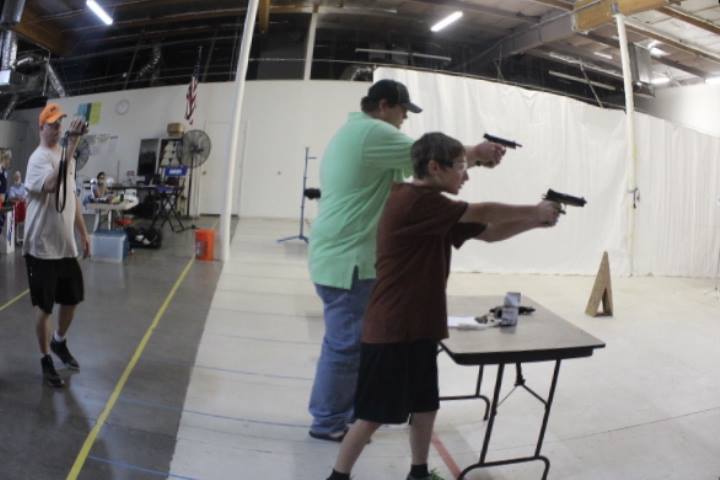
When I attended the event there were a lot of junior shooters attending with their parents. Watching both the juniors and adults handle the airsoft guns it became apparent that most would benefit from some instruction on firearms fundamentals including grip, stance, sight alignment, and trigger control. Talking to the event organizer, Rob Potter, we turned the match into a clinic to work on the skills required to compete successfully
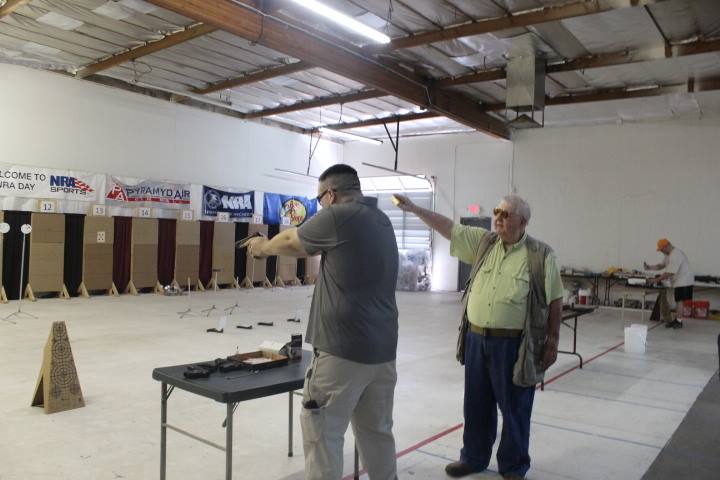
My uncle, John Kennedy, runs an airsoft specific shot clock while I work the plates with an Airsoft 1911.
Cost Savings
If we want the shooting sports and gun ownership to continue in the future, getting youth involved and excited about shooting is critical. .22lr ammo remains in short supply, the cost of ammunition over all is greater and the industry is continually racked with various shortages. Getting today’s generation into shooting sports simply isn’t as economical as it was for the previous generation. Action shooting sports are on the higher end cost wise. Airsoft is the answer for cost savings so juniors don’t have to learn the basics at $0.25-0.50 a shot. Working with the juniors at Shoot Right, it was easy to give corrective action and let them try again. Number of airsoft BBs or CO2 consumed was never really a concern.
No Ear Protection Required
Without ear protection communicating with students is a lot easier. Unless people have electronic hearing protection in large groups having everyone hear and understand the instructor can be challenging. Novices rarely have electronic hearing protection. Using airsoft immediately allows for more effective instruction in this regard. Muzzle report firing live ammunition also causes a flinch response in most novices. Without the noise and blast it’s easier to get fundamentals right before going to live fire.
Reduced Risk
Airsoft guns can hurt people, and eye protection is required at all times. However, the chances of fatal or life threatening injury occurring from airsoft are minimal. Action shooting sports require learning how to move safely with firearms and getting into and out of shooting positions safely without breaking the 180 or sweeping ones self. For novices, airsoft is a great training aid in these areas. I would rather watch a novice exercise these skills and take corrective action with an airsoft gun first, than doing this initial training with real firearms.
My uncle built this Man vs Man Steel Challenge Plate Rack for Airsoft.
At the end of the clinic we held a man vs man elimination shoot off. The juniors really enjoyed shooting against their parents. To keep things fair I had the top two shooters shoot off against me at the same time.
Rifle vs Rifle Shoot Off
Limitations
Using airsoft is not without it’s limitations and it is not a substitute for live fire. Accuracy was good enough within 10 yards, past that it seemed the flight path of the airsoft BBs were unpredictable. Malfunctions with airsoft guns are not cleared the same way as real firearms, care must be taken to emphasize these skills when transitioning to real firearms. Similarly unloading airsoft guns is not exactly the same either; racking the action doesn’t necessarily get the BBs out of the barrel. Magazines can’t be dropped because they are too fragile. The pistols were the closest to using real firearms with their reciprocating slides and blowback action. The airsoft rifles were OK, but the point of aim vs point of impact was not exactly the same as a similarly zeroed real rifle. The CO2 powered rifles performed the best. Electronic Airsoft rifles have a noticeable delay between pulling the trigger and firing as the motor spins up. The airsoft shotgun we had at this event did not really work that well and was hard for the juniors to operate. Rob told me he has since gotten a better airsoft shotgun that is more reliable and eaiser to operate. Still I don’t think firing 3 pellets at once realistically replicates using a real shotgun, and the way these guns load is nothing like working a real tube fed shotgun. If I was teaching an intro class with airsoft I would make it a rifle/pistol class.
Junior Shooter Camp Concept
If I were to run a junior shooter camp for youths that had no practical firearms experience, I believe doing the first 3 days of a 5 day camp as airsoft only would be most beneficial from a cost/benefit perspective for the reasons listed above. After the students had the fundamentals down by day 4, I would then transition to using real firearms that were the same basic models as the airsoft guns used. Interested in the concept? Leave a comment below.
Shoot Right has a number of events planned this year. Like their Facebook page to keep up to date on what they have going on.
Posted inCompetitions, Training|Comments Off on Airsoft as a Competition Training Tool
I haven’t shot a pistol only match in a long time, but the Berry’s Steel Open sounds fun and challenging. There will be 14 stages of 35+ rounds, 4 Steel challenge stages at 20 rounds. Basically bring a case of pistol ammo at least. All steel means simple scoring and faster reset times on the stages. Generally steel matches are fast paced, and a lot of fun. I plan on attending.
The match is not sanctioned by USPSA, but it is run under similar rules. I spoke with Match Director, Ken Nelson, about having a division for pistols with slide mounted optics to compete in. Normally we would have to compete in open division with our RMR equipped Glocks. Few people with slide mounted optics have them set up as full open division guns. Ken agreed to run a provisional division, Limited Optics for slide mounted red dots.
Limited Optics Division
Minimum power factor for Minor: 125
Minimum cartridge dimensions; 9×19 mm (0.354” x 0.748”)
Minimum trigger pull: No
Maximum handgun size: No
Maximum magazine length: 5.561” (141.25mm) or 6.742” (171.25mm) in single stack guns
Maximum ammunition capacity: No
Maximum distance of handgun and mags/speed loaders from inner side of belt Handgun and Mags: 2”
Rule 5.2.3.1 applies*: Yes
Restriction on position of holster and other equipment: No
Optical/electronic sights permitted: Slide Mounted Red Dots with or without co-witnessing Iron Sights
Installed flashlights permitted: No
Compensators permitted: No
Barrel ports permitted: No
Slide ports permitted: Yes
Maximum weight: No
Handgun specifically approved for Division: N/A
Holster restrictions: No
*5.2.3
Unless specified in the written stage briefing, the belt carrying the holster and allied equipment must be worn during the course of fire; the belt must be worn at the waist level, which is deemed to be at the same level as the original belt loops on the lower garment. (See 5.2.3.1 for exceptions.) The belt or the inner belt or both must be either securely fixed at the waist, or secured with a minimum of three belt loops. The belt may be removed between courses of fire
5.2.3.1 Lady competitors are permitted to wear a belt, holster and allied equipment at hip level, however, the top of the belt must not be positioned below the furthest lateral point of the top of the femur (tuberosity major).
Pistol Caliber Carbine Division
Ken has also added pistol caliber carbine division to the match. Any PCC in 5.7×28 through .45ACP is allowed with Iron Sights or an unmagnified optic.
Competitors can shoot the match twice on the same squad so shooting the match once with pistol and once with PCC is an option if you want to pay two entry fees.
Match starts: April 11, 2015 @ 9:00 AM · Match ends: April 12, 2015 @ 5:00 PM
Location: St. George, UT
18 stage all steel match combining action steel, par-time (also known as pro-am) steel, and steel challenge into one match. It’s the funnest match of the year, held at a great facility and great time of the year.
This year we will reduce the number of Steel Challenge stages to 4, and instead add in 2 of the super fun par-time steel stages.
Prize table is order of finish for top 20 across all divisions, and random after that.
General match, with the following divisions:
Production, Limited, Open, Single Stack, L10, Limited Optics
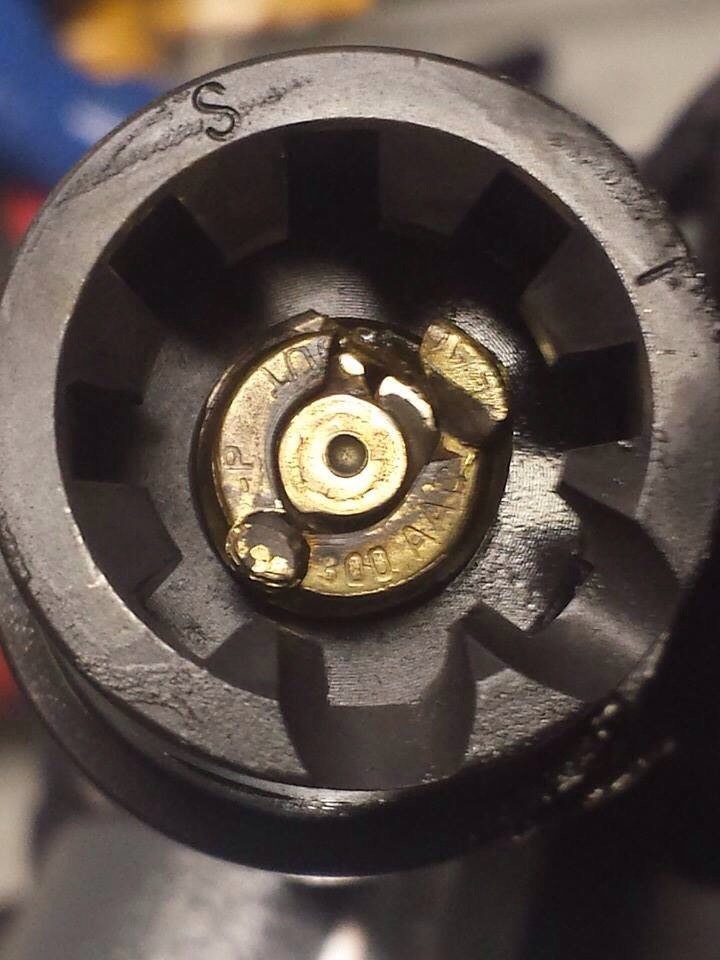
.300 Blackout has gained a lot of attention since it made it’s debut in 2011. There have been caliber conversions for ARs for decades, but they generally required a new bolt and magazine in addition to a barrel. What made .300 Blackout so appealing is it is just a new barrel and the bolt and magazines remain the same as .223/5.56mm guns. While this is logistically much easier for shooters, it can also be a contributing factor to catastrophic failures
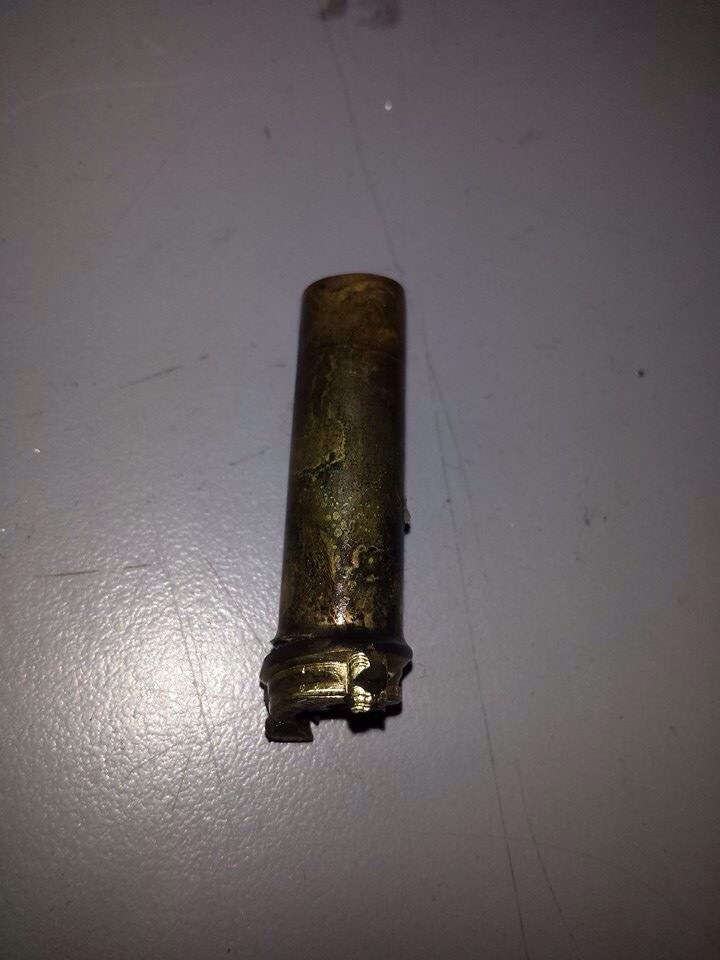
I’ve heard of people accidentally clambering .300 Blackout in .223 chambers before and seen the photos. It’s often as simple as someone picking a round up off the range between drills and not recognizing it as .300 then mixing it into a mag with .223. With a bolt action it would be pretty hard to chamber .300 Blackout into a .223 barrel. In a semiauto, with the bolt slamming forward the projectile can be pushed back into the casing allowing the bolt to close.
This week it happened to one of my friends, John Brooks. Here’s his post from Facebook.
“IF YOU ARE A SHOOTER, A RELOADER OR KNOW ONE, I NEED YOU TO READ THIS PLEASE. On December 31st, 2014, there was a very real opportunity for me to either be killed or very seriously injured. We had been shooting all day testing out some of our new 308s. While we were finishing up our brass call and cleanup, I realized I brought one of our suppressed 10.5” 5.56mm machineguns to test fire. I had already packed up all our ammo, so I borrowed a mag from another shooter that was “clearly” full of 5.56.
Since it was suppressed and we were already done for the day and packed up, I got lazy and decided to not pull my eyepro and earpro back out from their cases. So I fired a few rounds in semi, everything seemed good, so I switched to auto. Braaap, braaap, braaaBOOOM! Catastrophic detonation.
I was deaf, disoriented and in a semi state of shock. If any of you have been hit by a flashbang you know exactly what I am talking about. I quickly checked myself for new holes and made sure both eyes still worked. My right ear had shut off and the ringer was off the hook. Unbeknownst to me, there was a 300 BLK round hidden in the mag. It most certainly chambered fully, and the crazy thing is the barrel was clear and there were no baffle strikes on the can. So a 30 caliber bullet squeezed itself down to .22 and made a 10.5″ high pressure journey and exited and made it all the way through a YHM can. This most likely saved my life. If the barrel was any longer, I’m sure it would have found a new place to deposit gas; most likely right into my idiot face.
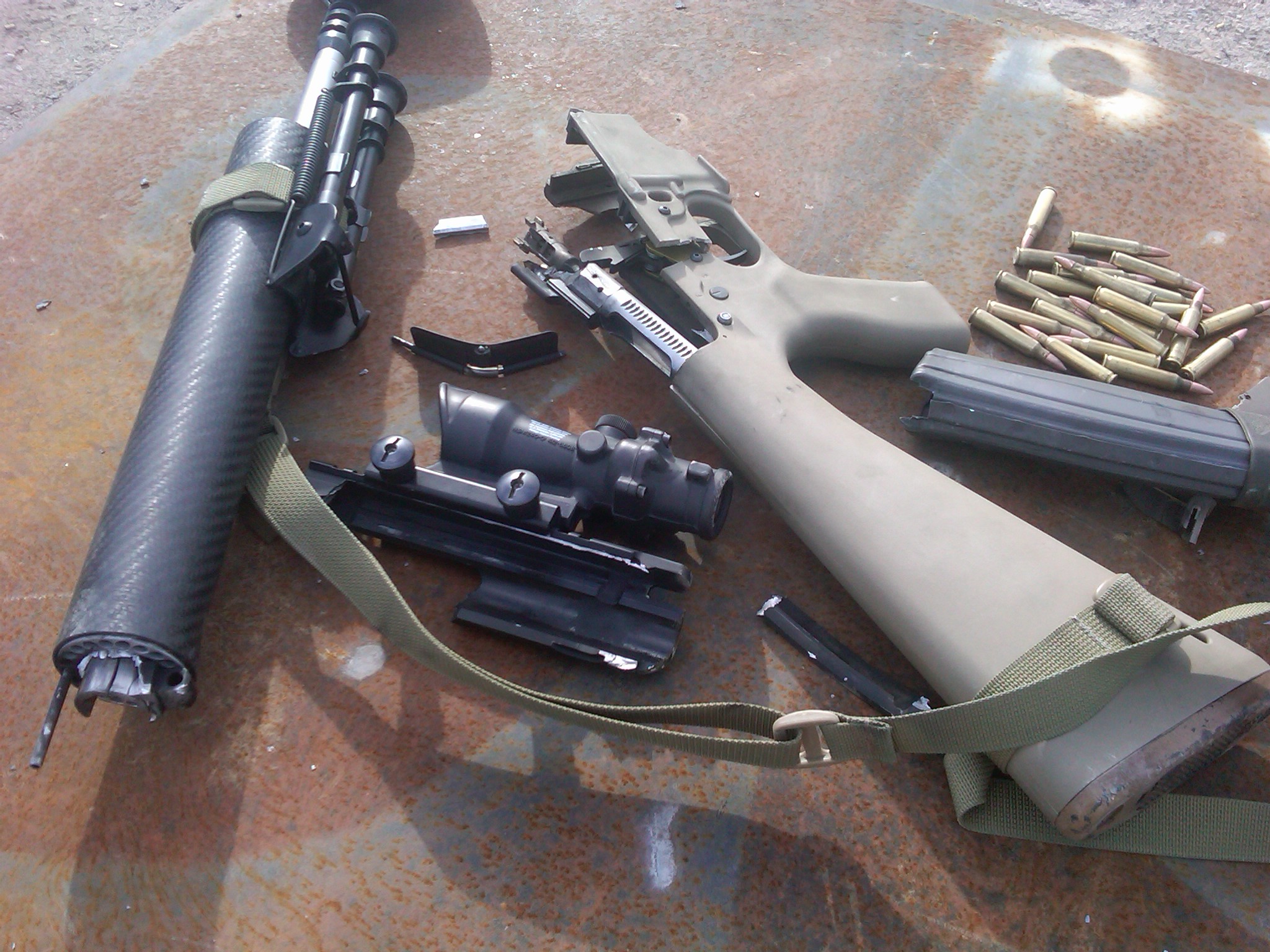
The upper receiver bulged out, the carrier split longways and the remaining contents of the magazine were launched out at my feet at Mach 2. I walked away from this (somewhat) unscathed. I was very very lucky because this could have gone a lot worse.
What I took away is this: Always, ALWAYS wear your eye and ear pro, no matter what you are shooting. You never know when it might save your eyes and hearing. If you are going to borrow ammo or reload your own, observe all safety precautions and verify all the rounds going into your gun! I have been shooting a long time, with probably millions of rounds downrange, but I am obviously not immune to my own stupidity. Complacency kills. Stay Frosty out there and Happy New Year.”
If you own both .223 and .300 blackout rifles take care not to mix up mags or ammo. It would make sense to not have both calibers on the range at the same time.
They say anything that goes on the net will never go away. This is definitely true, In the past week an image of a rifle that suffered a catastrophic failure has gone viral. Again. Unfortunately when photos get shared the original story is lost and there is no context to what the viewer sees. A lot of internet experts have posited various reasons why it failed, most of them completely false. Perhaps the most absurd is that it was caused by firing .300 blackout out of a .223. At the time this occurred in December of 2010, .300 Blackout wasn’t commercially available. In an effort to set the record straight, here’s what occurred
Background
Paul Shanks was part of our shooting team at Cavalry Arms Corporation (since closed, GWACS Armory now produces the CAV-15 MKII and offers service and support on Cavalry Arms manufactured units). He built a lightweight rifle on a CAV-15 MKII polymer receiver with these components:
Timney Trigger
9mm upper with gas tube hole drilled out (no forward assist or brass deflector making it the lightest he could get at the time.)
Young M16 carrier
Compass lake 18″ rifle gas SPR barrel, 1:8 twist 223wylde chamber.
Miculek brake
Clark Custom Carbon Fiber Free Float Tube.
He had used this rifle for some time at local and national level matches. The failure occurred at the December 2010 Phoenix Rod and Gun 3 Gun Match. On the close range rifle stage Paul fired 3 rounds and on the 4th round the failure occurred (interestingly we did find all 4 holes in the paper targets). Karl Kasarda, who was running the timer, saw Paul’s hat fly off and at first thought it was muzzle blast from his brake that caused it. I was conversing with other shooters when heard an extra loud muzzle report and turned in time to see the rifle fall out of Paul’s hand in pieces.
Paul was visibly shaken. We checked him for injuries and fortunately there was nothing major. He had some small scratches on his face and a fragment from the barrel extension in his inner forearm. He was wearing Oakley Half-Jacket glasses and while there was no visible impact on the glasses, Paul now uses glasses with more coverage for shooting.
The Damage
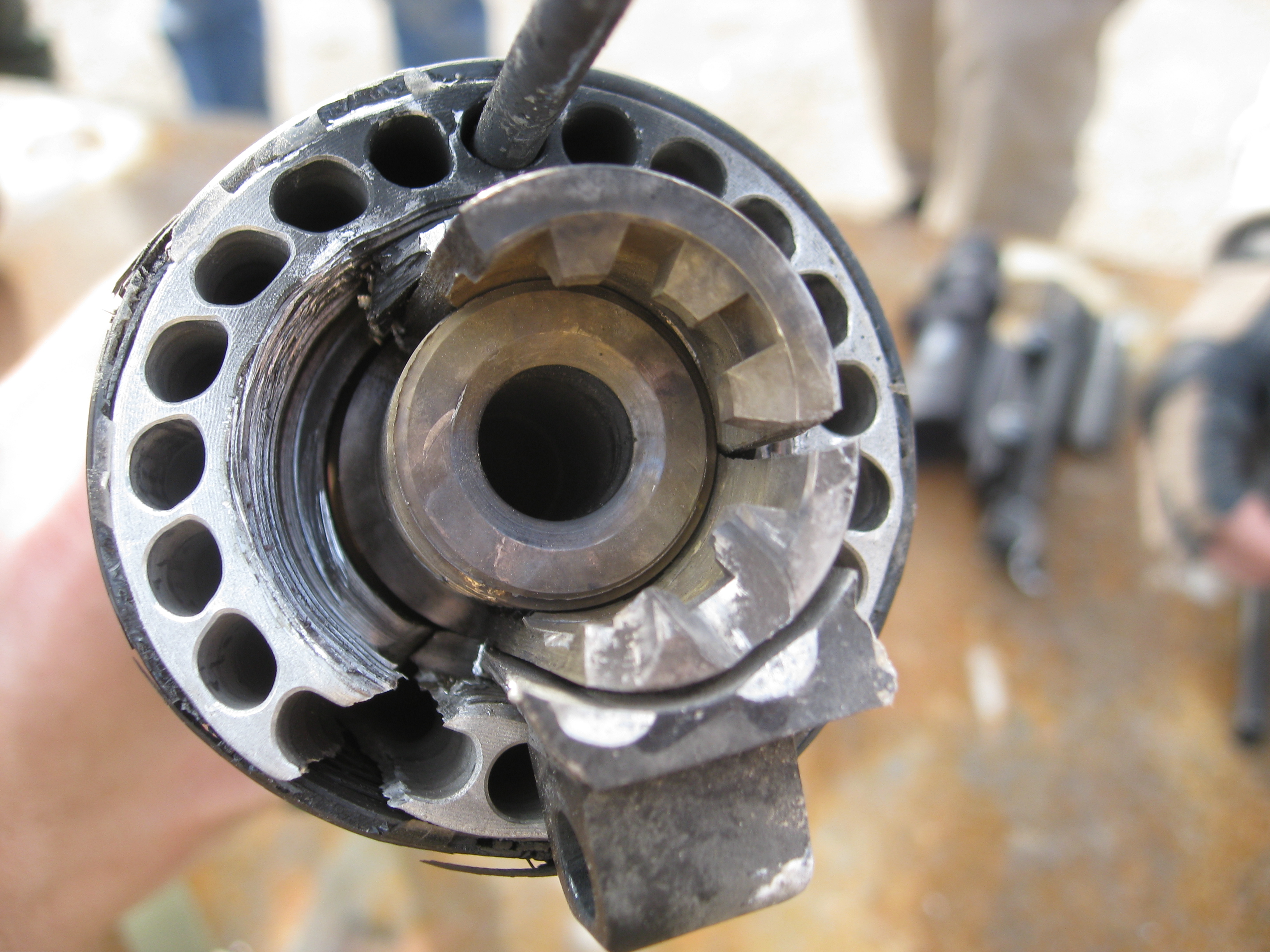
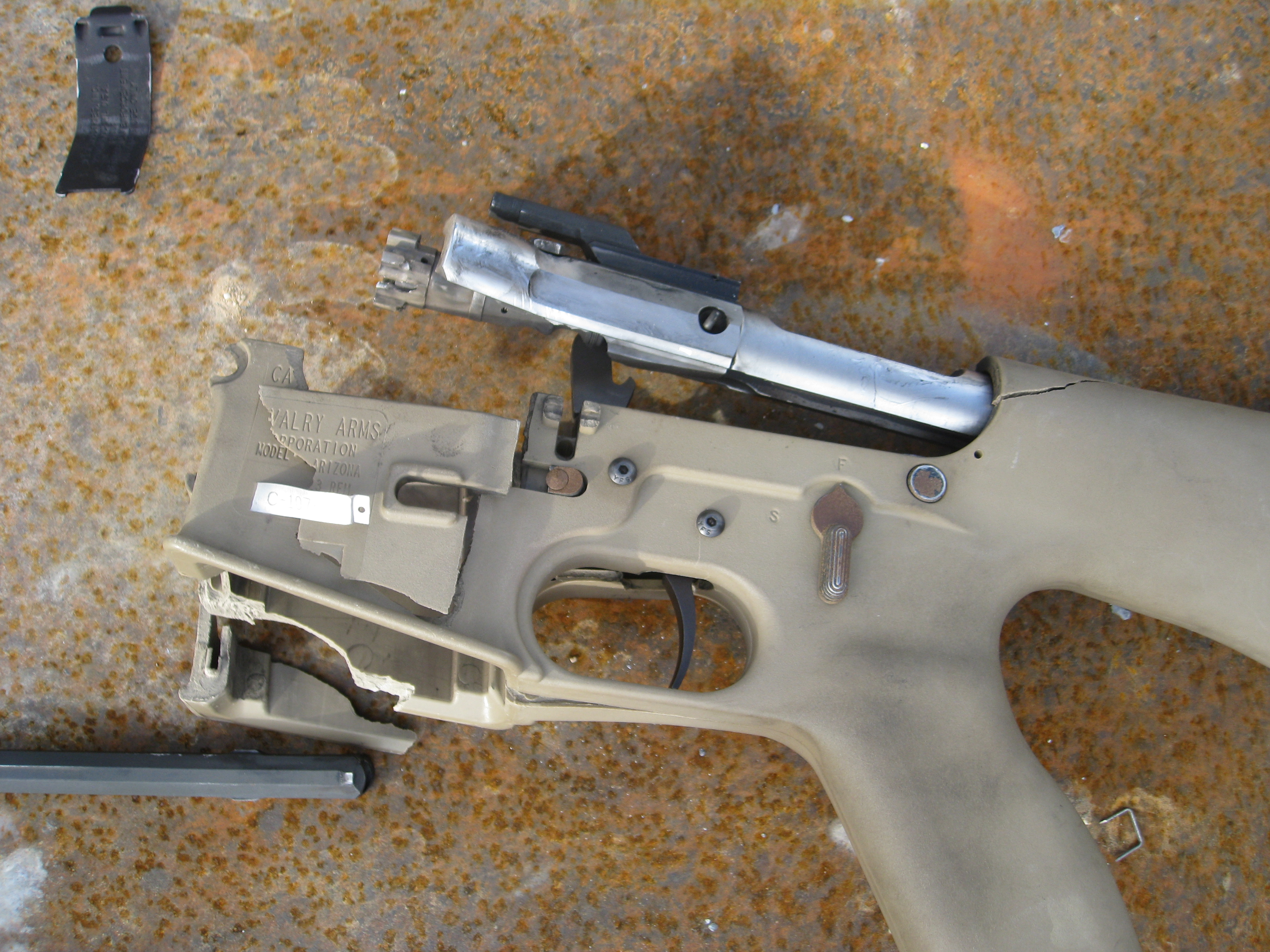
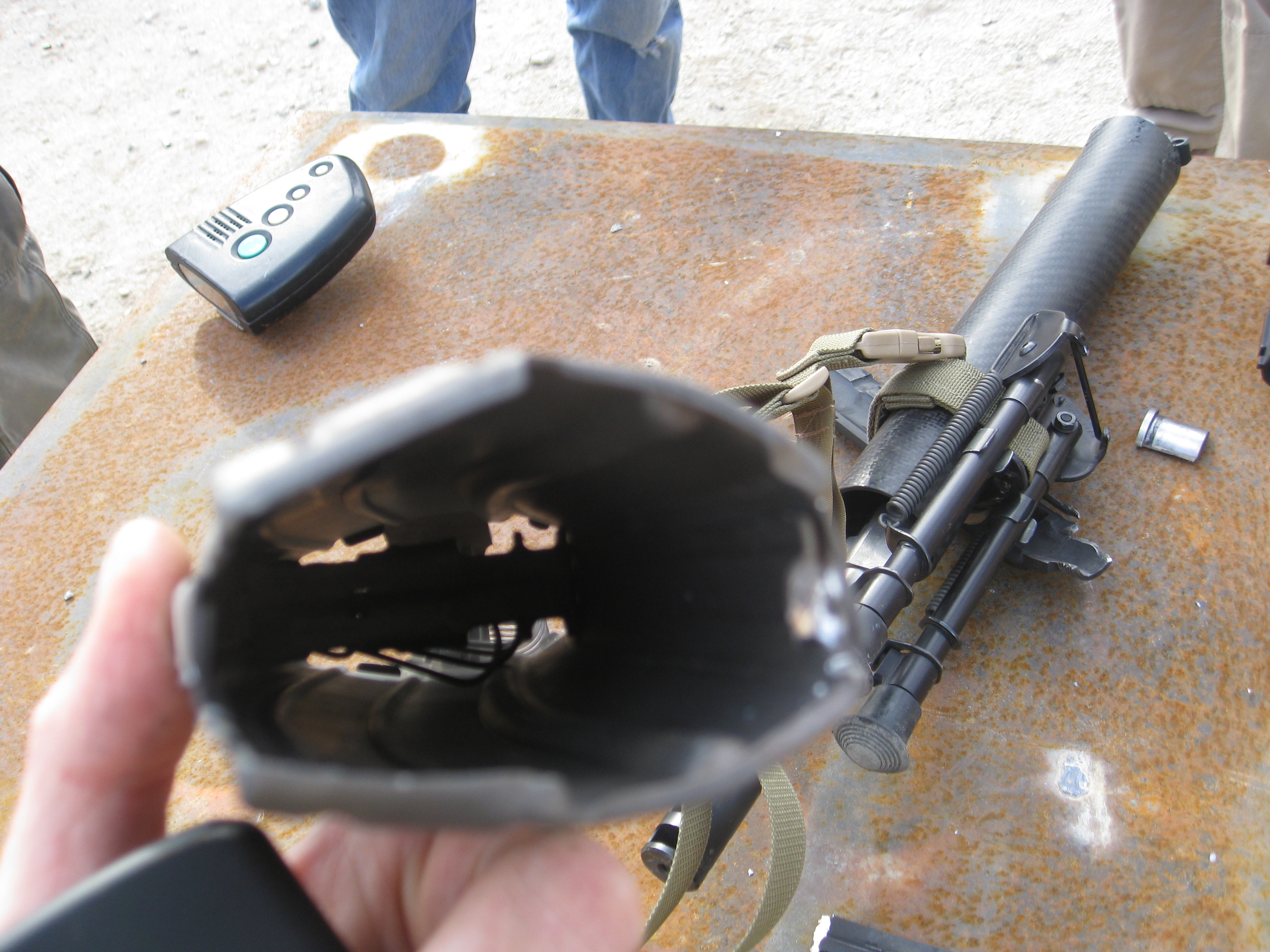
Cracked barrel extension. The threaded area of the upper receiver and front lug separated from the upper.
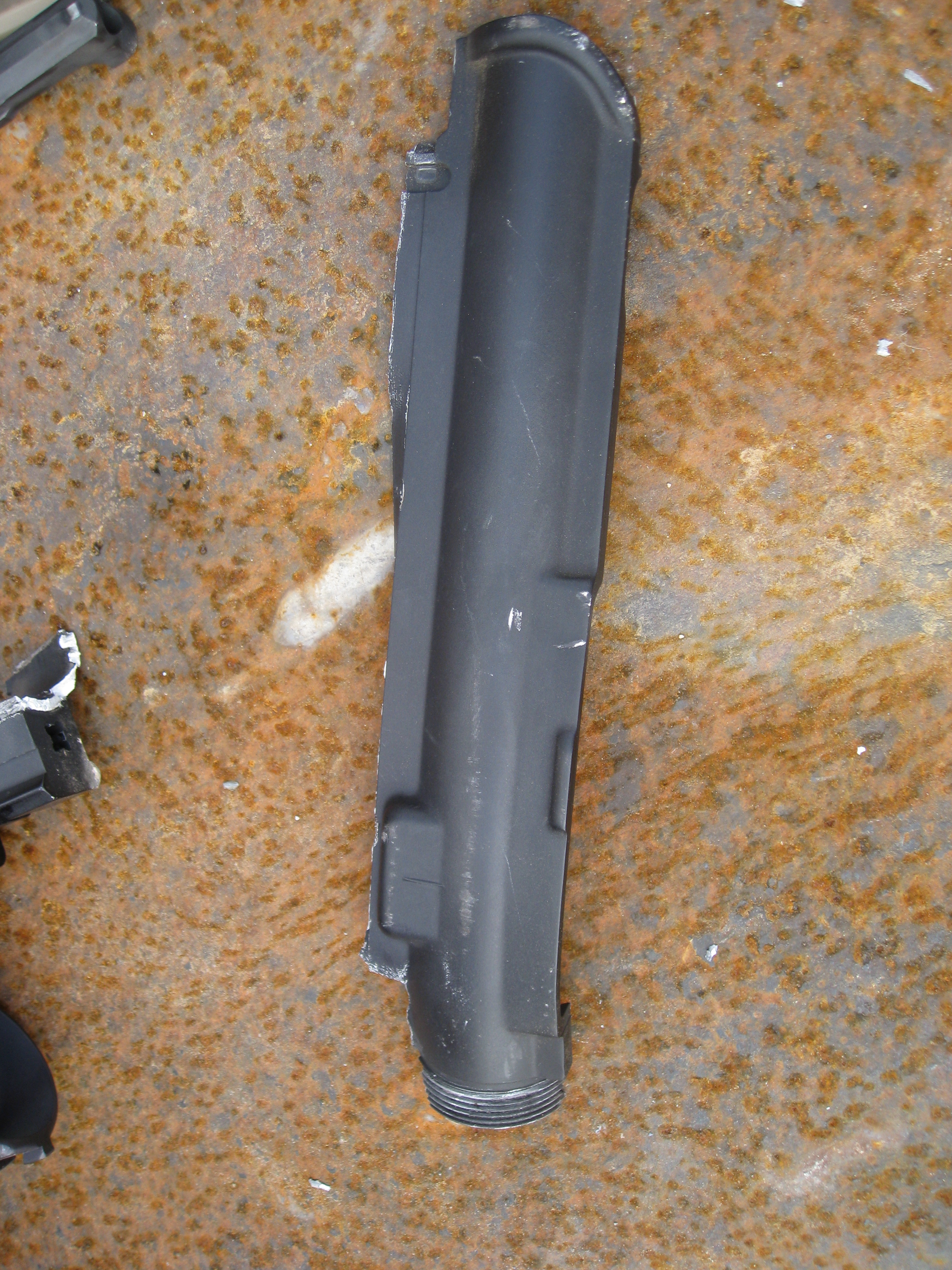
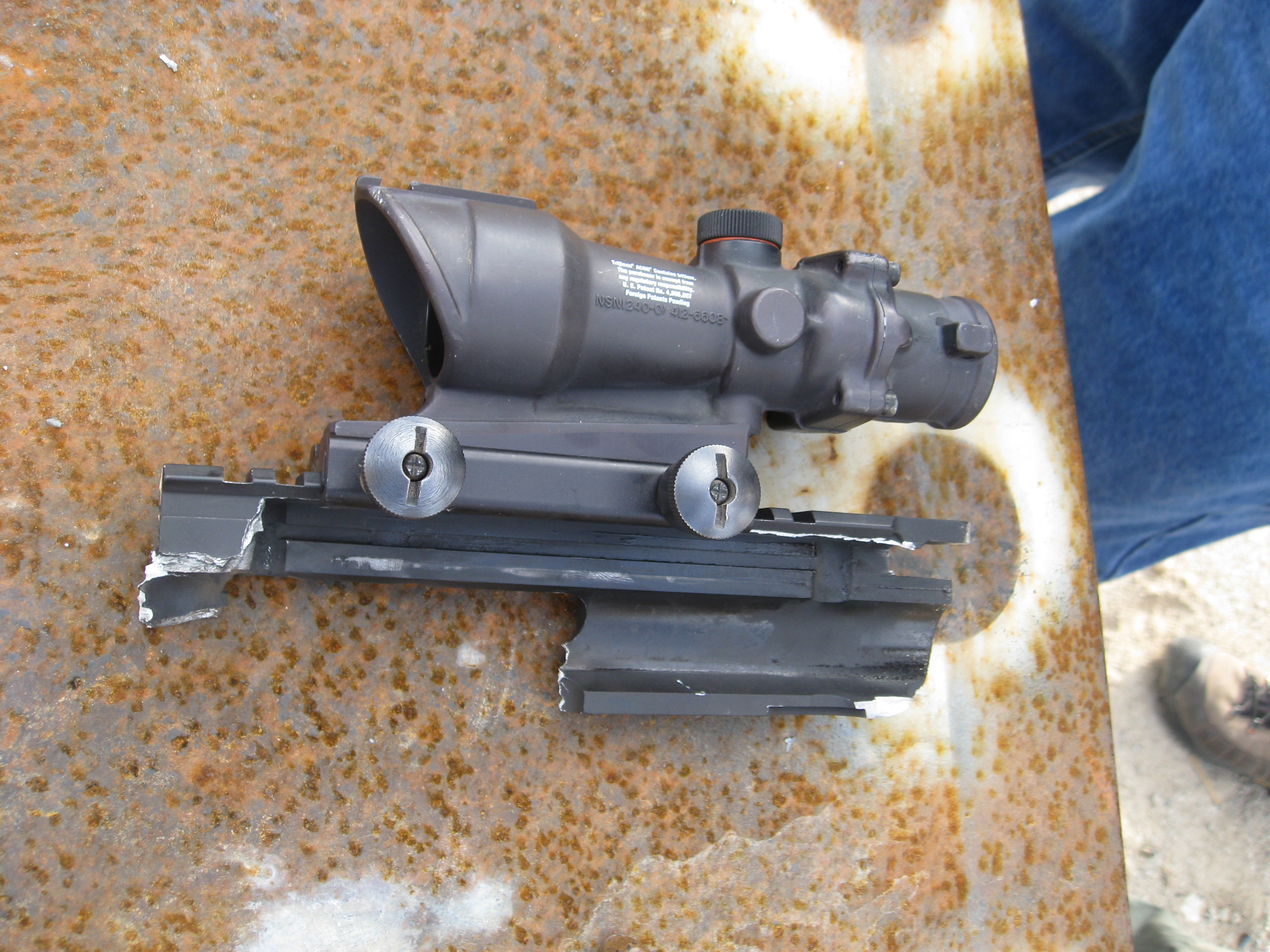
The upper receiver split in half
.
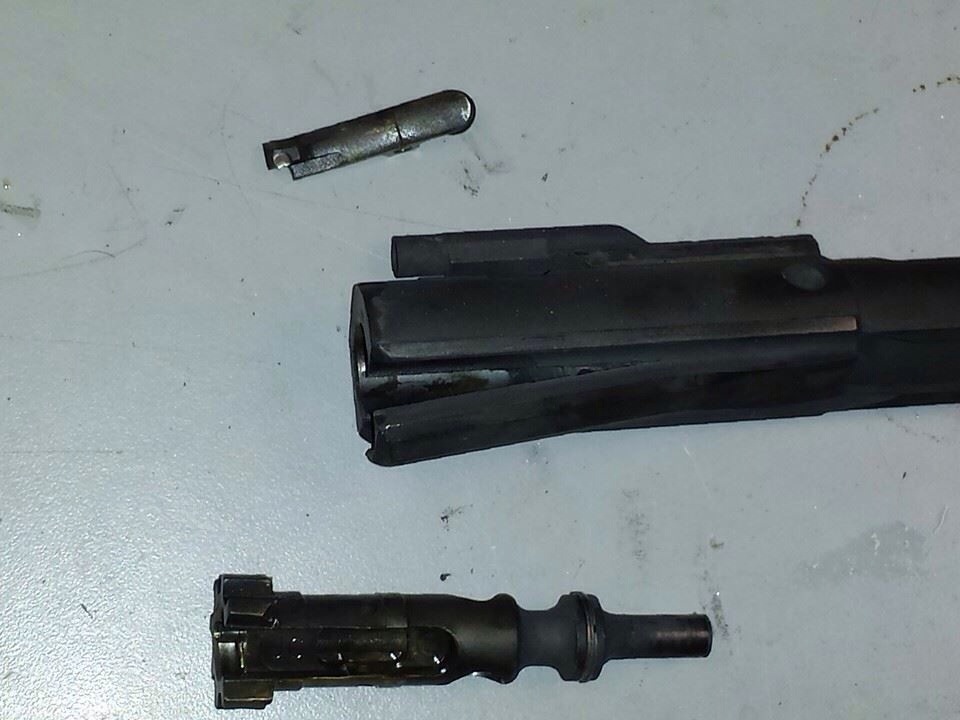
The bolt split right down the middle. Extractor broke off.
The CAV-15 MKII polymer receiver fractured at multiple points. We speculated that the lower fracturing like this saved Paul from more severe injury as it gave the over-pressure more room to escape more rapidly.
The bolt carrier also suffered severe structural damage.
The magazine blew out as is typical with catastrophic failures.
The Cause
It wasn’t .300 Blackout in a .223 barrel. It wasn’t head space. It wasn’t “firing out of battery”. It was a binary charge in the cartridge of pistol and rifle powder. Pistol powder burns at a much more rapid rate than rifle powder. That created the over-pressure that caused the rifle to fail like this. Paul had purchased a lot of ammo from a commercial reloader. They had not sufficiently cleaned out the hoppers when switching from pistol to rifle reloading. Fortunately for the public, Paul had bought the entire lot. The manufacturer compensated Paul for the damage and the bad ammo. Four years later I don’t feel the need to name the manufacturer because they took corrective action and Paul was satisfied with how they handled it.
I’m sure this will keep coming up every so often in the cycle of the internet. Please direct people here for the entire story. This is a cautionary tale for reloaders, and emphasizes the need to wear quality protective lenses.
2014 was my thirteenth year competing in action shooting events. Matches have started becoming routine after going to the same ones year after year. Even with the more challenging events I go to like the Ironman 3 Gun I know exactly what to expect. The stages may change, but the skillset required to complete the matches remains relatively the same. Many of the same people I shoot with at Ironman recommended the Purgatory Flats Hard as Hell Multi-Gun Match (HAH) as a next level challenge. After watching John McClain’s videos of the 2013 match and seeing how challenging and physical they were I knew I had to attend. HAH is held at the Southern Utah Practical Shooters, Inc Range. I spoke with the match director, Ken Nelson, about the match for more details. He assured me that the 2013 blizzard was a fluke and the weather in St. George in December is typically in the 50s-60s during the day. GWACS Armory generously donated some CAV-15 MKII receivers to the prize table to cover my slot for the match.
Rules/Equipment
There are a few differences in regards to equipment rules for the HAH match. As long as a gun is legal in your division, you can use a different gun for every stage, where most matches require you to use the same rifle, pistol, and shotgun throughout the match. Shooters are also not allowed to strip off chest rigs or other ammunition carrying equipment once a stage has started. Once you watch the videos you will see why some people might want to. There are a lot of physical challenges that could be handled more easily with minimal gear. Lastly because of the length of the stages, coaching is expressly allowed because memorizing the stages entirely would prove difficult.
I chose to compete in Open division with the following guns:
Shotgun: VEPR-12 with Vortex SPARC 2. I had two coupled 12 round mags I would start stages with and reload with MOLOT 8 rounders out of my chest rig. This is the same gun I reviewed in RECOIL a year ago.
Pistol: Suarez International Red Dot Glock with Trijicon RM01. The RMR made hitting all the further pistol steel and one handed shooting I had to do a breeze.
Rifle: CAV-15 MKII lower with 16″ mid-length upper and Vortex 1-6 Razor HD with JM Reticle. I brought a bipod but there was nowhere to use it.
Close Range Rifle: Because we could swap guns out for specific stages I used a post-dealer sample Brethren Arms BAP9 for all the close range rifle work. I had an original Vortex SPARC on this gun.
I used all of them as much as I could in the 2 months preceding the HAH match at local matches and teaching my multi-gun competition classes.
The Trip
I drove up to St. George with two other shooters from Phoenix. The drive only took 7 hours and this was a nice change of pace from some of the other events I go to that require two days of driving there and back. The SUPS range is located only about 20 minutes outside of St. George, again increasing the convenience factor of attending the match and making it generally more pleasant. Ranges by necessity are often located in the middle of nowhere so you might have up to an hour drive in the morning and back to the hotel at night, or the choice of camping on the range. With good restaurant and lodging options so close by, it really made attending the match feel more like a real vacation.
Day 1
The match was supposed to have an alternating AM/PM schedule for shooters so we showed up at 10AM on the first day of the match (12-5-2014) so we had time to hit the sight in range and check our zeros. We showed up to our first stage at noon with the rest of our squad consisting of about 13 shooters. One thing that stood out immediately to me about the match was there were no dedicated Range Officers. Most major matches have dedicated ROs assigned to each stage to make sure scoring is consistent and squads move on schedule. I did not see any scoring or consistency issues from squad to squad, but the lack of dedicated ROs to brief the shooters and keep things moving did cause the match to drag. A lot of this is simply trying to figure out what the stage description means and shooters walking through the stages more than they would normally with an RO to explain it to them. Fortunately our squad was filled with people who had RO and match logistics experience so we were able to work things out. We did have to ask the MD how penalties applied in some cases. The MD has already announced that there will be dedicated match staff for next year, which is a good call to keep long stages like these moving along.
Stage 7
Our squad shot in alphabetical order with the first shooter rotating to the bottom on each stage so no one had to go first twice. This put me third in the stack for our first stage, Stage 7. Stage 7 involved pistol shots to 50 yards, close range shotgun, flying clay, slug targets at 50 yards, and rifle targets at 200-300 yards. Stage 7 went pretty well for me until I got to the rifle portion.
Stage 8
Fortunately I was able to borrow a bolt group from squad mate Ryan, and test fire my rifle between stages. On Stage 8, the obstacle course I was up second. I wish I had been lower in the stack because watching others go through it made better techniques for handling the course more apparent. This stage required pistol shots to 50 yards, and rifle shots to 100 yards.
That was our last stage for day 1. We finished up at about 6:30PM. It became apparent by the end of day 1 that the AM/PM schedule would not work for the volume of shooters and the length of the stages. All shooters would need to be back at 7:30AM to start shooting. Our squad would need to get 4 stages done on day 2 to stay on schedule.
Day 2
Stage 9
Back at the range on day 2 I was first up on stage 9. I elected to use the BAP9 for the rifle portion as it was all 25 yards or less. The shotgun started unloaded in the drag barrel, so I put my coupled 12 round mags in my dump pouch; as you can see in the video they didn’t stay there. There’s really no good way to carry mags that large while doing this stuff.
Stage 1
This was the trench warfare stage. Lots of shotgun targets in the trench, then some pistol targets starting at 50 yards, then rifle from 100-600 yards. I was last in the squad on this stage so I stayed behind the berm on the rifle portion waiting to call hits for the shooter when they got up there. While hanging out back there sitting I apparently scooped up a mag well full of dirt in my Glock. I realized this when I went to make ready and sand and pebbles fell out of it. I quickly field stripped it, blew it out, and reassembled it without issues on the stage.
We did not stop for a lunch break. Fortunately because the range was so close to town Tactical Performance Center ordered pizza and had it delivered to the ranges. I’m not normally a fan of Dominos, but it tasted pretty good after running around the range all morning.
Stage 2
On this stage we had to carry an egg in one hand whenever shooting pistol. And we had to ground it whenever shooting long guns. Rifle started slung on our backs and all the rifle targets were close range so I used the BAP9 starting with the stock folded slung on my back with the muzzle in my dump pouch. Having to start with the shotgun unloaded was a pain again because of my huge mags.
You may notice I needed more coaching on these stages where we had to sweep through the same bay twice with two different guns. When it is just one gun per bay it’s pretty simple to sweep through and shoot them as you see them. This was more complicated. Resetting these stages also doesn’t allow for much walk-through time.
Stage 3
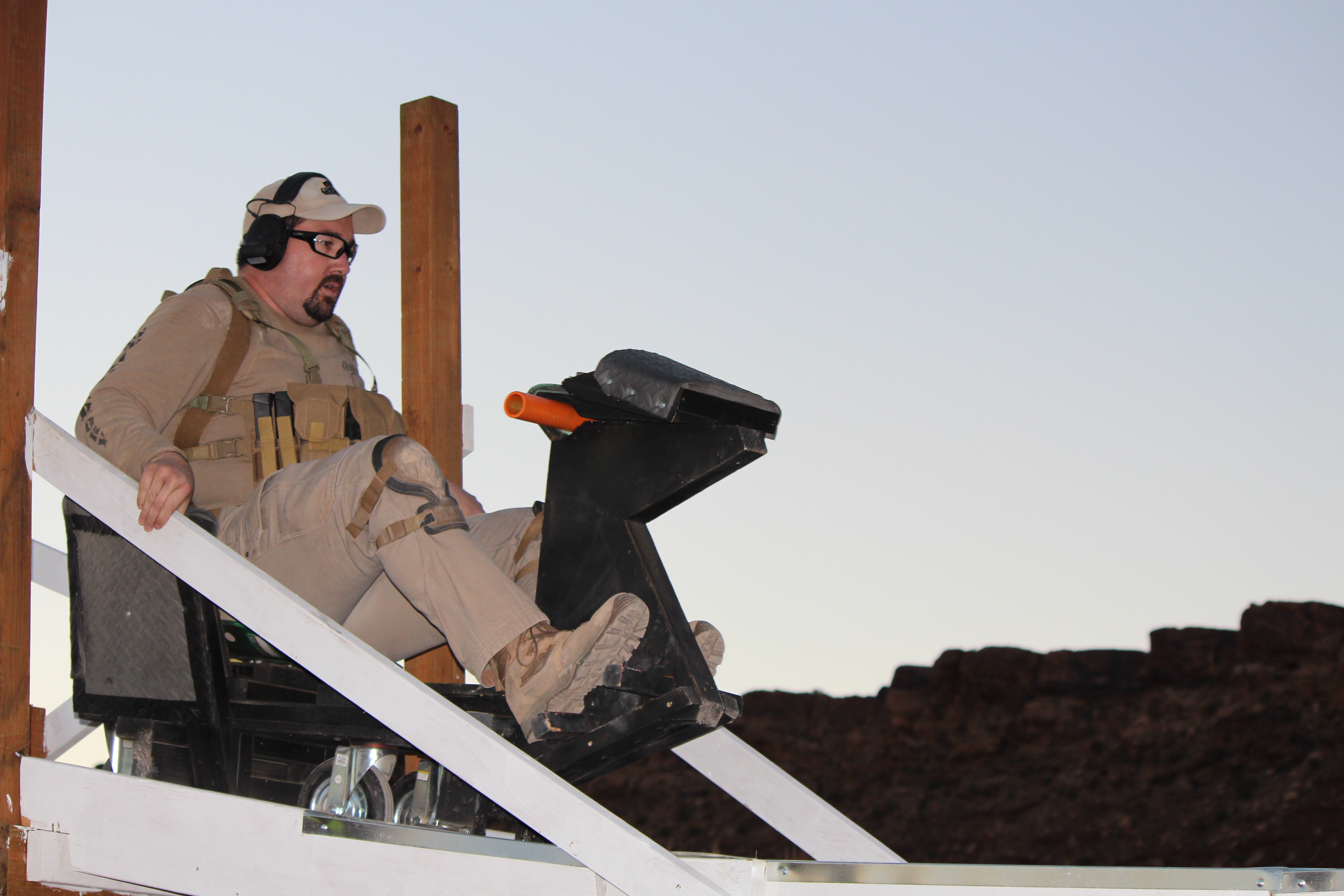
This was the last stage of day 2. The HAH Rollercoaster is not nearly as scary as it looks, and turned out to actually be pretty fun.
We finished shooting at about 6:300PM again, getting our 4 stages knocked out.
Team Shoot-Off
Saturday Night was the Silencerco Team Scramble. Tactical Performance Center provided dinner for all competitors while we were waiting to shoot. FNH-USA provided a SCAR MK16S, P-12 Shotgun, and .45 FNX there were outfitted with Silencerco suppressors and Crimson Trace lasers. This was a fun event with each team coming out and shooting to theme music played by a DJ while the spectators in the bleachers watched on. John Brooks and I entered the event and shot it cold getting the fastest time over other teams that paid for multiple entries and dry fired the heck out of the guns. Shooting different guns all the time like I have been for articles helps adapt to different platforms more easily. The top 4 teams and 4 random teams were selected for the team shoot off Sunday night before the awards ceremony.
Day 3
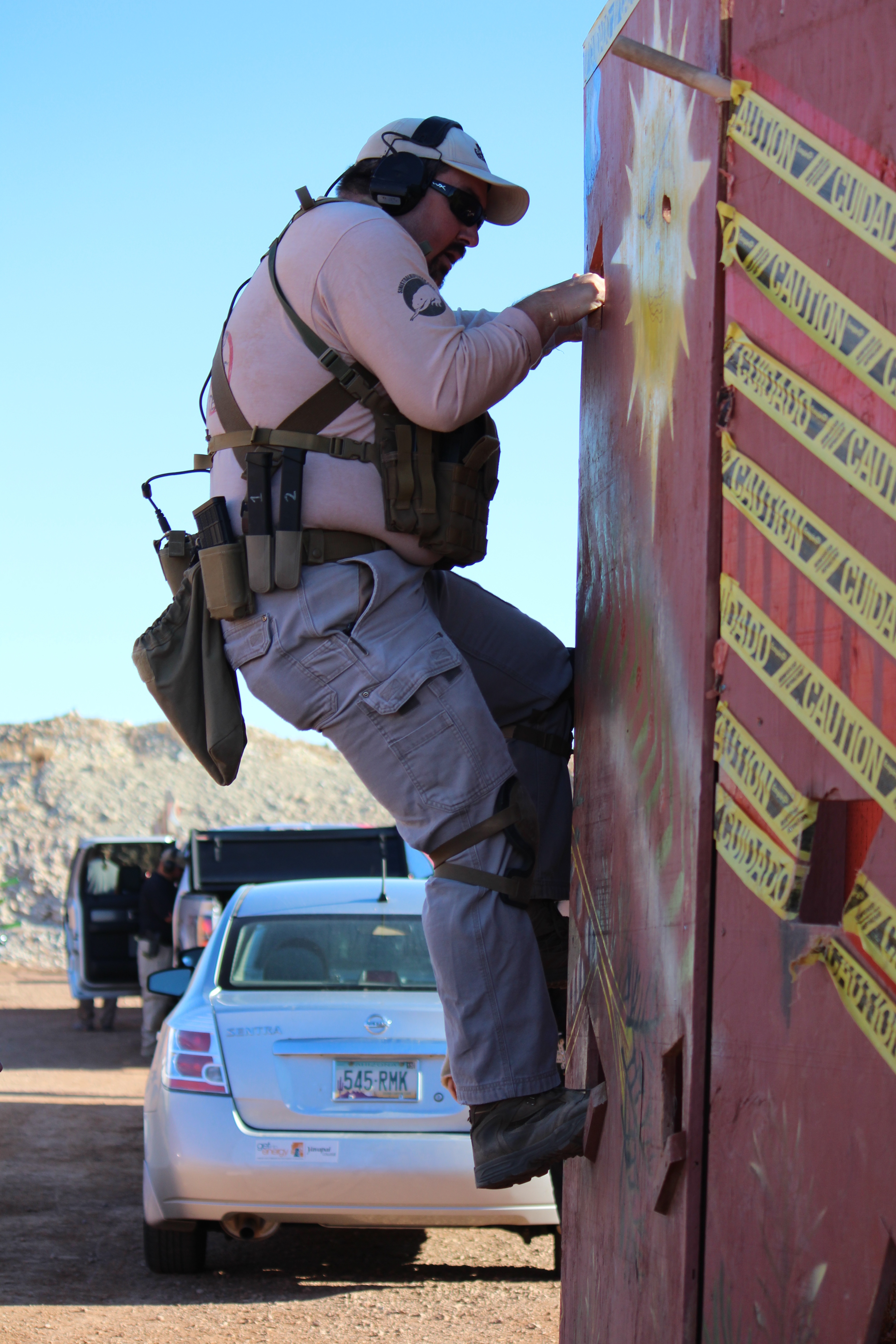
Stage 4We started again at 7:30 with 3 stages left to go. Stage 4 had a rock climbing wall we had to traverse. I’ve never done anything like that before, so I practiced a few times before we started shooting. Brooks helped coach me through the right technique to use and got me through it on the stage.
Stage 6
This one really did not go according to plan for me. It’s a good example of the snowball effect of one part of the plan falling apart and other things going wrong. Fatigue after 3 days on the range was definitely a factor here. Things went decently after I got to the shotgun portion.
Stage 5
This was the last stage of the match. At this point everyone on the squad was worn out and ready to get it over with and head home. This felt like it was the most physically demanding, I’m not sure if that is because it was the last stage or if it was that hard. With all the obstacles on this stage I timed out with a few targets left. A lot of people came close to timing out or did on this stage. There was just a lot of things to get done in 300 seconds.
We wrapped up shooting the last stage at about 2:30, then it was time for the team shoot offs and awards.
Team Match Shoot-Offs
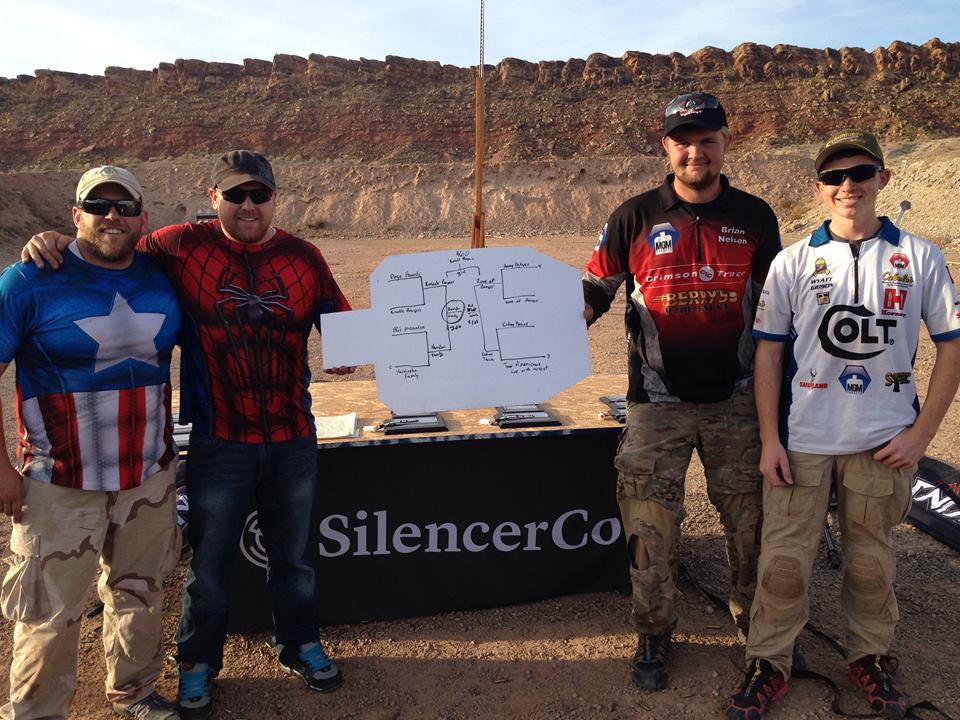
The team shoot offs pitted the 8 teams from the previous night against each other in a man vs man format. Shooters had to complete their portion of the course in relay format. First shooter doing rifle, running back tagging shooter for shotgun, then shotgun shooter runs back and tags pistol shooter, then pistol shooter runs back and tags team mate to shoot stop plate with pistol. Brooks and I were up in the first relay so we didn’t see anyone else shoot it. Unfortunately we did not understand the stage description and failed to swap out for the pistol stop plate, thus getting knocked out of the shoot offs immediately. Brian Nelson and Wyatt Gibson (right) defeat The Kidney Twins (left) to win the Team Shoot Off
Results
Awards were done by 5:00. The Practiscore system used at the match no doubt expedited this. Open division had 20 shooters with Travis Gibson in first, Wyatt Gibson was 2nd with 94.9% of his father’s score, and Sean Smith was third with 93.2%. Limited had 19 shooters and was won by Adam Riser, Donovan Montross was second with 95.3%, and Scott McGregor was third with 94.2%. Tac-Scope had 74 shooters finish the match with Andy Peterson in first, Josh Wakamatsu in second with 98.8%, and Brian Nelson in third with 98.5%. I ended up 10/20 in open with 64.6% of the division winner’s score. Hard as Hell was the first match I’ve shot in a long time that I felt was truly challenging. I completed all the challenges wearing the same full gear and chest rig for every stage. I found myself thinking several times during the match “can I actually do this on the clock?”. Challenges like this are good. It forced me out of my comfort zone. Having an event like Hard as Hell to look forward to for next year helps motivate me to work on physical fitness and difficult shooting in the meantime.
What is Old is New Again
Talking with Kurt Miller and other veteran 3-gunners at the match, they said that HAH is very close to what 3 Gun originally was when it started in the 1980s with the Soldier of Fortune Matches. Sterling White also said that HAH was closer to what 3 Gun was like 15-20 years ago. More physical, hard shooting, and less memory games. Somewhere along the line 3 Gun turned into what it is today, and I don’t think it’s always a good thing. Ken Nelson told me he runs HAH because he feels it is the kind of event that needs to happen; even though they make less money off of it for the club than other events with shorter stages and faster reset times that allow for more shooters. Ken also speculated that the Global War on Terror and returning veterans are influencing the type of competitive shooting people would want to do. Many returning veterans want a venue to practice the skills they learned in the military and used over seas. Looking back the start of 3-Gun in the 1980s was likely similarly influenced by Vietnam War veterans. Another consideration is the most commonly cited reason people have for owning guns today is self-defense. Many want an arena to practice these skills in. I’ve seen the same phenomenon with the 2-Gun Action Challenge Match in Tucson. Hopefully more ranges start running similar physically challenging practical events to meet the market demand for them.
Thanks to Squad 204
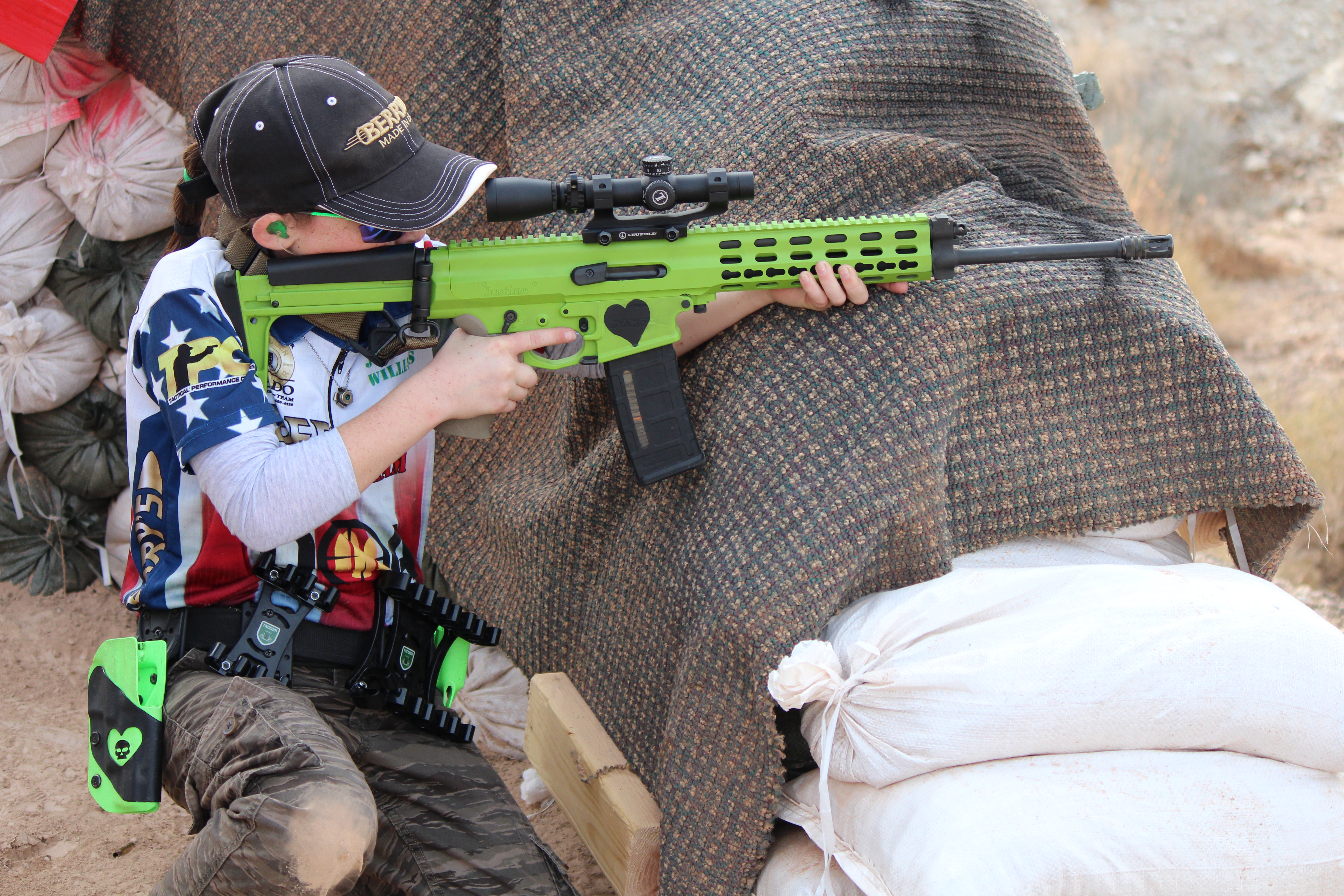
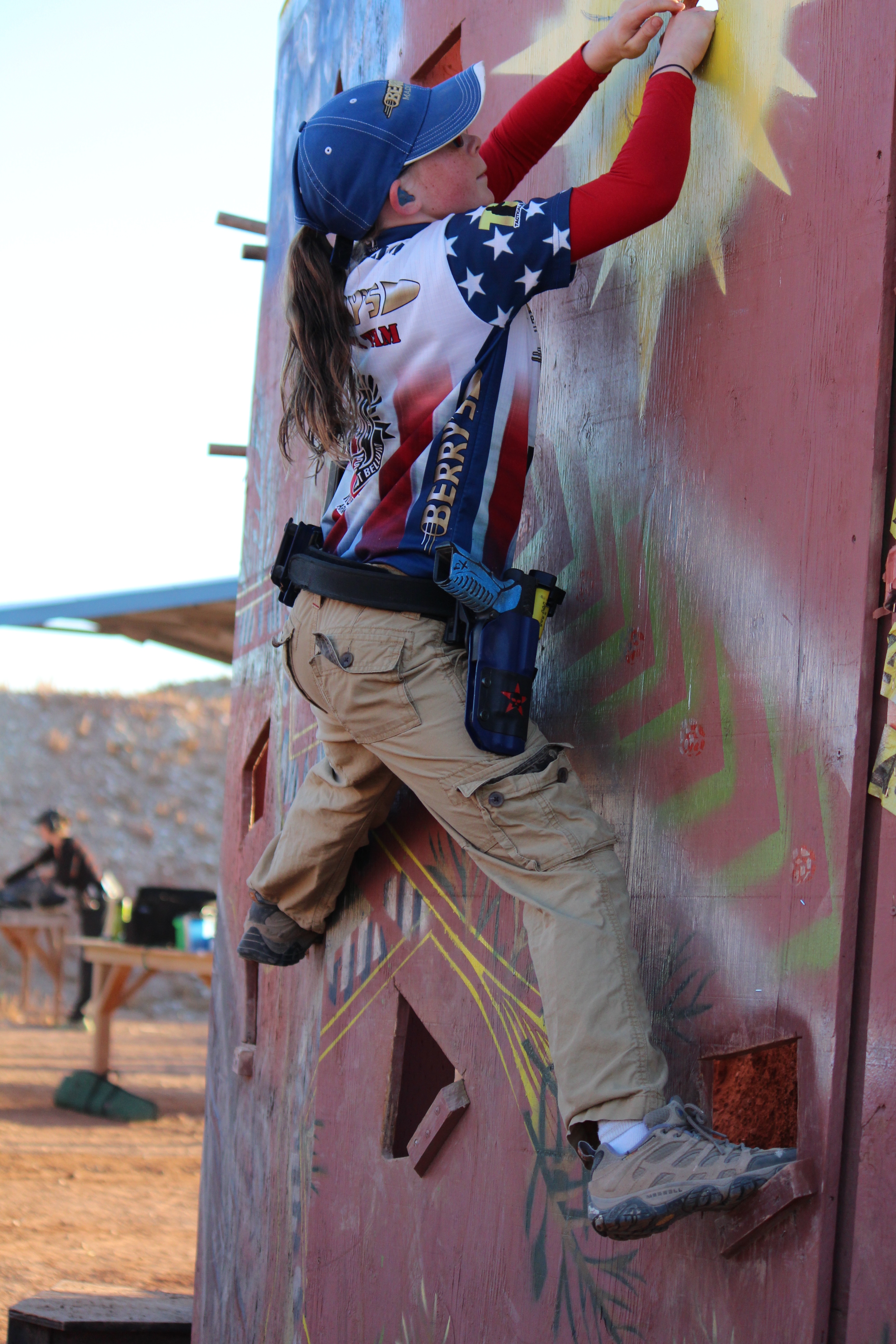
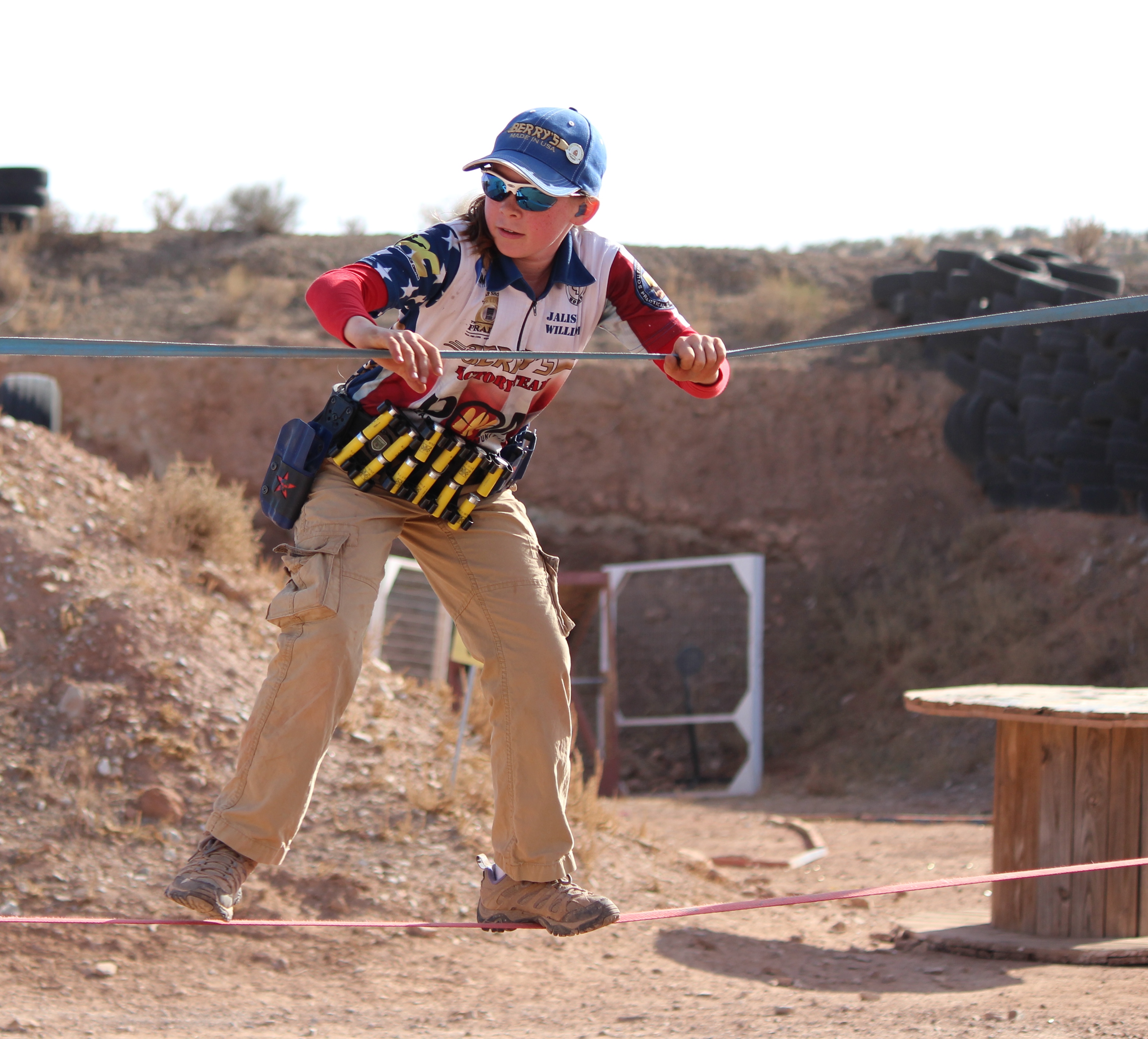
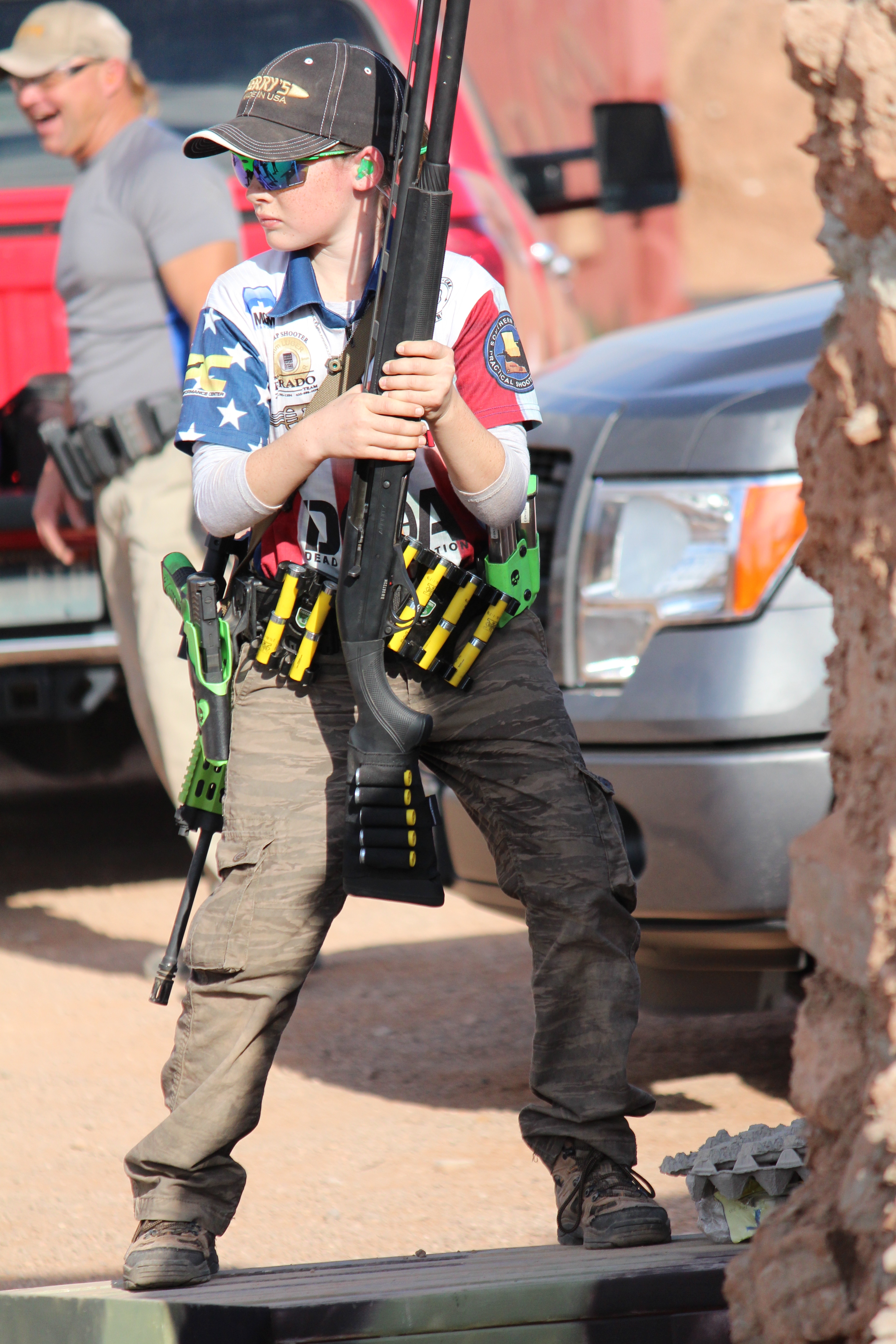
I do want to give a shout out to everyone on squad 204 for making this a fun event, you were all great to shoot and compete with. It’s rare to go to a match where you feel like everyone on the squad is working together to help everyone else do better on the stages. In particular junior shooters Jalise and Justine Williams, really impressed me. At 10 and 11 years old they had a great don’t give up mindset and showed great sportsmanship. They’ve only been shooting for a year and their skills are impressive for their age. Watch them shoot their full size Robinson Armament XCRs, Springfield XDs, and shotguns that are longer than they are tall and you’ll see what I’m talking about. Special thanks to their mother, Jaime, for taking photos of our squad that you see in my article here. Follow their Facebook athlete page here.
I have been competing in action shooting sports since 2001. I will readily admit that I wasn’t even a middle of the pack shooter at local matches until 2005-2006. I learned a lot about gun handling and marksmanship shooting matches. I learned through trial and error and watching better shooters. This took a long time, but I had time, money for ammo, and the desire to persevere. When I started getting newer shooters into competition shooting it became apparent to me that the diverse skill set I often take for granted involved so many different things that learning them match to match might be too frustrating for novices.
Some clubs do offer training for shooters new to action shooting sports; but the ones I have seen were primarily safety and scoring classes and did nothing to effectively prepare a shooter to actually participate. If someone only gets to shoot at a Texas Star for example on one stage and they don’t do it right they may have to wait until the next week or next month to try to get it right again. If someone does not know how to effectively use barricades and props for support on rifle stages they may end up missing a lot and get frustrated. Frustration at matches often goes hand in hand with expending more ammunition making attending the match even more costly. Most people are also not introspective enough to be aware of what they did wrong or what they could improve upon the next time. With these things in mind I developed a curriculum to prepare shooters to attend matches by giving them the knowledge and skills they need so they don’t have to learn the hard way on the clock. I am currently offering two courses through Suarez International; Intro to Multigun Competition and Intermediate Multi-Gun Skills.
Intro to Multi-gun Competition covers match safety rules, match etiquette, scoring methods, and equipment divisions. I cover how to move safely on a course of fire without breaking safety rules. We cover shooting around and through common props and using supported positions. Shooting for speed on paper vs shooting for points. How to engage targets on the move relative to the course of fire. We also shoot match specific target systems like Texas Stars and Plate Racks. I can’t cover everything in one class, however the goal is to give the student the skills to successfully complete local match stages and to be able to self-identify what they can improve upon.
Intermediate Multi-Gun Skills is intended to prepare the student for the challenges they will face at a major match. We shoot out as far as the rifle range will allow. We work with a variety of props and awkward shooting positions. We engage slug targets at 50-100 yards. We shoot at aerial clay targets when available. Pistol shooting is done on more complex targets and at farther distances. Being able to attempt these challenges multiple times gives students the confidence to handle those shooting problems when they face them at a major match.
At the end of both classes we assemble all the individual skills together into stages to test it all under pressure. Here’s the video of the final drill from my recent Intermediate Multi-Gun Skills Class.
Students advance at different rates, but everyone I’ve taught has taken something from class and applied it to their next match. If you’re a tactical/self defense oriented shooter and you’ve considered competing I encourage you to come to these classes so we can take the skill set you have along with the will to prevail and show you how to apply it to action shooting sports.
2 Gun Action Challenge Match October 2014 I have not shot a local match with as much controversy as this one in a while. The 2 Gun Action Challenge Match in Tucson recently got a batch of MGM Targets steel including some double spinners. The double spinner is a challenging target requiring decent marksmanship, timing, and patience. See my video on how to shoot the MGM Double Spinner here.
Most competitors had not shot one of these targets before. For a new shooter it can be daunting, but it can be done. I first encountered some of these targets in the mid 2000s at the MGM Targets Ironman 3 Gun. I and others had to figure out how to shoot them on the clock and we got better at it over the course of the match, and better at it over the course of years encountering them. Some people will write these targets off as carnival props. I would disagree with that sentiment. The plates roughly represent the areas of the human head and center vitals and they move. Until we have target drones that are cost effective to move around the range gravity or mechanical moving targets are as good as it will get for many of us to practice live fire.
Don’t Game it, Do the hard things. Local matches are organized practices sessions that prepare us for larger major events, or simply allow us to test our skills and gear month to month. A local match is the time to fail and try to get better the next time. In the end only 3 of us rotated both the rifle and pistol double spinners. Most shooters could not do it with rifle and only a fraction could do it with handgun. Many attempted and gave up because their marksmanship was not up to the task, or in some cases fired enough rounds to count it as engaged and moved on. Let me reiterate, a local match is the time to learn how to do these things and simply opting out when there are no prizes or trophies is selling ones self short.
Skill and Experience vs Gear The match staff got a lot of feedback during and after the match about how unreasonable or impossible the double spinner was. Some said they are used to shooting CQB distances only and they weren’t ready for it. Some said the equipment the 3 of us had is what allowed us to rotate it. Equipment matters a lot less than skill level.
One shooter did it with a .308 with red dot (after the paint had been shot off and the target obscured into the backdrop). It is true that .308 rotates it more easily, but .308 is a disadvantage on every other stage at the match due to capacity, more recoil, and muzzle blast. Without the right skill the .308 alone would not have allowed him to do this.
Karl Kasarda shoots his FG42 repro in .308. It may move steel harder, but it makes everything else at the match harder.
Another shooter did it with a lightweight 16″ AR15 with low mass carrier, and some argued his minimal sight disruption with this system allowed him to shoot faster and rotate the target because of more rapid hits. This particular shooter is also a veteran of multiple Ironman matches, so again I believe the skill mattered more.
1st/47 shooters
Rifle: GWACS Armory CAV-15 MKII with Sionics 16″ upper, Suarez International Kompressor and Vortex Razor HD 1-6x JM
Pistol: Suarez International Glock 17 with Warren Tactical Sights and Inforce APL.
My rifle had no real inherent advantages over other rifles used at the match. I shot with the scope on 2x to simply get a better view with the paint gone. My normal method of double tapping the plates did not work because the position we were shooting from was not stable enough and the transition time between shots was better spent moving to the other plate than trying to recover quickly enough for a second shot on the same plate as it moved rearward. Ultimately I rotated it shooting top-bottom-top-bottom until it spun 360. I have shot these targets a lot, and I have done it before with a red dot only. The shooting platform made it harder, and I figured it out 0n the clock and made it work. Problem solving on the clock is one of the more valuable things people can get out of shooting matches.
Will to Win; Don’t Give Up Developing the will to prevail despite adversity is another important factor. I heard people complain that the lack of stability made their chosen equipment less effective, such as scopes blacking out as eye relief changed under recoil. I also heard complaints that the body position required to support made it harder or was a factor in giving up. If people are experiencing these things in a match environment and they ostensibly own rifles for self defense or SHTF purposes they are most certainly selling themselves short if they don’t adapt and overcome.
Going to similar events all the time can indeed make people complacent about their skills. One way to shake this up is to go to different events and see what they have to offer. I give credit to the 2GACM crew for not letting their match stagnate and changing it up. Too many matches today are based around mean equipment and mean skill level. A match is more interesting when it tests “can this be done at all” vs “how fast can it be done”.
The other stages were typical 50 yard close range events. Stage 4 (the last one in the video) also caused people some problems. I did not shoot it as clean as I would have liked, but it was worse for others. My friend that used an RMR equipped Glock did better on this one than I did.
This was the first match I’ve used the Vortex 1-6 Razor HD at. I was pleasantly surprised how easy it was to transition to using thanks to the daylight visible center illuminated dot. I will be doing a review of this optic after I get some more matches in with it.
Posted inUncategorized|Comments Off on 2GACM October 2014: Match Mindset and Skills

 My JACS as currently configured. The external VIP Trauma Kit pouch is also made by Honor Point. Inside it I have Israeli trauma bandages, Celox, and a CAV-MFG tourniquet. I also have bandaids and disinfectant wipes to deal with common minor injuries that can occur during stages (mostly cuts to hands or scrapes).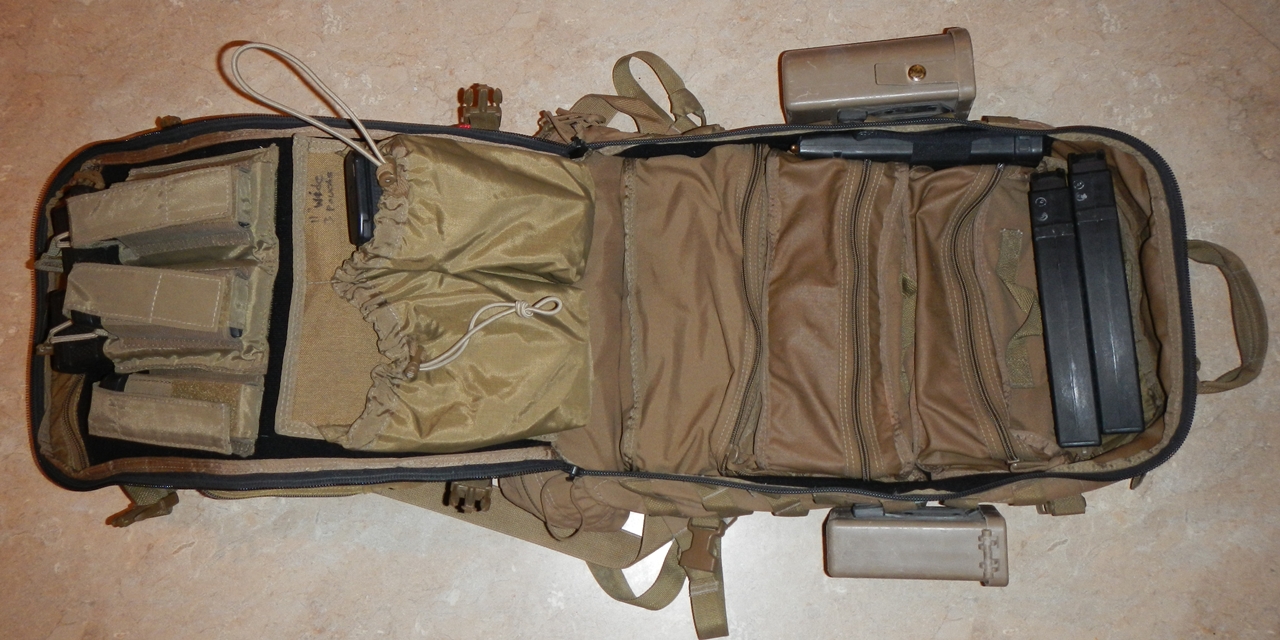
 The inside of the JACS is lined with velcro that pouches can attach to. Conveniently three removable bags fit one one side. I use them for pistol ammo/mags, rifle ammo/mags, and bird shotshells. How much ammo I load up with depends on the match I’m going to. You can see that the JACS is wide enough to lay 40 round PMAGs with KE Arms extensions side ways. These bags can also be flipped inside out and attached to MOLLE webbing with the straps that are sewn on. On one side I also have a Maxpedition pistol mag pouch for my Glock 30 rounders.













 SinistralRifleman
You must be logged in to post a comment.